Firefox gets slower after running for several days when a memory-heavy extension, a single heavy tab, or a growing cache is left unchecked. A healthy default install should not drift this way, so the fix starts with finding the real culprit.
Open Firefox's built-in Task Manager first, then work through cache clearing, extension audits, and tab unloading. The steps below move from least disruptive to most, and most readers notice a difference after the first three or four.
In this guide, I have covered:
Contents
Why Firefox Gets Slower After Running for Several Days
Firefox gets slower after running for several days? The usual cause is one of three things: a memory-heavy extension or site, a growing cache, or too many background tabs and content processes running at once.
On a clean install with no add-ons, this drift should not happen. That means the first job is to find the culprit, not reset the browser blindly.
Work from least disruptive to most. Most readers only need the first three or four steps before Firefox feels responsive again.
Check What’s Using Memory with Firefox’s Task Manager
When Firefox has been open for days, the fastest way to see what changed is its built-in . It lists every tab and extension with CPU and memory use.
Open it and look for the single tab or add-on that has ballooned over the past few days.
- Click the hamburger menu
 at the top right of Firefox and choose , then . You can also type about:performance in the address bar and press .
 - Sort the list by Energy impact to surface the tabs and add-ons using the most CPU, then look at the memory column to spot RAM hogs.
- Click any entry to select it, then click the close button at the top of the table to close that tab or disable that add-on directly from the page.
- Note the worst offenders. You'll target them in the next sections.
If a specific site is using most of the memory, close that tab. If an extension stays near the top, leave the list open and continue to the next steps.
Clear the Cache and Cookies
The cache and per-site cookies grow quietly in the background. That is why Firefox often feels heavier on day four or five than it did on day one.
Clearing them weekly prevents the slow drift most readers describe. The full walkthrough is in our guide to clear cookies and cache in Firefox on Computer.
- Open the Firefox browser on your computer.
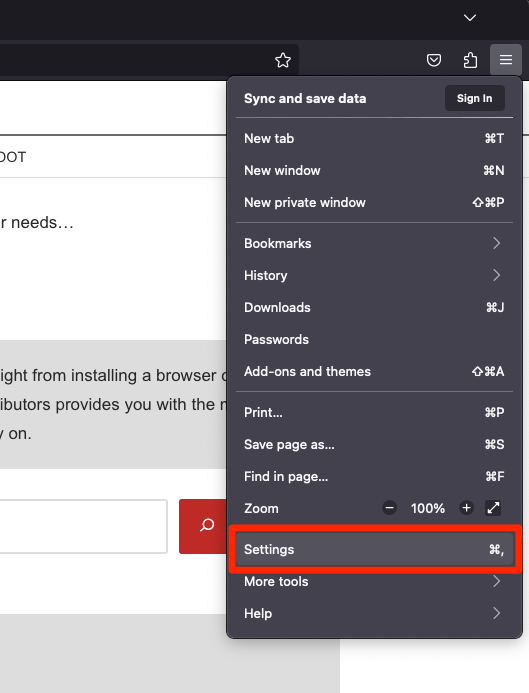
- Click on the More menu and select the Settings menu.
- Switch to the Privacy & Security tab and scroll to the Cookies and Site data section.
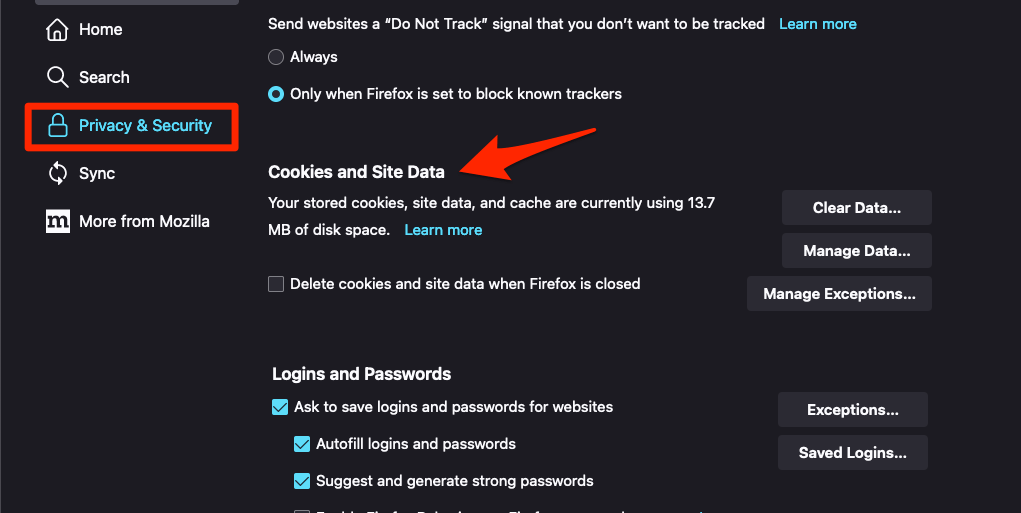
- Click on the button.
- Enable the checkbox for the 'Cookies and Site Data' and 'Cached Web Content' options.
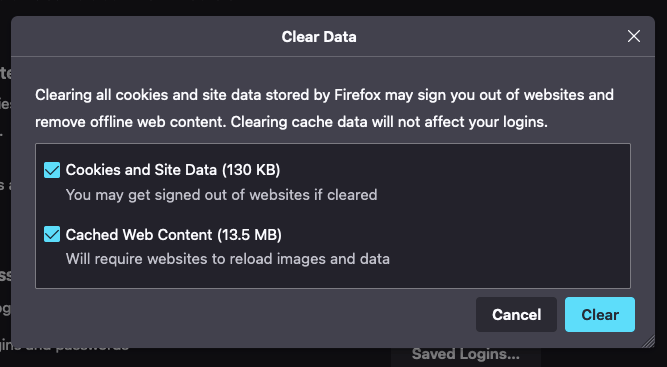
- Hit on the option.
It will immediately delete the cache, cookies, and site data on the browser.
After Firefox restarts, browse normally for an hour or two. If the slowdown has not returned, you can stop here.
Try Troubleshoot Mode to Isolate Extensions
restarts Firefox with extensions, themes, and hardware acceleration temporarily disabled. If Firefox feels fast in that mode, an add-on or theme is the reason.
The full procedure is in Mozilla’s official Troubleshoot Mode support article.
- Click the hamburger menu at the top right of Firefox.
- Click Help.
- Select Troubleshoot Mode….
- Click Restart in the confirmation dialog.

Your extensions, themes, and custom settings are not removed. They are skipped during the Troubleshoot session and come back when you restart normally.
If Firefox is fast in Troubleshoot Mode, restart normally and disable extensions one at a time in the until the slowdown is gone.
Disable Extensions That Use a Lot of Resources
Some extensions keep working in the background long after you close their tab, and a few leak memory over hours of use. Turning off the ones you do not actively need is the biggest performance win for most readers.
- Click the hamburger menu and select .
- In the left sidebar, click .
- Use the blue toggle next to each extension to disable it. Start with ad blockers, tab managers, and any extension you installed in the past few weeks.
- Restart Firefox from the hamburger menu .
- Use Firefox normally for a few minutes, then check about:performance. If usage dropped sharply, re-enable extensions one by one to find the offender.

TIP: Open Firefox’s Task Manager again after disabling extensions. If the memory totals drop sharply, leave the worst offenders disabled and recheck every few weeks.
Unload Inactive Tabs to Free Memory
Firefox already unloads background tabs you have not opened in a while. That keeps a session with dozens of tabs from dragging down the whole browser.
You can also unload tabs manually when you need memory back right away.
- Click the hamburger menu , choose , then select from the left sidebar.
- Scroll to the Performance section and check "Use recommended performance settings" if it isn't already on.
- Make sure "Unload tabs when system memory is low" is also enabled so Firefox acts automatically under pressure.
- To free memory right now without closing tabs, type about:unloads in the address bar and press .
- Click the button at the top of the list to drop the least-recently-used tabs from memory. Their tab strip entries stay in place and reload when you click them.
After unloading, the tab title and content return when you click back to it. It is a low-risk way to recover RAM without losing your place.
Reduce the Content Process Count
Firefox splits tabs across several content processes for stability. On older or low-RAM machines, too many processes can make the whole browser feel slower.
Lowering the count consolidates tabs into fewer processes.
- Type about:config in the address bar and press , then click .
- In the search box, type dom.ipc.processCount and press .
- Click the pencil icon next to the preference and change the value: try 2 on 4 GB machines, 4 on 8 GB machines, leave it at 8 on 16 GB or more.
- Click the save checkmark, then restart Firefox.
If your machine has 8 GB of RAM or more, leave the default value. Reducing the count helps most on systems with 4 GB of RAM or less.
Open the Task Manager after the restart. You should see fewer Firefox processes than before.
Toggle Hardware Acceleration
Hardware acceleration usually speeds up video and page rendering, but outdated graphics drivers can reverse the effect. A quick on and off test is worth trying if the Task Manager shows the GPU process near the top.
- Click the hamburger menu and choose , then select from the left sidebar.
- Scroll to the Performance section.
- If "Use recommended performance settings" is checked, uncheck it to expose the manual options.
- Uncheck "Use hardware acceleration when available".
- Restart Firefox from the hamburger menu so the change takes effect.
Run Firefox normally for a few minutes after the toggle. If pages feel smoother, leave it; if they feel worse, switch the setting back.
Delete Pending Crash Reports
If Firefox has crashed a few times in the past weeks, leftover crash report files can pile up inside the profile folder. They do not run in the background, but a large profile slows startup and can interfere with session restore.
- Open a new tab in Firefox and go to about:support.
- Under Profile Folder, click (or on macOS and Linux).
- Inside the profile folder, open Crash Reports, then the pending subfolder.
- Select every file inside pending and delete them. Leaving the folder empty is fine.
- Optionally, also clear the contents of Crash Reports/submitted if you want a full reset.
- Close the folder window and restart Firefox.
Firefox should start a little faster, and session restore should stop stalling.
Refresh Firefox as a Last Resort
If nothing above has helped, Refresh Firefox resets add-ons, themes, and custom settings while keeping bookmarks, history, and saved logins. It is the cleanest fix for an old, heavily customized profile.
The companion guide covers the full Firefox reset walkthrough on Computer.
- Click the hamburger menu , choose , then select .
- On the Troubleshooting Information page, find the Give Firefox a Tune Up section on the right.
- Click Refresh Firefox and confirm by clicking in the dialog.
- Wait for Firefox to restart. Your bookmarks and logins are preserved, but extensions and most site settings are reset.
Refresh Firefox may not be available on Firefox ESR. ESR users can create a fresh profile in the next step instead.
After a successful refresh, Firefox runs as if it were newly installed. Reinstall only the extensions you actually need.
Try a Fresh Firefox Profile
A new profile starts Firefox with default settings and no extensions. It is the cleanest test of whether your existing profile is causing the slowdown.
If Firefox is fast in a new profile, the old profile is the issue. You can copy data over selectively instead of rebuilding everything.
- Type about:profiles into the address bar and press .
- Review the This is the profile in use section and any Other profiles listed below.
- Note the path of the profile you usually use, and check whether the desktop you are looking at matches.
- Click Launch profile in new browser next to the profile you want to inspect.
- In the new window, open about:logins and search for the missing entry.
Once a new profile is in use, decide what to bring back. Bookmarks can be restored from a JSON backup, and saved logins sync through your Mozilla account.

Frequently Asked Questions
Is it normal for Firefox to slow down after a week of uptime?
Not in a default setup with no extensions. If Firefox is sluggish after a few days, an extension, a single heavy tab, or a large cache is the usual cause. The steps above will usually identify it within a few minutes.
Does Refresh Firefox delete my bookmarks and passwords?
No. Refresh Firefox resets add-ons, themes, and custom preferences, but keeps bookmarks, history, saved logins, and most other data. Synced data reappears once you sign back into your Mozilla account.
How often should I clear the cache to prevent the slow drift?
Once a week is enough for most readers. If you visit many media-heavy sites, clear it every few days. Firefox can also clear the cache automatically when you close the browser from the panel.
Why does Firefox use so much memory with only a few tabs open?
Background extensions and a few web pages, especially chat, social, and video sites, can each hold several hundred MB. Open the Task Manager with + to see exactly which tab or extension is using the most memory.
Will restarting Firefox every day prevent the slowdown?
A daily restart is a fair workaround if you cannot find the cause, but it does not fix the underlying extension or tab leak. The Task Manager diagnosis is faster than a daily restart habit and points at the real cause.