Firefox blocked a sign-in, payment, or download window from a site you trust. The fix is a one-site exception, not switching off protection for the whole browser.
Open Firefox Settings, go to Privacy & Security, and work under Permissions and data. You can block pop-ups everywhere, allow a single domain, and remove an old exception when the site no longer needs it.
In this guide, I have covered:
Contents
Why Firefox blocks pop-ups you actually wanted
A sign-in window, a payment step, or a download prompt refuses to open, and Firefox shows a small notice in the address bar instead. That is the pop-up blocker doing its job, not a fault on the site.
You have two ways forward: switch the global setting off, or keep it on and allow one trusted domain. The second option leaves protection in place everywhere else, so start there.
To allow or block pop-ups in Firefox on a computer, you pick between that global switch and a per-site exception. Firefox blocks unexpected windows by default, so the global option is usually already on.
Names differ by version. Current releases call it Block pop-ups and third-party redirects. Older ones say Block pop-up windows. Both sit under Privacy & Security, inside Permissions and data or the older Permissions.
The newer checkbox covers two things: pop-ups and third-party redirects. Clearing it turns off both.
Turn the pop-up blocker on or off for every site
You want one decision to apply everywhere: block all pop-ups, or allow them all. The global switch handles that. If only one trusted site needs a window, the exception route in the next section gets you the same result with far less exposure.
- Open Firefox on your computer.
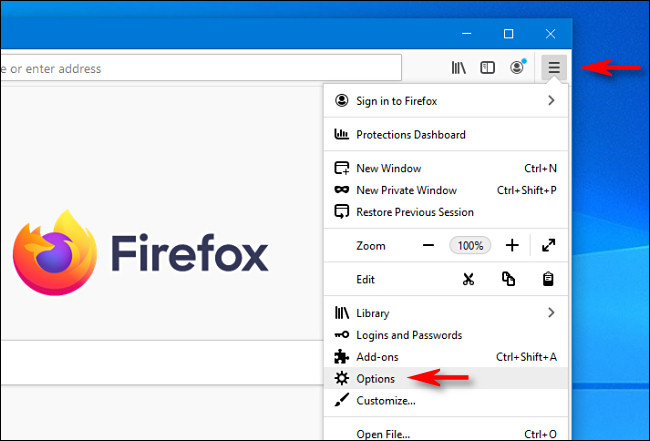
- Click the
 menu in the top-right corner. On macOS, open the Firefox menu in the menu bar instead.
- Choose Settings from the menu.
- Select Privacy & Security in the left sidebar.
- Scroll to Permissions and data. Older builds use Permissions instead.
- Under Pop-ups and redirects, select Block pop-ups and third-party redirects to block them, or clear the checkbox to allow requests from all sites. Older builds call this option Block pop-up windows.
- Close the Settings tab.
- Reload the page that was affected.
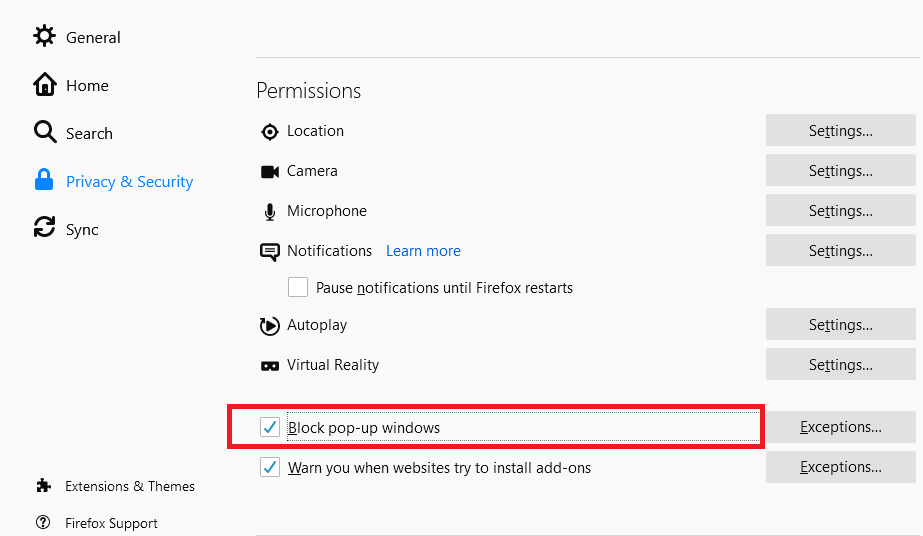
The screenshot above shows the older wording. Current Firefox releases use the redirect-aware label from step 6.
You’ll know it worked when an unexpected pop-up stays blocked with the box ticked, and the trusted page opens its window after you clear the box and reload.

Keep the global option enabled and allow only a trusted site when possible. On current Firefox, clearing the global checkbox also removes third-party redirect blocking.
Allow pop-ups for one trusted site
Your bank, insurer, or store needs a pop-up to finish signing you in, and you would rather not open the door for every site you visit. An exception keeps the blocker running and gives one domain a pass.
- Open Firefox on your computer.
- Click the menu in the top-right corner.
- Choose Settings.
- Select Privacy & Security in the left sidebar.
- Scroll to Permissions and data, or Permissions in an older build.
- Under Pop-ups and redirects, click . Older builds show instead.
- Click the add control beside the allowed pop-ups list. Newer Firefox keeps pop-up entries separate from third-party redirect entries.
- Enter the site’s domain, such as example.com, in the Address of website field. Newer builds just call it the site address.
- Set the site’s status to Allow. In the classic dialog, click .
- Save the entry. In the classic dialog, click . On the current exceptions page, confirm the entry if prompted.
- Close the exceptions page.
- Return to the site, reload it, and trigger the action that opens the pop-up.

The screenshot above shows the classic dialog: type the domain, set the status to Allow, then save. Current Firefox opens a Manage exceptions page instead, with pop-ups and third-party redirects kept as separate lists.
You’ll know it worked when the domain appears in the allowed pop-ups list and the window opens after a reload. The entry stays saved until you remove it.
Some windows really are one-time. If you need the pop-up just now, allow pop-ups temporarily for a specific site in Firefox and the permission expires on its own.
Remove a pop-up exception you no longer need
A domain you allowed months ago should not keep that permission forever. Remove it once the workflow stops needing pop-ups.
- Open Firefox on your computer.
- Click the menu in the top-right corner.
- Choose Settings.
- Select Privacy & Security.
- Scroll to Permissions and data, or Permissions in an older build.
- Click under Pop-ups and redirects. Older builds show .
- Find the domain in the allowed pop-ups list.
- Select the site’s entry.
- Click its remove control. In the classic dialog, click .
- Close the exceptions page.
- Reload the site to apply the change.
You’ll know it worked when the domain is gone from the allowed pop-ups list. If the site needs permission again later, add it back with the steps above.
The classic dialog also offers . That clears every saved exception at once, so use it only when you mean to reset the whole list.

When a pop-up is allowed but still won’t open
The domain sits on the allowed list, the blocker is on, and the window still refuses to appear. Run these checks before you touch any other setting.
Reload the page first. A stale tab is the most common reason a permission seems not to apply, and a reload costs you nothing.
Then confirm the entry is in the pop-ups list itself, not in the third-party redirects list. Current Firefox keeps those lists apart, and an entry in the wrong one changes nothing. Check the spelling of the domain while you are there.
A pop-up permission does not touch the separate third-party redirect setting, and it does not override a cookie block. If the page tells you cookies are disabled, work through Block or Allow Browser Cookies in Firefox on the Computer before changing anything else.
Frequently Asked Questions
How do I allow pop-ups for one site in Firefox on a computer?
Keep the global blocker enabled, open Manage exceptions…, add the domain to the allowed pop-ups list, and reload the site. Older Firefox builds use Exceptions… for the same button.
How do I block pop-ups and redirects again?
Open Settings, select Privacy & Security, and go to Permissions and data. Select Block pop-ups and third-party redirects. Older builds call the option Block pop-up windows.
Why does Firefox no longer show the Block pop-up windows option?
Newer Firefox versions use the name Block pop-ups and third-party redirects because the checkbox now controls both features. The setting may also appear under Permissions and data instead of Permissions.
Does a pop-up exception also allow third-party redirects?
No. Firefox keeps separate exception lists for pop-ups and third-party redirects. Allowing a domain to open a pop-up does not change its third-party redirect entry.
Should I turn off Firefox’s pop-up blocker?
Usually, no. Leave the global blocker enabled and allow only the trusted sites that need it. Clearing the global checkbox on current Firefox also permits third-party redirects from all sites.
Most stubborn pop-up problems come down to one of three things: a missing exception, a reload you skipped, or a domain typed with a small mistake. Remove the entry, add it again, and test the site once more.