Firefox can keep showing the Facebook password change prompt when login cookies are wiped, blocked, or cleared by an extension. Tracking Protection and cookie-cleaning add-ons can sign you out on every visit. Facebook treats that as suspicious activity.
Clear Facebook's site data, allow facebook.com cookies, and set Enhanced Tracking Protection to Standard. After one clean sign-in, the prompt usually stops.
In this guide, I have covered:
Contents
Why Facebook keeps prompting a password change in Firefox
Facebook only shows the change your password screen when it thinks the account was accessed from an unusual browser or location. If Firefox signs you out every time you close it, Facebook treats each fresh session as a new device and walks you through the same security steps again.
Those silent logouts usually come from one of these Firefox settings:
- Firefox deletes cookies and site data when you close it, or on a schedule.
- Third-party cookies blocked in Enhanced Tracking Protection can break Facebook’s session cookies.
- A cookie cleaner, privacy tool, or antivirus extension wipes cookies at startup or on tab close.
- You are using a Private Browsing window, where cookies vanish at the end of the session.
- Facebook itself has flagged a login you do not recognize as a real security issue.
Work through the fixes in order. You’ll know it worked when Facebook stops showing the password prompt after a normal sign-in.
Sign out of Facebook and sign back in inside Firefox
We usually start with a clean sign-out and sign-in inside Firefox. A stale Facebook session token can keep triggering the security prompt even when your password is fine.
- Open facebook.com in Firefox.
- Click your profile picture at the top right and choose Log Out.
- Quit Firefox: click the hamburger menu
 at the top right, then select Exit on Windows/Linux or Quit Firefox on macOS.
 - Reopen Firefox, go back to facebook.com, and sign in with your normal password.
- If Facebook offers Save Browser or This Was Me on the security check, click it to confirm the new session.
If the loop returns the next time you open Firefox, move to cookie clearing.
Clear Facebook’s cookies and site data in Firefox
Old or corrupted Facebook cookies are the most common reason Firefox keeps prompting for a password change. Clearing them forces Facebook to issue a fresh session on your next sign-in.
- Open the Firefox browser on your computer.
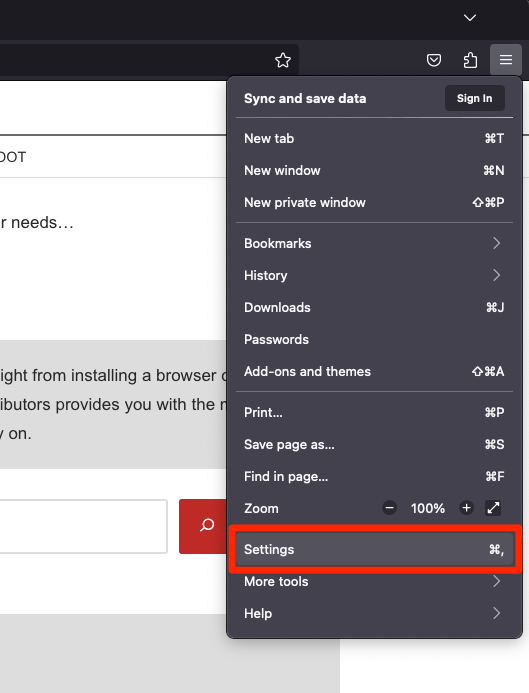
- Click on the More menu and select the Settings menu.
- Switch to the Privacy & Security tab and scroll to the Cookies and Site data section.
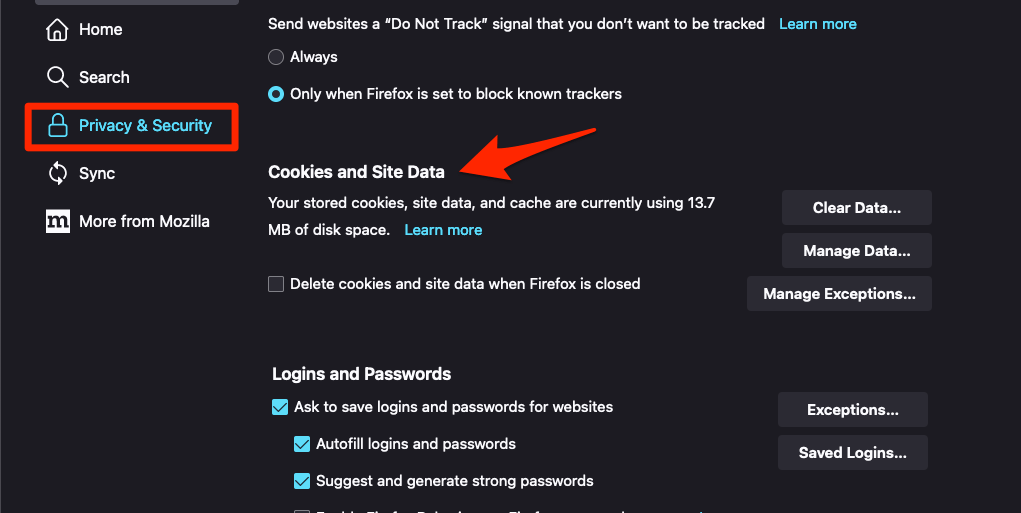
- Click on the button.
- Enable the checkbox for the 'Cookies and Site Data' and 'Cached Web Content' options.
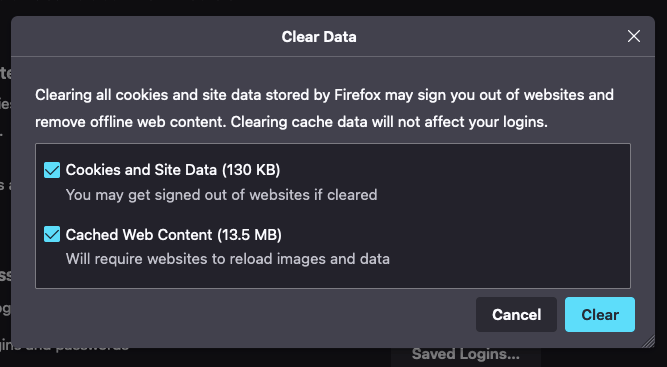
- Hit on the option.
It will immediately delete the cache, cookies, and site data on the browser.

TIP: To jump straight to the panel, type about:preferences#privacy in the address bar and Firefox opens Cookies and Site Data directly.
If you would rather not log yourself out of every site, click Manage Data… in the same panel, search for facebook.com, remove only those entries, and leave the rest. Mozilla’s own guide to clearing cookies and site data walks through the same panel.
Our clear browsing data in Firefox on Computer guide covers the full wipe. For a faster route that focuses on the same panel, see how to clear cookies and cache in Firefox.
Sign in again and open Facebook twice in a regular window. You’ll know it worked when the password prompt stays away on the second visit.
Allow Facebook cookies in Firefox’s site permissions
If the prompt comes back minutes after you sign in, Firefox is being told to delete Facebook cookies before the session expires. Letting Facebook keep its cookies usually fixes the loop.
- Open facebook.com in Firefox.
- Click the padlock or
 icon to the left of the address bar.
 - Click Clear permissions and data for this site at the bottom of the panel, then confirm the dialog.
- Reload facebook.com and sign in again.
Mozilla retired the official Facebook Container add-on, so manage these settings through the built-in panel and the Cookies and Site Data permissions instead. You can also open the site info and permissions page in Firefox and set Cookies to Allow for facebook.com and any *.facebook.com subdomain.
After you set Allow, reload Facebook and sign in. You’ll know it worked when the prompt does not return on the next visit.
Check that Firefox is not deleting cookies on exit
If Firefox clears cookies every time you close it, Facebook loses the session cookie and asks for a password change on the next launch. This setting is easy to miss because it hides under History options.
- Click the hamburger menu at the top right of Firefox and choose Settings.
- Select Privacy & Security from the left sidebar.
- Under History, change Firefox will to Remember history if it is not already selected.
- If you use custom settings, untick Clear history when Firefox closes.
- Click Settings… next to it and untick Cookies in the popup list.
- Restart Firefox once for the change to take effect.
From now on Facebook’s session cookie should survive a browser restart. If you also want to clear your history, see our guide to clearing Firefox browsing history.
Switch Enhanced Tracking Protection to Standard
Firefox’s Strict mode blocks more third-party cookies and trackers, and Facebook uses a lot of cross-site requests. Strict mode can repeatedly break Facebook’s login cookies and trigger the password prompt.
- Click the hamburger menu at the top right and choose Settings.
- Select Privacy & Security on the left.
- In the Enhanced Tracking Protection section, pick Standard.
- Sign in to Facebook and check whether the loop is gone.
If you want to keep Strict protection everywhere except Facebook, use the Custom option and add facebook.com plus *.facebook.com to the list of sites where cookies are allowed.

Strict tracking protection plus Facebook is a frequent trigger for this prompt, because Facebook relies on cross-site scripts to keep your login valid.
You’ll know it worked when Facebook keeps you signed in after a restart.
Disable extensions that might be clearing Facebook cookies
Cookie-cleaning, anti-tracker, and antivirus extensions can wipe Facebook cookies at startup or on tab close. Disabling them in Firefox and signing back in is the quickest way to test.
- Click the hamburger menu and select .
- In the left sidebar, click .
- Use the blue toggle next to each extension to disable it. Start with ad blockers, tab managers, and any extension you installed in the past few weeks.
- Restart Firefox from the hamburger menu .
- Use Firefox normally for a few minutes, then check about:performance. If usage dropped sharply, re-enable extensions one by one to find the offender.
Restart Firefox and visit facebook.com. If the password prompt is gone, re-enable your extensions one at a time to find the one wiping Facebook’s cookies, then add facebook.com to its allowlist. You’ll know it worked when Facebook still recognizes you after a restart.
Make sure you are not in Private Browsing
Private Browsing windows do not keep cookies between sessions, so Facebook always asks you to verify on the next normal window. Look for the purple mask icon in the toolbar. Close any Private window and sign in to Facebook in a regular window.
Refresh Firefox as a last step
If nothing else has worked, a Firefox refresh restores default settings, removes add-on permissions, and rebuilds the cookie database without touching your bookmarks or saved passwords.
- Click the hamburger menu , choose , then select .
- On the Troubleshooting Information page, find the Give Firefox a Tune Up section on the right.
- Click Refresh Firefox and confirm by clicking in the dialog.
- Wait for Firefox to restart. Your bookmarks and logins are preserved, but extensions and most site settings are reset.
After the refresh, sign in to Facebook once and tick This Was Me or Save Browser if the security check appears. You’ll know it worked when Facebook keeps you signed in after a restart.
For a heavier reset that wipes more settings, see our Firefox settings reset guide.
Check Facebook’s own security settings
If Firefox is no longer logging you out and the prompt still appears, the trigger is on Facebook’s side.
- Open Facebook's Hacked and Fake Accounts page in a separate browser tab.
- Run the security check and remove any session or device you do not recognize.
- Open Facebook's Settings & privacy → Settings → Security and Login and click Sign out of all sessions.
- Change your Facebook password once to clear any active security flag.
Once Facebook recognizes the clean session, the password prompt should stop appearing in Firefox.

Frequently Asked Questions
Why does Firefox keep asking me to change my Facebook password?
If Firefox is deleting cookies on exit, blocking third-party cookies, or running a cookie-cleaning extension, Facebook loses its session cookie and treats the next sign-in as a new device. That is what triggers the password change prompt. Switching tracking protection to Standard and turning off on-exit cookie clearing usually stops the loop.
Is the Facebook password change prompt a real security warning?
Sometimes. Facebook shows the same screen for genuine suspicious logins and for cookies being wiped. Check the date and location Facebook lists, and if you do not recognize them, change your password from another device and turn on two-factor authentication.
Will clearing Firefox cookies log me out of every site?
The full Clear Data option does. To keep your other sites logged in, use Manage Data… in the same Cookies and Site Data panel, search for facebook.com, remove only Facebook’s entries, and leave the rest untouched.
Does the Facebook Container extension still work in Firefox?
Mozilla retired the official Facebook Container add-on, so it is no longer a recommended fix. Use Firefox’s built-in site permissions and Custom Enhanced Tracking Protection to add facebook.com to the cookie allowlist instead.
Does this also happen on Firefox for Android?
The same root causes apply on Firefox for mobile. Clear the Facebook site’s cookies from the menu and set tracking protection to Standard to stop the loop on a phone or tablet.