Firefox fans spinning, browser eating more RAM than expected, and CPU pegged near 100 percent? The cause is usually heavy tabs, a few runaway extensions, a bloated cache, or a hardware acceleration setting that fights your graphics driver.
This guide helps you diagnose the real culprit with Firefox's built-in Task Manager, then apply each fix that actually brings memory and CPU back down.
In this guide, I have covered:
Contents
Why Firefox is using too much memory and CPU
If Firefox is eating more RAM than it should and the CPU stays busy, the browser’s process model is usually part of the story. Firefox runs each tab, extension, and system process in its own memory bucket so one bad page can’t crash the whole browser. That design protects stability, but it also lets heavy tabs, runaway extensions, a bloated cache, and long sessions pile up into real resource pressure.
The usual triggers are many open tabs that keep running scripts in the background, a few resource-hungry extensions, a large or corrupted cache, or hardware acceleration that conflicts with your graphics driver. Mozilla’s official guide to fixing Firefox memory and CPU usage lists the same root causes, with extra background on how the process model works.
Diagnose the real culprit with Firefox’s Task Manager
Before changing settings, find out which tabs and add-ons actually consume the most resources. Firefox’s built-in Task Manager shows live memory and CPU use per tab, extension, and process.
- Click the hamburger menu
 at the top right of Firefox and choose , then . You can also type about:performance in the address bar and press .
 - Sort the list by Energy impact to surface the tabs and add-ons using the most CPU, then look at the memory column to spot RAM hogs.
- Click any entry to select it, then click the close button at the top of the table to close that tab or disable that add-on directly from the page.
- Note the worst offenders. You'll target them in the next sections.
Reload a busy page after closing the worst tabs. Re-check the Task Manager. Total memory should drop and CPU activity should settle back to normal.
Unload tabs you aren’t using
Firefox can put background tabs to sleep after you ignore them for a while, which frees the memory they were holding. Enable this once and you can also unload tabs on demand when memory pressure starts climbing.
- Click the hamburger menu , choose , then select from the left sidebar.
- Scroll to the Performance section and check "Use recommended performance settings" if it isn't already on.
- Make sure "Unload tabs when system memory is low" is also enabled so Firefox acts automatically under pressure.
- To free memory right now without closing tabs, type about:unloads in the address bar and press .
- Click the button at the top of the list to drop the least-recently-used tabs from memory. Their tab strip entries stay in place and reload when you click them.
Open about:performance again. The memory column for those unloaded tabs should drop to a small baseline figure.

TIP: If you keep a tab open only for quick access to one site, a desktop shortcut for that site in Firefox may replace the tab entirely. That removes the memory cost without losing one-click access.
Disable or remove extensions that consume resources
One badly written extension can keep several CPU cores busy in the background. Disable all extensions temporarily to test, then turn them back on one at a time.
- Click the hamburger menu and select .
- In the left sidebar, click .
- Use the blue toggle next to each extension to disable it. Start with ad blockers, tab managers, and any extension you installed in the past few weeks.
- Restart Firefox from the hamburger menu .
- Use Firefox normally for a few minutes, then check about:performance. If usage dropped sharply, re-enable extensions one by one to find the offender.
If a single extension keeps showing up at the top of the Energy impact list, click the three-dot menu  next to it and choose .
If disabling extensions changed how address bar searches behave, clear the search term history in Firefox as a follow-up.
Clear Firefox’s cache and cookies
A bloated or corrupted cache can keep large objects in memory and force Firefox to re-validate them, which costs CPU. Clearing it gives the browser a clean slate.
- Open the Firefox browser on your computer.
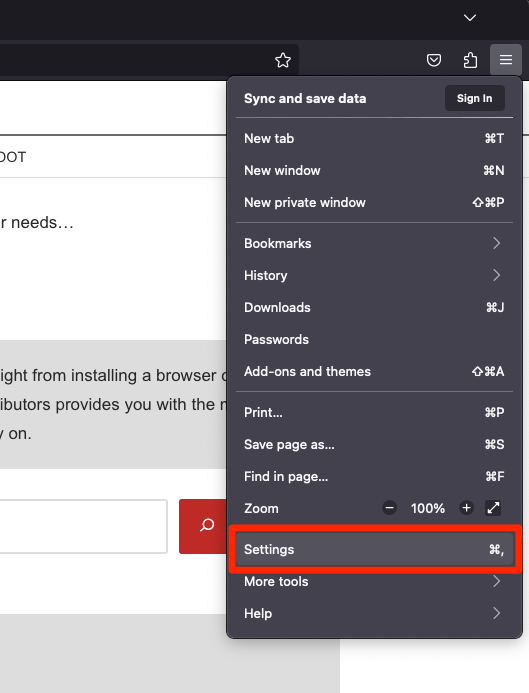
- Click on the More menu and select the Settings menu.
- Switch to the Privacy & Security tab and scroll to the Cookies and Site data section.
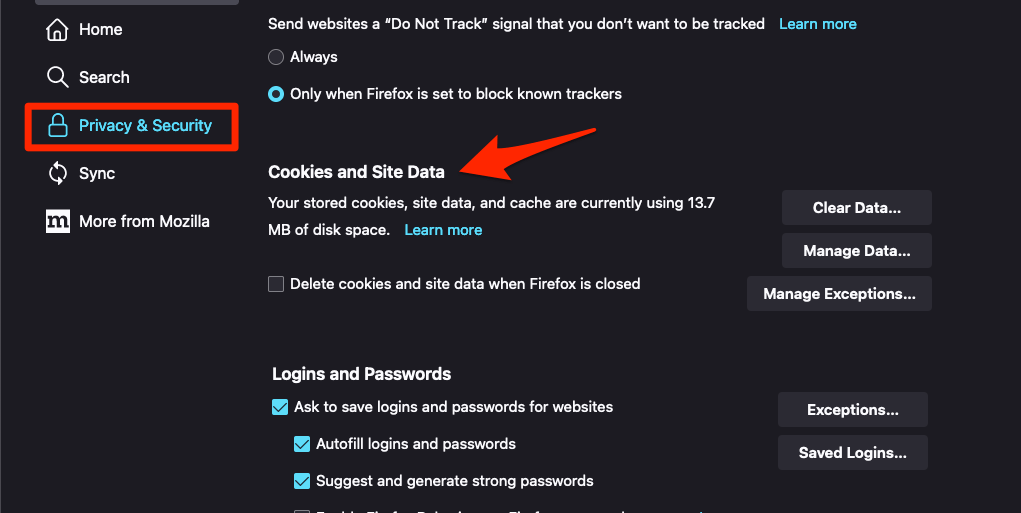
- Click on the button.
- Enable the checkbox for the 'Cookies and Site Data' and 'Cached Web Content' options.
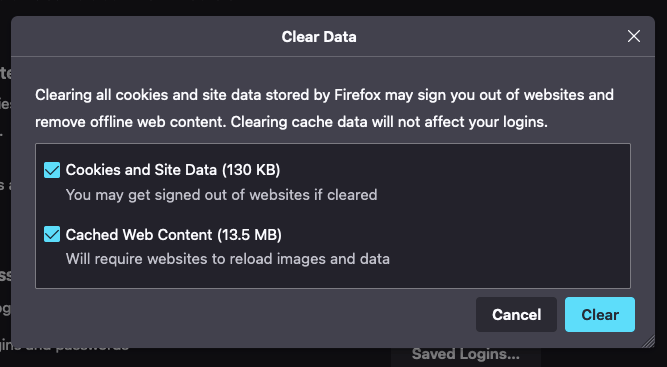
- Hit on the option.
It will immediately delete the cache, cookies, and site data on the browser.
You’ll know it worked when you reload your most-visited sites and watch about:performance. Total memory should be noticeably lower, and pages will fetch fresh instead of pulling from a corrupted cache.
If you want to clear only the cache or only the history without touching saved logins, see the guide to clear browsing data in Firefox on the Computer.
Toggle hardware acceleration off (or back on)
When graphics-heavy pages send CPU usage through the roof, hardware acceleration is often part of the problem. Firefox uses it to hand graphics work to your GPU.
On most systems that helps. On older drivers it can spike CPU while a page renders. Try flipping the setting to see which side your machine lands on.
- Click the hamburger menu and choose , then select from the left sidebar.
- Scroll to the Performance section.
- If "Use recommended performance settings" is checked, uncheck it to expose the manual options.
- Uncheck "Use hardware acceleration when available".
- Restart Firefox from the hamburger menu so the change takes effect.
Browse a video-heavy or graphics-heavy site. If CPU usage drops, leave it off. If video stutters or pages feel choppier, re-enable it and update your graphics driver instead.
Make sure Firefox is up to date
Each Firefox release ships memory and CPU fixes for known regressions. Running an outdated build can leave you stuck on a known-bad version.
- Open the Firefox browser app on your computer.
- Click on the More menu and select the Settings menu.
- Scroll down to the Firefox Updates section within the General tab, and click the button.
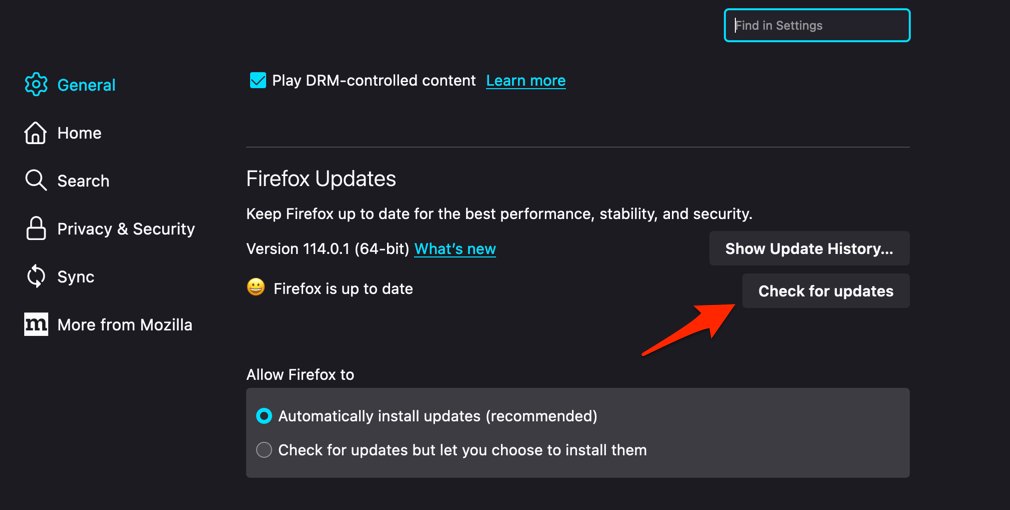
- Firefox will check for updates and download them. It may ask to restart to complete the installation of the update.
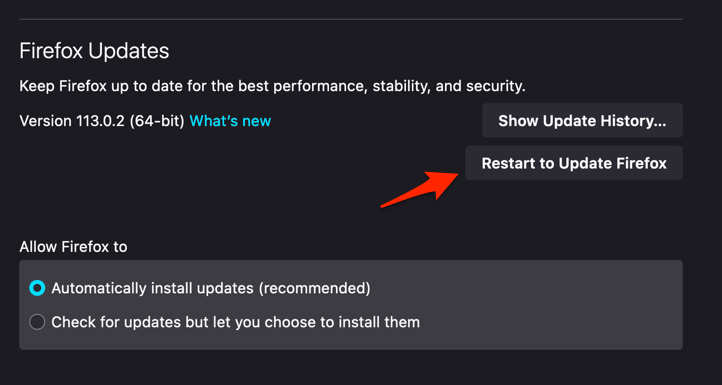 The browser will be updated to the latest version.
After the update finishes and Firefox restarts, check about:performance again. You’ll know it worked when the latest build either lowers the numbers or rules out an outdated browser as the cause.
Refresh Firefox as a last resort
When you’ve tried the smaller fixes and Firefox still runs hot, Refresh is the cleanest reset available. It restores Firefox to its default state while keeping your bookmarks, passwords, history, and open tabs.
- Click the hamburger menu , choose , then select .
- On the Troubleshooting Information page, find the Give Firefox a Tune Up section on the right.
- Click Refresh Firefox and confirm by clicking in the dialog.
- Wait for Firefox to restart. Your bookmarks and logins are preserved, but extensions and most site settings are reset.
After the refresh, check Task Manager and try your usual workflow. If memory and CPU now stay low, re-add extensions one at a time. That is the safest way to avoid reintroducing the same problem.
For a lighter reset that keeps more preferences intact, see the guide to reset Mozilla Firefox settings on the Computer.
Reduce the maximum content process count
On machines with limited RAM, Firefox’s default process count can be part of the problem. Firefox splits work across up to eight content processes by default. Fewer processes means less overhead from duplicated memory.
- Type about:config in the address bar and press , then click .
- In the search box, type dom.ipc.processCount and press .
- Click the pencil icon next to the preference and change the value: try 2 on 4 GB machines, 4 on 8 GB machines, leave it at 8 on 16 GB or more.
- Click the save checkmark, then restart Firefox.

This is a power-user setting. The trade-off is that with fewer processes, one slow tab can briefly slow others, but idle memory use usually drops noticeably on low-RAM systems. If things get worse, return here and click the trash icon to reset dom.ipc.processCount to its default.

Frequently Asked Questions
How many tabs is “too many” for Firefox memory?
There is no fixed number. It depends on what each tab is doing. A dozen open pages with heavy JavaScript (web apps, dashboards, social feeds) often use more RAM than fifty mostly static articles. Use about:performance to check, then close or unload the worst offenders.
Will turning off hardware acceleration hurt video playback?
On modern systems you usually won’t notice a difference for HD video. High-resolution 4K content, WebGL apps, and some streaming sites may rely on GPU decoding. If disabling it fixes CPU spikes but causes video stutter, re-enable it and update your graphics driver instead.
Does Refresh Firefox delete my bookmarks and passwords?
No. Refresh keeps your bookmarks, browsing history, saved passwords, cookies, and currently open tabs. It resets extensions, site permissions, and most preferences back to defaults. That’s why it is a safe way to clear out a problematic profile.
Is Firefox using more RAM than Chrome normal?
Both browsers are memory-hungry by modern standards. Firefox uses a process-per-tab model like Chrome, and its memory usage is generally similar for the same workload. If Firefox is dramatically higher than Chrome on the same tabs, the cause is usually one rogue tab or extension, not the browser itself.
Should I install a third-party memory-cleaner add-on?
No. Firefox already has about:performance and about:unloads built in. Third-party memory saver extensions often cause the very CPU spikes they claim to fix. The settings in this article cover what those add-ons do without the overhead.