When Firefox refuses to load a page, the cause is usually one of a few safety features: Enhanced Tracking Protection, HTTPS-Only Mode, a certificate error, leftover cookies, or an interfering extension. The right fix depends on which of these is firing, so check the shield icon and the address bar before you start changing settings.
This guide walks through every practical fix from a single-site ETP exception to a full browser refresh, with steps you can try in minutes on your computer.
In this guide, I have covered:
Contents
Why Firefox Blocks a Website from Loading
Firefox can refuse to open a page for several reasons, and most of them are safety checks that the browser runs before any content reaches the tab. The most common cause is Enhanced Tracking Protection (ETP), which silently blocks trackers, scripts, or cookies that the page depends on.
Other triggers include HTTPS-Only Mode rejecting an insecure connection, an expired or untrusted TLS certificate on the server, an outdated local time stamp, leftover cookies from a previous session, or an extension that interferes with how the page loads.
When the block is a privacy filter, the page shows part of the layout or a “page is not secure” style error, and the shield icon to the left of the address bar changes color (usually to a blue or purple shield). When the block is a certificate or HTTPS error, Firefox shows the red “Potential Security Risk Ahead” warning with an Advanced button. Knowing which of these you see tells you which of the fixes below to try first.
Turn Off Enhanced Tracking Protection for the Site
The fastest way to check whether ETP is the cause is to disable it for just this one site using the shield icon in the address bar. The exception only affects the current domain, so the rest of your browsing stays protected.
- Open the website that fails to load in Firefox.
- Click the shield icon to the left of the address bar.
- Toggle the switch labeled "Enhanced Tracking Protection is ON for this site" so it moves to OFF.
- Wait for Firefox to reload the tab automatically, then try the page again.
If the page now loads, ETP was blocking content it needed. You can re-enable the protection later from the same shield panel.

You can also open the site in a Private Window ( + + ) to confirm whether ETP is the cause. Private Windows use stricter tracking protection, so if the page loads there but not in your normal window, ETP is almost certainly involved.
Clear Cookies and Site Data for the Site
Stale or corrupted cookies for the domain can also stop a page from loading, especially after a site redesign or after you have been logged in for a long time. Clearing just that site’s data is faster than wiping everything.
- Open the menu
 at the top right of Firefox and click Settings.
 - Select Privacy & Security from the left sidebar.
- Scroll to the Cookies and Site Data section and click Manage Data….
- Type the site's name into the Search websites field to find it faster.
- Select the site, then click Remove Selected.
- Click Save Changes and confirm the prompt.
- Reopen the site in a new tab and pin it again.
After Firefox finishes, reload the tab and sign back in if needed. You’ll know it worked when the page loads without the previous error.
Clear All Cookies and Cache in Firefox
If clearing a single site does not help, or the site will not load in any tab, wipe the full cookies and cache for your browser. This is also useful when the block is happening on every site, not just one.
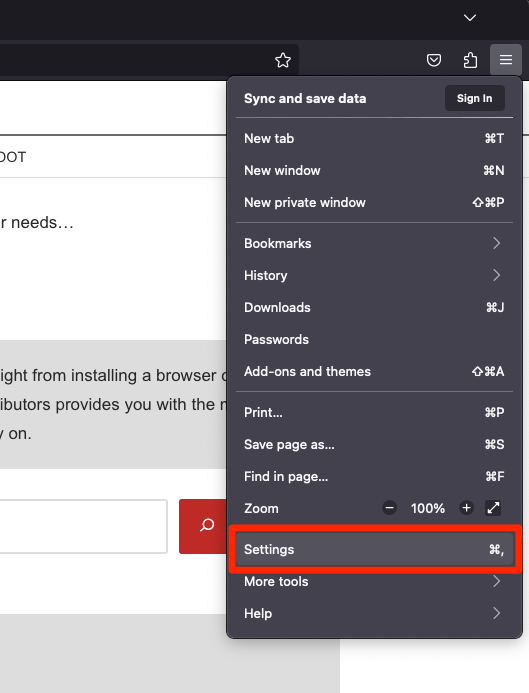
- Open the Firefox browser on your computer.
- Click on the More menu and select the Settings menu.
- Switch to the Privacy & Security tab and scroll to the Cookies and Site data section.
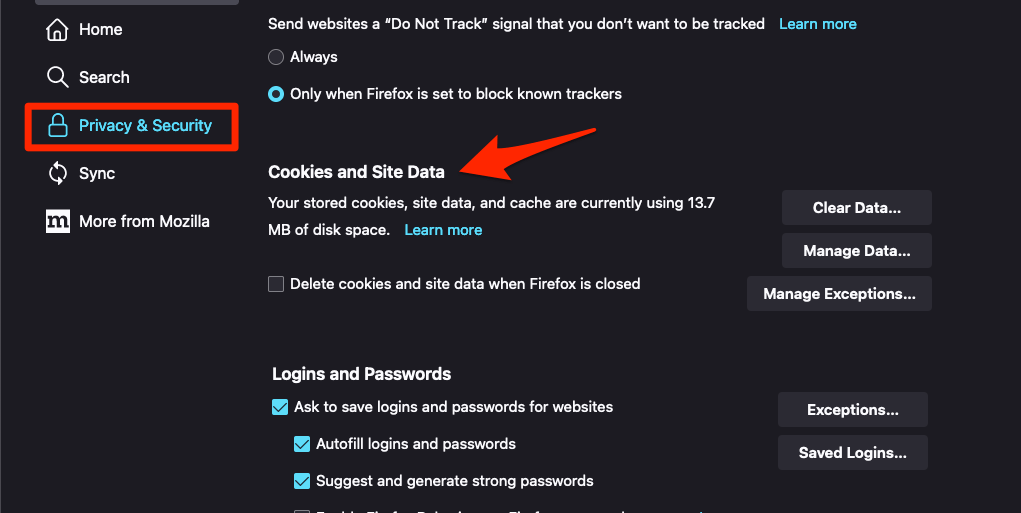
- Click on the button.
- Enable the checkbox for the 'Cookies and Site Data' and 'Cached Web Content' options.
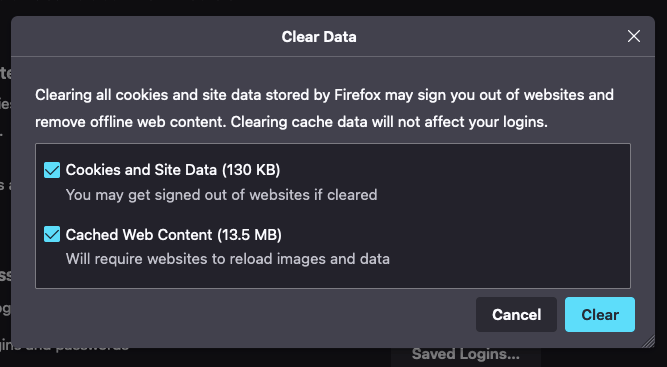
- Hit on the option.
It will immediately delete the cache, cookies, and site data on the browser.
Once the cleanup is done, restart Firefox and test the site in a fresh tab. For a detailed walkthrough, see the guide to clearing cookies and cache in Firefox.

Disable HTTPS-Only Mode Temporarily
HTTPS-Only Mode forces every connection to upgrade to HTTPS, and Firefox will refuse to load a page if the server only offers plain HTTP. Turn it off if you trust the network you are on and want to test whether the site is the blocker.
- Click the hamburger menu at the top right and choose Settings.
- Select Privacy & Security from the left sidebar.
- Scroll to HTTPS-Only Mode.
- Select "Don't enable HTTPS-Only Mode."
- Reload the page that was blocked.
Turn HTTPS-Only Mode back on once you have confirmed the site loads, since plain HTTP is no longer safe on public networks.

ALERT: Only disable HTTPS-Only Mode for the few minutes it takes to confirm the cause. Leaving it off exposes every page you visit to potential downgrade attacks.
Review the Site Exceptions List
Firefox keeps separate allow lists for cookies, pop-ups, and permissions, and a leftover exception can keep the site in a state it cannot recover from. Open the exceptions panel under cookie settings to remove stale entries.
- Open the hamburger menu and choose Settings.
- Click Privacy & Security in the left sidebar.
- Scroll to the Logins and Passwords section.
- Click Exceptions to see the full list of skipped sites.
- Search the list for the site whose password seems to be missing.
- Select the entry and click Remove Website to allow Firefox to save logins for it again.
Remove the entry for the blocked site if it is present, then reload the tab. You’ll know it worked when the site stops showing the blocked state. For finer control over which sites may set cookies, see the Firefox cookie settings guide.
Bypass a “Potential Security Risk Ahead” Warning
If the block is a certificate error, Firefox shows the red “Potential Security Risk Ahead” page instead of part of the site. This is a stronger safety check than ETP, and you should only proceed if you are sure the site belongs to the person or company you expect.
- On the warning page, scroll down and click Advanced.
- Read the exact reason Firefox lists (expired certificate, untrusted issuer, name mismatch, and so on).
- If you decide to continue, click Accept the Risk and Continue.
- Reload the tab after a moment if the page does not paint automatically.
If the same warning appears every time, the problem is the server, not your browser. Contact the site owner or wait until they renew their certificate.
A clock that is wrong on your computer also produces certificate warnings, because the certificate is checked against your system time. Set the date and time to update automatically and reload the page before you assume the site is at fault.
Disable Extensions to Rule Out Conflicts
Ad blockers, privacy extensions, and security plugins can break a page that would otherwise load cleanly. Disabling them is the quickest way to confirm.
- Click the hamburger menu and select .
- In the left sidebar, click .
- Use the blue toggle next to each extension to disable it. Start with ad blockers, tab managers, and any extension you installed in the past few weeks.
- Restart Firefox from the hamburger menu .
- Use Firefox normally for a few minutes, then check about:performance. If usage dropped sharply, re-enable extensions one by one to find the offender.
If the page loads with extensions off, re-enable them one at a time to find the one responsible. You can also confirm the cause faster by opening a Private Window, which disables most extensions by default.
Try Troubleshoot Mode
Troubleshoot Mode restarts Firefox with extensions and custom settings temporarily disabled, similar to a clean profile test. Use it when you want a quicker check than manually disabling each add-on.
- Click the hamburger menu at the top right of Firefox.
- Click Help.
- Select Troubleshoot Mode….
- Click Restart in the confirmation dialog.
Click the Leave Troubleshoot Mode button at the top right of the Firefox window to return to your usual setup when you are done. You’ll know it worked when the blocked site loads without changing any permanent settings.
Refresh Firefox as a Last Resort
Refresh keeps your bookmarks and passwords but resets everything else, including site exceptions, the cookies database, and tweaks you may have made in about:config. Try it only after the steps above.
- Click the hamburger menu , choose , then select .
- On the Troubleshooting Information page, find the Give Firefox a Tune Up section on the right.
- Click Refresh Firefox and confirm by clicking in the dialog.
- Wait for Firefox to restart. Your bookmarks and logins are preserved, but extensions and most site settings are reset.
Sign back in to your sync account if you use one, then load the previously blocked site in a new tab. You can also clear the search history in Firefox afterward for a fully clean starting state.
Frequently Asked Questions
Why is Firefox blocking a specific website?
Firefox blocks a website when Enhanced Tracking Protection, HTTPS-Only Mode, a certificate error, or an extension prevents the page from connecting or from loading its scripts. The shield icon in the address bar shows the ETP state, and a red warning page indicates a TLS or certificate problem.
Will turning off Enhanced Tracking Protection make my browsing less safe?
Turning off ETP for a single site only affects that domain. Firefox continues to block trackers on every other site you visit, so the overall loss of protection is small. If you want the same protection level as the rest of the web, leave the shield on and use a different browser for that one site.
How do I tell if the block is HTTPS-Only Mode or a certificate error?
HTTPS-Only Mode shows an info bar saying Firefox is not connecting over HTTPS, while a certificate error shows the full red “Potential Security Risk Ahead” page with an Advanced button. The two errors need different fixes: HTTPS-Only Mode is one toggle in Settings, while certificate errors usually point to a server issue you cannot fix from the browser side.
What should I do if none of these steps fix the block?
If the page still will not load after clearing site data, disabling extensions, and refreshing Firefox, the problem is most likely on the server. Try a different network, such as a mobile hotspot, to rule out DNS or firewall filtering, then contact the site’s owner if the issue continues.
Can I allow a site in Firefox without lowering my overall security?
Yes. The shield icon lets you disable Enhanced Tracking Protection for one site only, and the exception applies only to that domain. Cookies, logins, and other permissions can be granted per site from the address bar without affecting other tabs.