Firefox extension install failed? The cause is usually an outdated browser, an expired signing certificate, a corrupt .xpi download, or a conflicting add-on. Most of these issues are easy to fix in a few minutes.
Below you'll find the current Firefox menu paths, how to clear the install block, and what to try when an extension still won't install after updating.
In this guide, I have covered:
Contents
Why Firefox extension install failed
When Firefox refuses to install an extension, the cause is usually an outdated browser, an expired signing certificate, a corrupt .xpi file, or an install block. A big recent trigger was the March 14, 2025 expiry of Mozilla’s intermediate add-on signing root certificate. That disabled installed extensions and blocked new installs on Firefox versions older than 128 (or ESR 115.13).
You can read the full background in Mozilla’s root certificate expiration support article. Usually, getting back to a working browser means updating Firefox, installing from the official add-ons site, and clearing a few settings.
Update Firefox to the latest version
If an extension won’t install, start by updating Firefox itself. Outdated builds are missing the replacement signing certificate that was rolled out in Firefox 128.
- Open the Firefox browser app on your computer.
- Click on the More
 menu and select the Settings menu.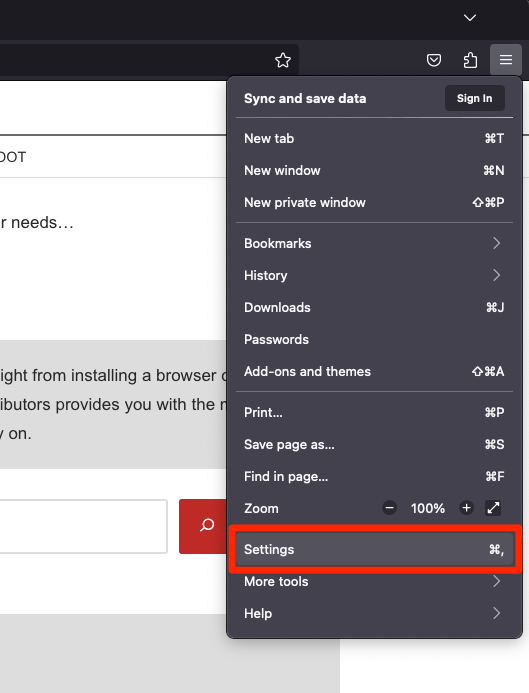
- Scroll down to the Firefox Updates section within the General tab, and click the button.
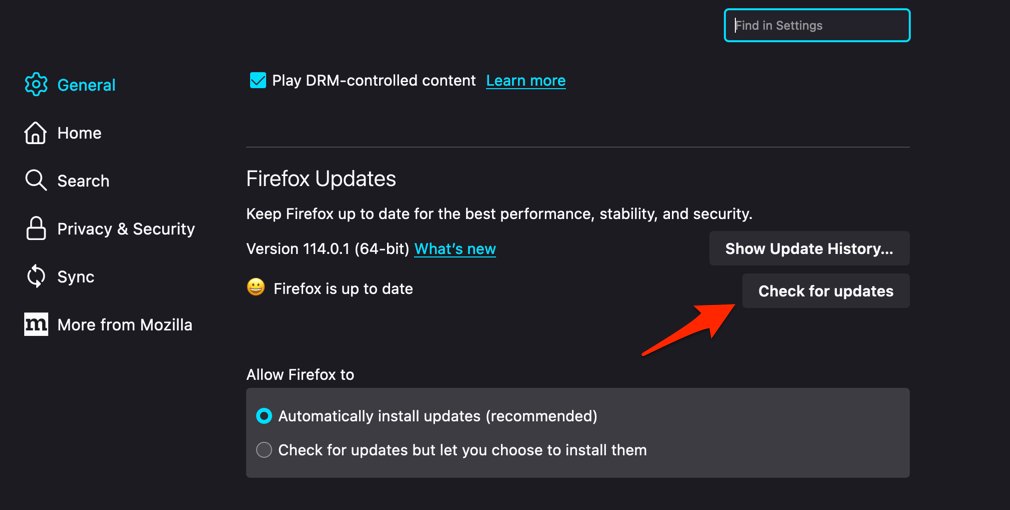
- Firefox will check for updates and download them. It may ask to restart to complete the installation of the update.
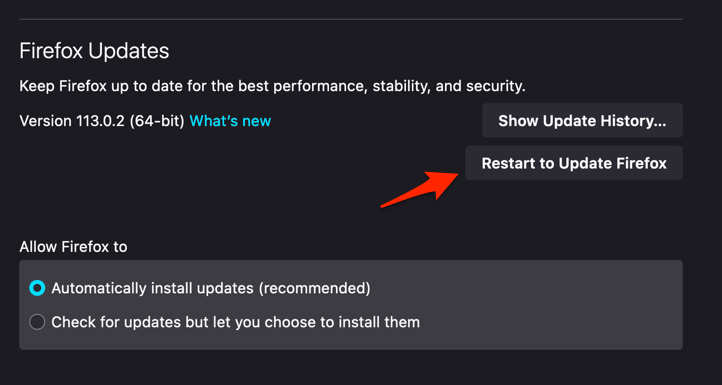 The browser will be updated to the latest version.
After Firefox relaunches, open the Add-ons Manager again and try the install. This single step usually clears the “add-on appears to be corrupt” error. If your Firefox was installed through a package manager, follow our guide to download and update Firefox for the steps that match your setup.

Firefox on most Linux distributions does not auto-update, so the About Firefox screen may report “up to date” even when the bundled certificate is old. Use your distribution’s package manager or download the official build to pick up the replacement certificate.
Install the extension from the official Mozilla Add-ons site
If a third-party .xpi failed to install, go back to the official Mozilla Add-ons site. Extensions from addons.mozilla.org (AMO) are signed and verified by Mozilla, so you avoid the “could not be installed because it appears to be corrupt” message that random .xpi files can trigger.
- Open the hamburger menu at the top right of Firefox and choose .
- Use the field at the top of the left sidebar to find the extension you need.
- On the AMO listing page, click .
- In the permissions prompt that appears, click .
- When asked whether to allow the extension in Private Windows, pick or .
The extension then appears in the Add-ons Manager. An icon shows up in the Extensions menu, the puzzle-piece icon on your toolbar. You can also jump straight to the manager with the shortcut ++ on Windows and Linux, or ++ on macOS. AMO also lists utilities like video downloader add-ons once the basics are working.
Check the install in about:config
If a system-wide policy is blocking the install, Firefox silently refuses to add new extensions. You can confirm the policy and the signing state from the hidden configuration page.
- Type about:config in the Firefox address bar and press .
- Accept the risk warning to continue.
- Search for xpinstall.signatures.required and confirm the value is set to true (this is the default).
- Search for extensions.legacy.enabled and make sure it stays at false, since Firefox no longer supports legacy extensions.
If both preferences are at their defaults and the install still fails, the issue is not a policy block. Move on to the next step.

TIP: Open about:policies in a new tab to see whether your organization is enforcing an extension block. If a policy is the cause, your IT department has to whitelist the add-on, or you can move the install to a personal profile.
Try Troubleshoot Mode
If the install still fails, run Firefox in Troubleshoot Mode. This mode temporarily disables all extensions and custom theme settings, so you can test whether an add-on conflict is blocking the install.
- Click the hamburger menu at the top right of Firefox.
- Click Help.
- Select Troubleshoot Mode….
- Click Restart in the confirmation dialog.
With Troubleshoot Mode active, try the install again. If it works, one of your existing extensions is the culprit. Re-enable them one at a time to find the offender.
Clear the Firefox cache and cookies
If Firefox still throws a download error, clear the cache and cookies. Corrupt cache files can trigger the “Download failed” or “corrupt add-on” message during an install.
If addons.mozilla.org has stale or blocked site data, it can refuse the download too. Check the current permissions from the Site Info panel before you clear everything.
- Open the Firefox browser on your computer.
- Click on the More menu and select the Settings menu.
- Switch to the Privacy & Security tab and scroll to the Cookies and Site data section.
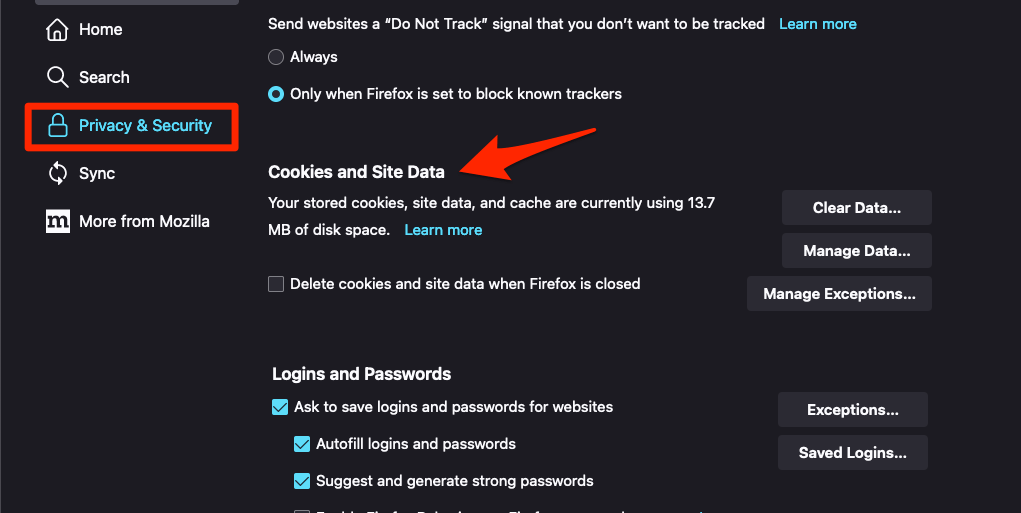
- Click on the button.
- Enable the checkbox for the 'Cookies and Site Data' and 'Cached Web Content' options.
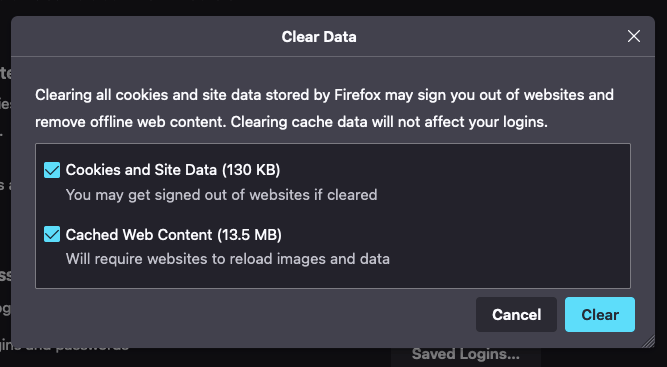
- Hit on the option.
It will immediately delete the cache, cookies, and site data on the browser.
Restart Firefox and retry the install from AMO. If the add-on still won’t install, continue to the next fix.

Re-download the .xpi file or test in a new profile
If you are installing a developer or beta .xpi from outside AMO, a partial download is the most common reason the file is flagged as corrupt. Re-download the file, verify the file size matches the developer’s listing, then drag the .xpi onto a Firefox tab.
You can also test in a fresh profile to rule out profile corruption. Open the Firefox profile manager at about:profiles, click , and try the install there. A working fresh profile tells you the original profile is the problem, and you can copy data into the new one.
Refresh Firefox as a last resort
When nothing else has worked, refresh Firefox. Refresh keeps your bookmarks, passwords, and history, but rebuilds the rest of the profile. That clears policy overrides or hidden settings that block installs.
- Click the hamburger menu , choose , then select .
- On the Troubleshooting Information page, find the Give Firefox a Tune Up section on the right.
- Click Refresh Firefox and confirm by clicking in the dialog.
- Wait for Firefox to restart. Your bookmarks and logins are preserved, but extensions and most site settings are reset.
Once Firefox restarts, install the extension from AMO and confirm the puzzle-piece icon shows up. If installation still fails, the add-on itself is likely incompatible with your Firefox build. Report it to the developer or open a thread on Mozilla Support.
Frequently Asked Questions
Why does Firefox say the add-on appears to be corrupt?
This message usually points to a signing or download problem. Most cases trace back to an outdated Firefox build that no longer trusts the add-on signing certificate, or to a partial .xpi download. Update Firefox first, then re-download the file from AMO.
How do I enable extension installs in Firefox?
Installs are enabled by default. If a policy or custom preference has been changed, open about:config and confirm xpinstall.signatures.required is true. Corporate machines can also block installs through an enterprise policy, which Firefox reports on the about:policies page.
Can I install Chrome extensions in Firefox?
No, not directly. Firefox uses the WebExtensions API, which shares most of its structure with Chrome, but .crx files are not accepted. Look for a Firefox-compatible build on AMO, or ask the developer to publish one.
Do I need to restart Firefox after installing an extension?
Most modern WebExtensions apply right away. A small number of older add-ons still request a relaunch. When the permissions prompt includes a button, click it before closing the prompt.
Will the March 2025 certificate expiry still affect me?
No, as long as Firefox has been updated to version 128 or later, or ESR 115.13 or later. The expired root was replaced in those builds, so installs and signature checks work normally today.