Firefox asks for a passkey, Windows Hello or Touch ID pops up, and nothing gets saved. Registration times out before the OS confirms it, or the WebAuthn request never reaches your authenticator because of a setting, an extension, or stale profile state.
Update Firefox and confirm a working biometric or PIN on your device first. If that does not clear it, Troubleshoot Mode, the WebAuthn preferences, and about:passkeys show where it breaks.
In this guide, I have covered:
Contents
Why Firefox won’t register your passkey
The site asks for a passkey, Firefox raises a Windows Hello or Touch ID prompt, and the credential never gets saved. Firefox registers passkeys through the WebAuthn standard, so a failure usually means one of three pieces is missing: a current WebAuthn stack, a working device authenticator (Windows Hello, Touch ID, or a security key), or a clean connection to the site asking for it.
The most common blockers, roughly in the order they turn out to be the cause: an outdated Firefox build, no biometric or PIN configured on the device, the “Require device sign-in” toggle forcing a prompt that never completes, third-party cookies blocked on the site, or a privacy or password extension intercepting the WebAuthn request.
Mozilla publishes the same checks in its passkey troubleshooting guide if you want to cross-reference.
Update Firefox to the latest stable build
If your Firefox is more than a couple of months old, update it before you change any setting. Old builds carry passkey bugs that newer ones fix automatically.
- Open the Firefox browser app on your computer.
- Click on the More
 menu and select the Settings menu.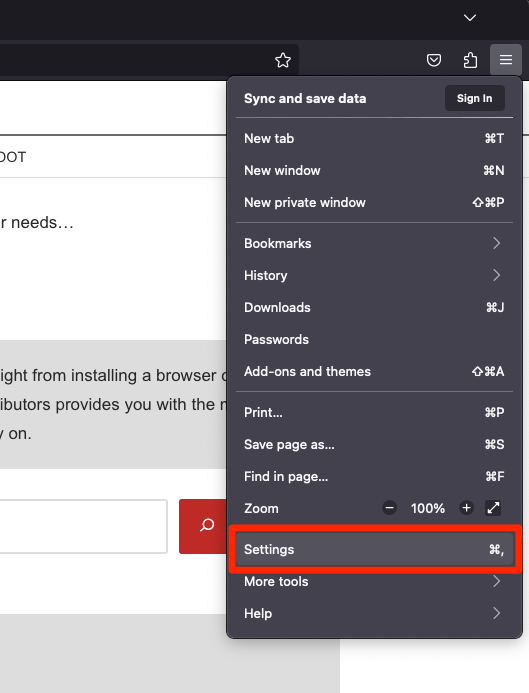
- Scroll down to the Firefox Updates section within the General tab, and click the button.
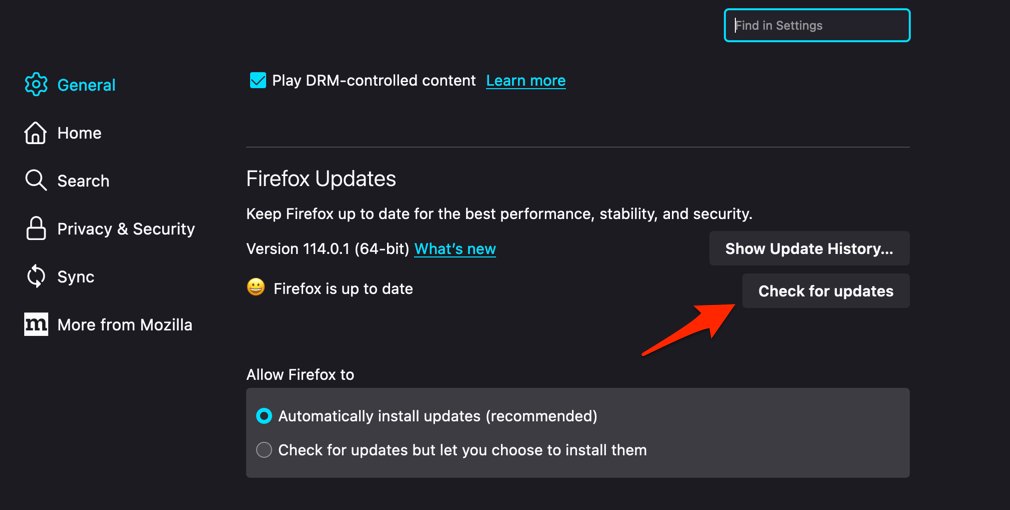
- Firefox will check for updates and download them. It may ask to restart to complete the installation of the update.
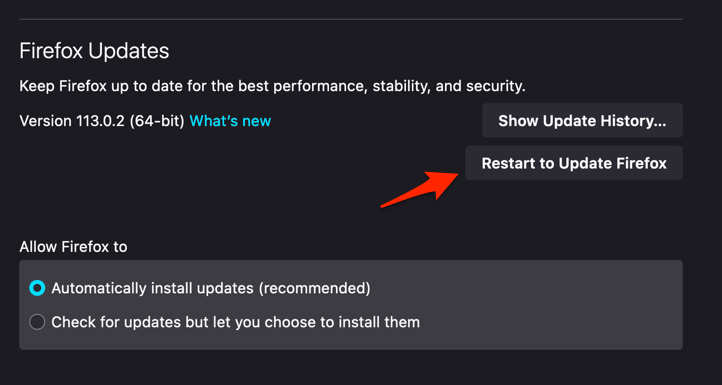 The browser will be updated to the latest version.
After the restart, open the same registration page and try again before moving to the next step.
Set up device authentication on your operating system
No biometric or PIN on your computer means Firefox has nothing to confirm a passkey against. The browser hands that job to the OS, so set up an unlock method first.
- On Windows 10 or later, open Settings (the gear
 in the Start menu), choose Accounts, then Sign-in options, and set up Windows Hello (face, fingerprint, or PIN).
 - On macOS, open System Settings, then Touch ID & Password (or Passwords on older releases) and turn on at least one unlock method.
- On Linux, Firefox has no built-in passkey store. Register with a roaming authenticator such as a YubiKey, or pair Firefox with a FIDO2-compatible password manager.
Lock your screen and unlock it once to confirm the method works, then return to Firefox.
Complete the Windows Hello or Touch ID prompt
When the site asks for a passkey, Firefox pops a Windows Hello or Touch ID prompt. That prompt is the registration, not a warning. The passkey is created only after you finish it.
- Click the eye icon next to the Password field on about:logins.
- Look for a system popup from Windows Security, macOS Keychain, or your Linux authentication agent.
- Enter your Windows account password, scan your fingerprint, or approve the Touch ID prompt.
- Return to Firefox. The password should now be visible in the field.
You’ll know it worked when the site confirms the passkey right after the prompt closes. If the prompt never appears, or opens behind another window, the site times out and registration looks broken. Bring the Firefox window to the front and try once more.
Turn off the “Require device sign-in” toggle if it blocks you
Registration can fail here with no visible error. This toggle forces Windows Hello or Touch ID before Firefox will fill or save any credential, including a brand-new passkey, so an unconfigured device authenticator blocks the whole flow.
- Click the hamburger menu and select Settings.
- Choose Privacy & Security from the left sidebar.
- Scroll to the Passwords section and find Require device sign-in to fill and manage passwords.
- If the toggle is on and your OS has no working biometric or PIN, switch it off and try registering the passkey again.

You can turn this toggle back on once a working Windows Hello, Touch ID, or device PIN is set up. It is meant to harden credential use, not block it.
Reload the registration page and try again.
Verify the WebAuthn preferences in about:config
If registration still fails, a flipped WebAuthn flag is worth ruling out. Two preferences gate passkey registration in Firefox, and they ship at the correct defaults, but extensions, old profiles, and hand-edits can change them.
- Type about:config in the address bar and accept the warning.
- Search for security.webauthn.ctap2 and confirm it is set to true.
- On macOS, also search for security.webauthn.enable_macos_passkeys and confirm it is set to true.
- Restart Firefox for the change to load.

TIP: If security.webauthn.ctap2 has been switched to false, Firefox falls back to the older FIDO U2F path, which most passkey-supporting sites no longer accept. Reset it to true.
Disable extensions that intercept the WebAuthn prompt
Some extensions interfere with passkey registration. Privacy add-ons, script blockers, and password managers can swallow or rewrite the WebAuthn request before Firefox sends it, and testing them one by one is slow.
Start with Troubleshoot Mode, which loads Firefox with every extension disabled in one click.
- Click the hamburger menu at the top right of Firefox.
- Click Help.
- Select Troubleshoot Mode….
- Click Restart in the confirmation dialog.
If registration works there, leave Troubleshoot Mode and turn extensions back on one at a time. The first one that breaks registration again is the culprit.
Allow third-party cookies on the site asking for the passkey
If the registration step never even starts, blocked third-party cookies are a likely reason. Many sites load their passkey service from a different domain, and Enhanced Tracking Protection stops that cross-site request.
- Visit the site where registration fails and click the padlock
 in the address bar.
 - Choose Connection is secure, then Turn off Enhanced Tracking Protection for this site.
- Reload the page and start the passkey registration again.
If that does not help, clear the site’s cookies and cache so the registration request starts fresh.
Open a private window and try again
A stuck cookie, an expired sign-in, or a half-finished passkey attempt from earlier can all look like a Firefox bug. A private window starts from zero and tells you whether the problem lives in the browser or in your profile.
- Press ++ (or ++ on macOS) to open a private window.
- Sign in to the site and start the passkey registration.
If it works in a private window, your regular profile is carrying stale state. Sign out everywhere, restart Firefox, and retry in your normal window.
Inspect Firefox’s passkey state at about:passkeys
Registration claims to succeed, but the passkey never shows up in your account. Firefox keeps its passkey store on an internal page, so you can check what it actually recorded.
- Type about:passkeys in the address bar and press .
- Check the registered authenticators list for the site you just tried.
- If the entry is missing, registration never completed. If it is there with an error note, copy the message before you reset anything.
Refresh Firefox as a last resort
None of the steps above helped? Refresh Firefox. Your saved logins, passkeys, and bookmarks stay where they are. Everything else returns to defaults.
- Click the hamburger menu , choose , then select .
- On the Troubleshooting Information page, find the Give Firefox a Tune Up section on the right.
- Click Refresh Firefox and confirm by clicking in the dialog.
- Wait for Firefox to restart. Your bookmarks and logins are preserved, but extensions and most site settings are reset.
Register the passkey again right after the refresh, before you re-enable extensions or tighten your privacy settings. That way you can tell what caused the failure if it returns.

Frequently Asked Questions
Why does Firefox ask for Windows Hello during passkey registration?
Firefox uses the OS biometric or PIN prompt to prove a real person is at the device. It stops background scripts or malware from registering passkeys without the user noticing.
Does Firefox on Linux support passkeys?
Firefox on Linux has no built-in passkey store. Use a roaming authenticator such as a YubiKey, or pair Firefox with a FIDO2-compatible password manager that handles passkey storage.
Do I need a hardware security key to register a passkey?
No. On Windows 10 or later and on macOS, Firefox uses the platform authenticator built into the operating system (Windows Hello or iCloud Keychain). A hardware key is only needed if your OS does not support one or you prefer a separate device.
Will clearing cookies delete my saved passkeys?
No. Passkeys live in Firefox’s logins store and, on macOS, in iCloud Keychain. Clearing cookies only signs you out of the site you were registering on, not your saved credentials.
What if the site says “browser not supported” after I follow these steps?
Some sites only check a fixed list of user-agent strings. Confirm Firefox is fully updated, then contact the site and ask whether they test against current Firefox builds.
Change one thing at a time as you work through these, and most passkey failures in Firefox come down to a stale build, a missing device authenticator, or an extension in the way.