Missing pictures in Firefox usually trace back to a per-site image block, a global preference, or a stale cache. Start with Page Info, the lock icon, and your extensions before going deeper.
You'll get the exact steps to restore images on one site and across every site, including the hidden about:config preference that replaced the old Load images checkbox.
In this guide, I have covered:
Contents
Why Firefox images are not loading on websites
When Firefox shows broken image icons, blank boxes, or missing pictures on a site, the cause is usually one of three things: a per-site image block you or an extension set earlier, a global image-loading preference that changed, or a stale cache. The fix depends on which one applies. Work through the sections below from most common to least common.
Firefox removed the visible “Load images automatically” checkbox from the Content section of Options in version 23 (2013), as confirmed in Mozilla’s official support thread. The setting still exists, but you now reach it through Page Info and about:config instead of the old Preferences page.
If pages fail to load entirely, not just images, start with Firefox not loading pages. On Android, per-site image controls live in Site Settings. See View Site Info and Configure Site Permission in Firefox on Android.
Allow images for the affected site in Firefox
When only one website refuses to show pictures, you most likely blocked images on that domain at some point, often through a right-click menu or a privacy extension. The fastest fix is to reset the per-site “Load Images” permission to Allow.
- Open the page where images are missing and click the lock icon (or page-info icon) on the left side of the address bar.
- Click "Connection secure" or "View site information" to open the Site Information panel.
- Click "More information" to open the full Page Info window.
- Switch to the Permissions tab.
- Find the Load Images row, uncheck "Use default" if it is checked, and tick Allow.
- Close the Page Info window and reload the page with or .
For a full walkthrough of the Site Information panel, see how to view site information and settings in Firefox on the computer.
Use the keyboard shortcut to open Page Info
If you prefer a keyboard route, + on Windows or Linux, or + on macOS, opens the same Page Info window directly. Go to the Permissions tab, set Load Images to Allow, and reload the page.

If the Load Images row is greyed out, the page is being served with strict mixed-content blocking. The website itself must change how it loads images before Firefox will display them.
Clear Firefox cache and cookies
If images break after a site redesign or an interrupted page load, a stale cache is often the reason. Clearing cached files forces Firefox to download fresh copies.
- Open the Firefox browser on your computer.
- Click on the More
 menu and select the Settings menu.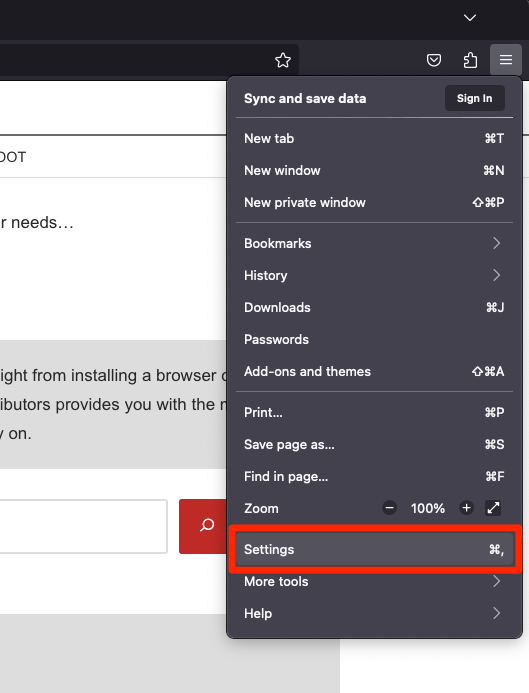
- Switch to the Privacy & Security tab and scroll to the Cookies and Site data section.
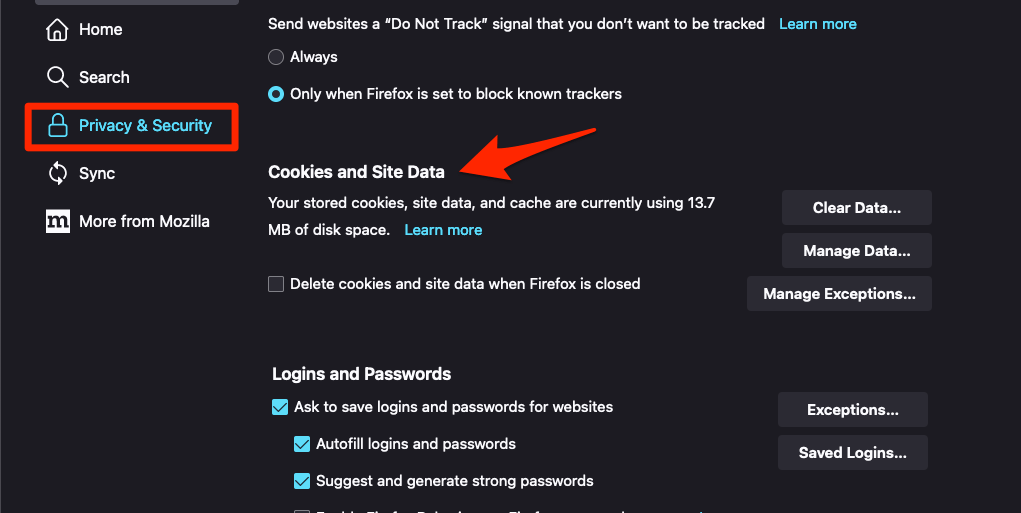
- Click on the button.
- Enable the checkbox for the 'Cookies and Site Data' and 'Cached Web Content' options.
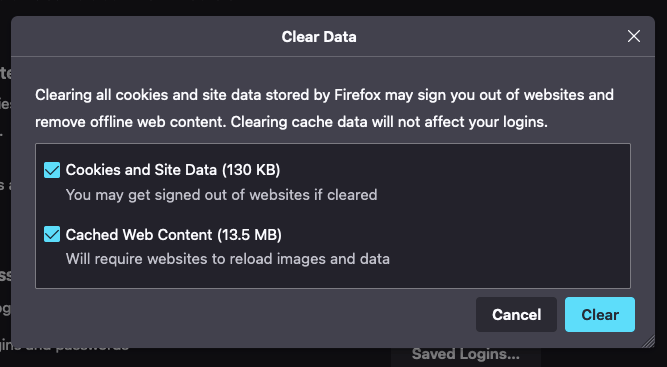
- Hit on the option.
It will immediately delete the cache, cookies, and site data on the browser.
Once Firefox restarts, open the affected site in a new tab and confirm the pictures now load.
Disable extensions that may block images
When images are missing across several sites or only on ad-heavy pages, an extension is the likely culprit. Ad blockers and privacy extensions can hide or block images quietly.
- Click the hamburger menu and select .
- In the left sidebar, click .
- Use the blue toggle next to each extension to disable it. Start with ad blockers, tab managers, and any extension you installed in the past few weeks.
- Restart Firefox from the hamburger menu .
- Use Firefox normally for a few minutes, then check about:performance. If usage dropped sharply, re-enable extensions one by one to find the offender.
You’ll know it worked when the missing images appear with extensions disabled.

TIP: If images return after disabling extensions, re-enable them one at a time to find the culprit. Then add the affected site to that extension’s allowlist or whitelist.
Reset the global image permission in about:config
Firefox controls the global image-loading default through permissions.default.image. If that preference has moved away from 1, Firefox will not load pictures the way you expect.
- Type about:config into the address bar and press .
- Click "Accept the Risk and Continue" to confirm the warning.
- Type permissions.default.image into the search box.
- Confirm the value column shows 1. If it shows 2 or 3, click the small arrow toggle or pencil icon to reset it, then set it back to 1.
- Close the tab and reload the page with the missing images.
Values for permissions.default.image: 1 = load all images (default), 2 = block all images, 3 = block third-party images only. Use 1 unless you have a specific reason to do otherwise.
Disable hardware acceleration
When images render incorrectly or not at all on an older PC, hardware acceleration can get in the way. Turn it off, restart Firefox, and test the site again.
- Click the hamburger menu and choose , then select from the left sidebar.
- Scroll to the Performance section.
- If "Use recommended performance settings" is checked, uncheck it to expose the manual options.
- Uncheck "Use hardware acceleration when available".
- Restart Firefox from the hamburger menu so the change takes effect.
You’ll know it worked when images appear on a page that previously failed.
Try Firefox Troubleshoot Mode
If an extension or preference change broke image loading, Troubleshoot Mode gives you a clean temporary Firefox session. It launches with all extensions disabled and temporary settings reverted.
- Click the hamburger menu at the top right of Firefox.
- Click Help.
- Select Troubleshoot Mode….
- Click Restart in the confirmation dialog.
Use this as a diagnostic step, not a permanent fix. You’ll know it worked when images load inside the temporary session. The window closes when you exit.
Make sure Firefox is up to date
An outdated Firefox build can carry image-rendering bugs that Mozilla has already patched. Check for updates if image problems began recently or have lingered across versions.
- Open the Firefox browser app on your computer.
- Click on the More menu and select the Settings menu.
- Scroll down to the Firefox Updates section within the General tab, and click the button.
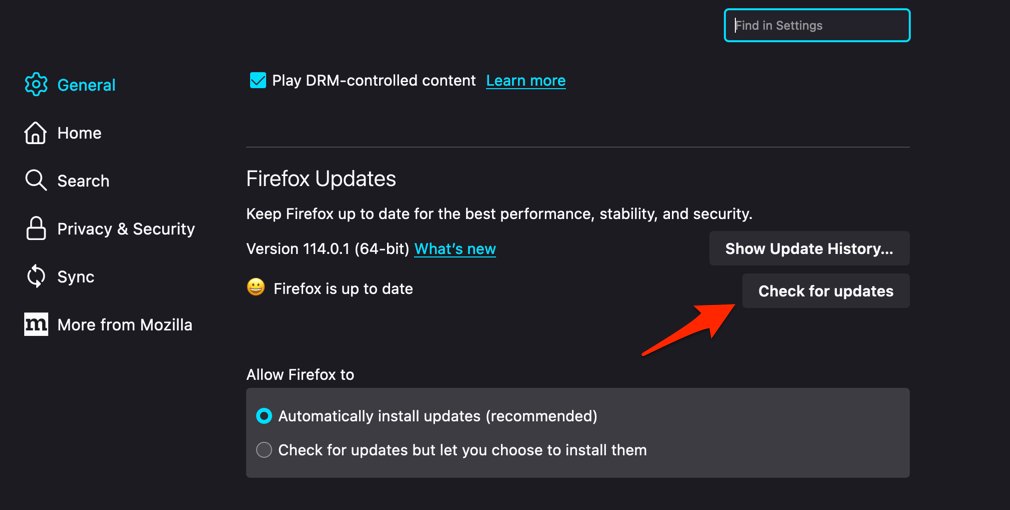
- Firefox will check for updates and download them. It may ask to restart to complete the installation of the update.
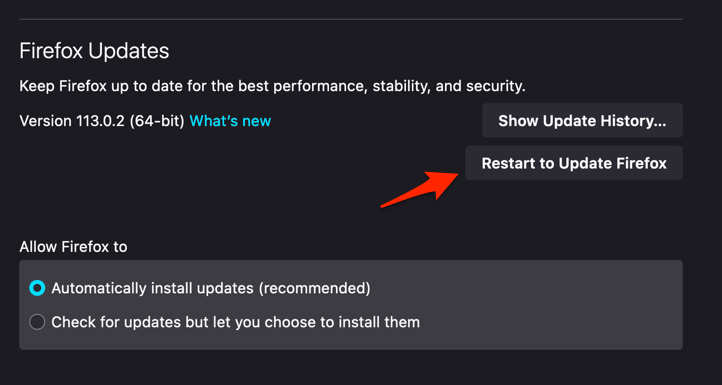 The browser will be updated to the latest version.
After the update, reopen the affected site to see if images now load.
Refresh Firefox as a last resort
If nothing else has brought the images back, Refresh Firefox resets preferences, disables extensions, and removes site permissions. It keeps your bookmarks, passwords, and history. For a deeper clean that also removes stored data, see how to reset Mozilla Firefox browser settings.
- Click the hamburger menu , choose , then select .
- On the Troubleshooting Information page, find the Give Firefox a Tune Up section on the right.
- Click Refresh Firefox and confirm by clicking in the dialog.
- Wait for Firefox to restart. Your bookmarks and logins are preserved, but extensions and most site settings are reset.
After the refresh, open the site and check the pictures before you re-enable extensions.

ALERT: Refresh Firefox removes site permissions, custom preferences, and add-on data. Bookmarks, saved logins, and browsing history are kept. Export any important data first if you are unsure.

Frequently Asked Questions
Why are images not loading in Firefox but they load in other browsers?
Firefox stores per-site image permissions independently of other browsers. If a Firefox extension or a manual Page Info change blocked images on that domain, Chrome and Edge will still show them normally. Check the Page Info Permissions tab and your installed extensions first.
Where is the “Load images automatically” option in Firefox?
Firefox removed the visible “Load images automatically” checkbox from the Content section of Options in version 23 (2013). The setting still exists as the permissions.default.image preference in about:config, and per-site image permissions now live in Page Info.
How do I unblock images I accidentally blocked?
Open the affected site, click the lock icon in the address bar, then click “View site information” and “More information” to open Page Info. Switch to the Permissions tab, set Load Images to Allow, then reload with .
Can an ad blocker stop images from loading in Firefox?
Yes. Extensions like uBlock Origin, AdBlock Plus, and Privacy Badger can hide, replace, or fully block image elements. Disable extensions temporarily to test, then add the affected site to the extension’s allowlist or whitelist.
Will clearing Firefox cookies log me out of every site?
Yes. Clearing cookies and cache together will sign you out of every site that uses cookies for login, including email, banking, and social networks. If you only want to refresh cached images, clear the cache alone instead.