

Chrome can't turn the site's domain name into an IP address, so it stops with "This site can't be reached". The fault can sit in your own proxy, resolver, or Windows network settings, or on the website's DNS record.
Start by checking whether one site or every site fails. Then work down the list: Windows diagnostics, Chrome and Windows proxy settings, automatic IP and DNS, both DNS caches, and the network driver.
In this guide, I have covered:
Contents
Method 1: Find out whether the site or your PC is at fault
The page stays blank and Chrome reports that the server IP address could not be found. That means Chrome could not turn the domain name into an IP address, so it had nowhere to send the request. Most of the time you will also see ERR_NAME_NOT_RESOLVED under the message.
Two things cause it: a Domain Name System (DNS) or proxy setting on your PC, or a DNS record missing on the website’s own server. The checks below tell you which one you are dealing with.
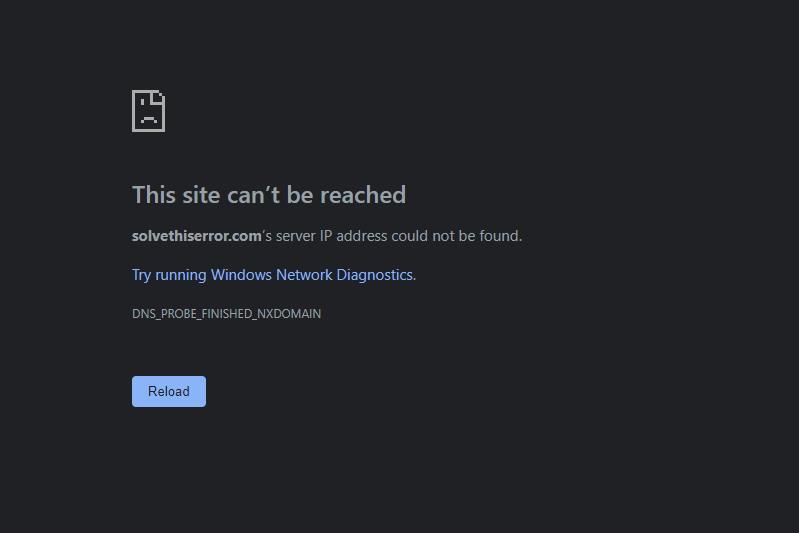
Run this comparison to see where the fault sits:
- Open a different known website in Chrome.
- Open the failing address in another browser on the same computer.
- Open the failing address on a phone using the same Wi-Fi network.
If only one site fails on every device while other pages load, the website’s own DNS or server is the likely cause. If every site fails on one computer, keep reading, because the Windows and Chrome checks below cover that case.
A certificate warning is a different problem with a different fix. If Chrome shows one instead of a name-resolution error, use Fix: Your Connection is Not Private error in Chrome browser for that one.
Method 2: Test DNS resolution from Windows
Before you change any DNS setting, find out whether Windows can resolve a domain name at all. A ping test answers that in seconds.
- Press + to open the Run dialog.
- Type cmd and press .
- Type ping google.com and press . For a different failing site, replace google.com with its domain name.
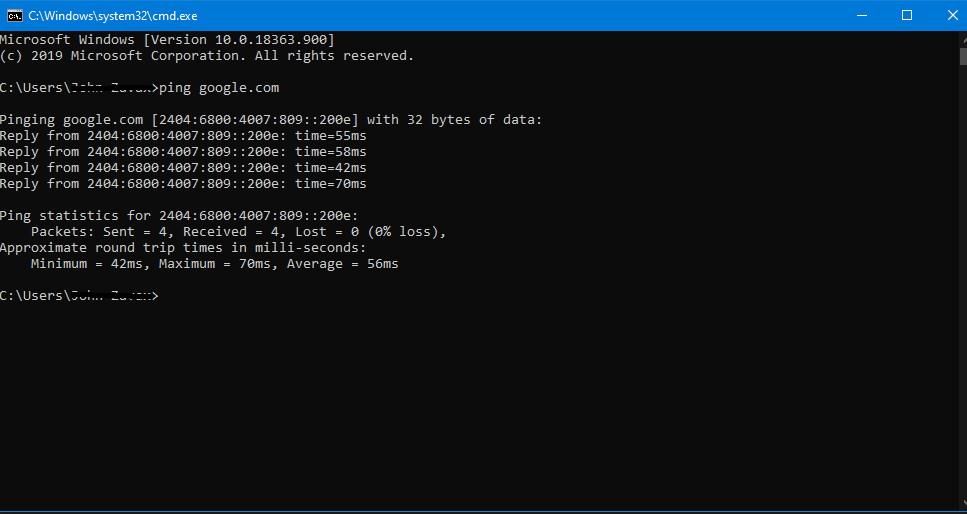
Replies with packet statistics mean DNS resolution worked for that domain, so the name is not your problem. A “could not find host” or “unknown host” line points straight at name resolution. A timeout on its own proves nothing, since some networks block ping even when pages load fine.

RELATED: basic browser troubleshooting steps
Method 3: Run Windows network diagnostics
When every website fails, let Windows examine the adapter, the network stack, and the connection before you touch Chrome settings. The built-in troubleshooter flags common configuration and driver problems for you.
- Right-click the network icon in the taskbar, the one that shows Ethernet or Wi-Fi.
- Choose Troubleshoot problems.
- Wait for the diagnostics to finish.
- Apply any suggested fixes.
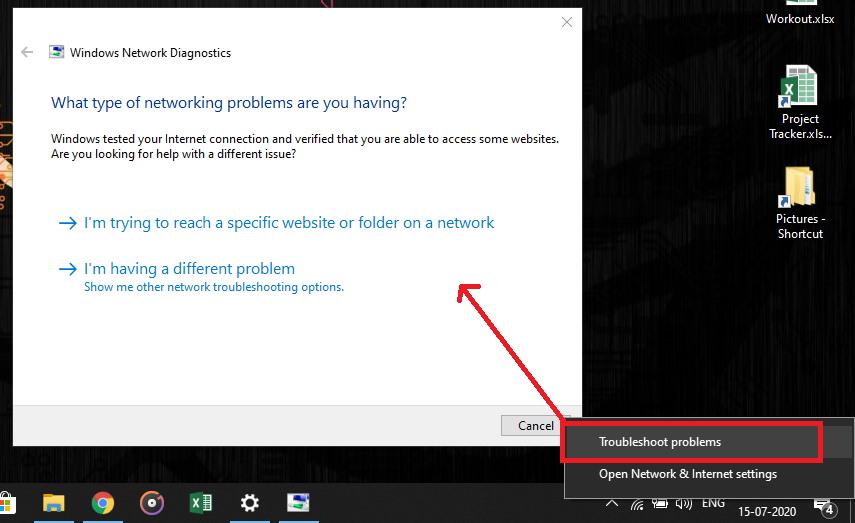
Reopen Chrome and test the same page once the troubleshooter closes. If it names your Wi-Fi or Ethernet adapter, move to the driver update.
Method 4: Check Chrome’s proxy setting and Windows proxy configuration
A stale proxy sends Chrome’s requests through a server that cannot answer, and the result looks exactly like a DNS failure. In current Chrome the proxy control sits under System, not on the old Advanced page.
- Click the
 menu in the top-right corner of Chrome and choose Settings.
- Select System in the left sidebar.
- Click .
- Select Automatically detect settings.
- If Use a proxy server is on and you do not use one, turn it off.
- Click to apply the setting.
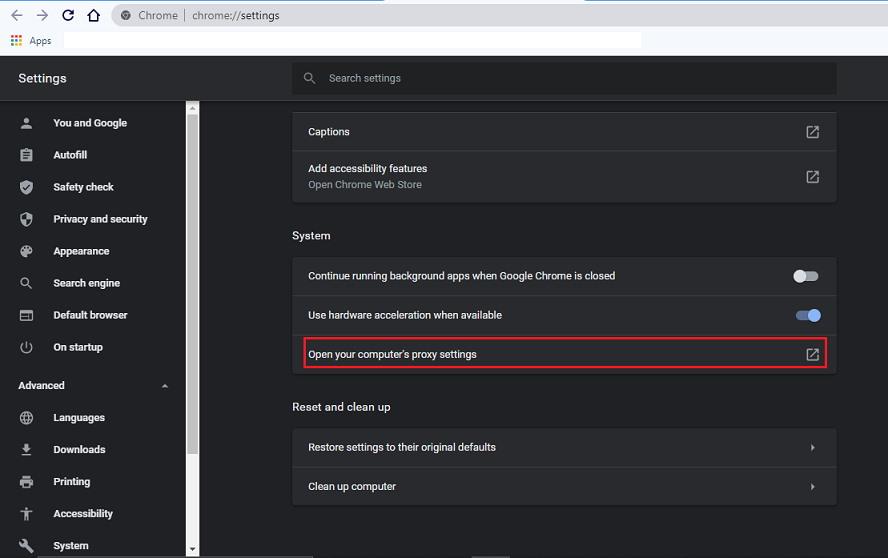
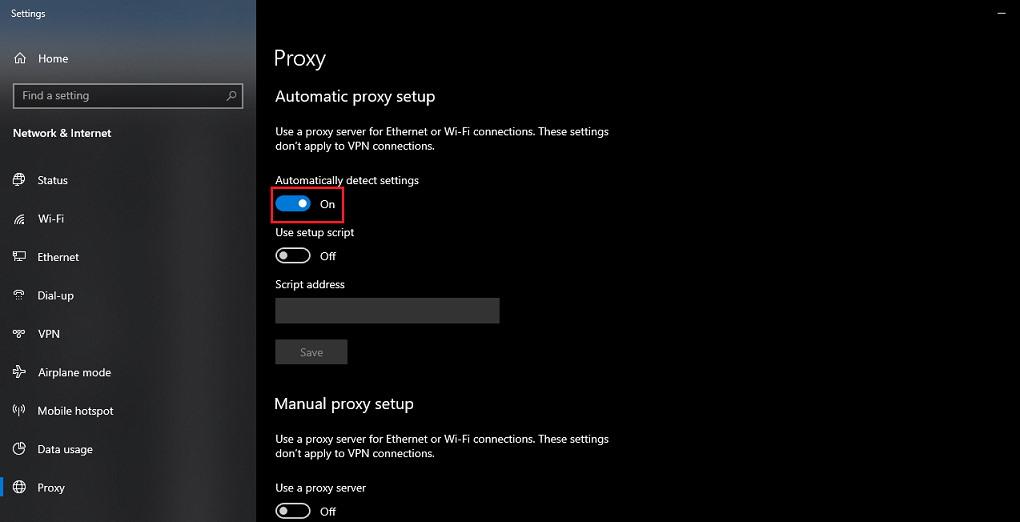
If the site loads now, the proxy was the culprit. If Chrome is the only browser that fails while other devices on the same Wi-Fi work, this is also a sensible first check.

TIP: On a work or school network, keep the proxy your administrator supplied and confirm its address before you change anything.
Method 5: Restore automatic IP and DNS settings
Manual IP or DNS values go stale. They collide with the router’s DHCP settings or with a VPN client, and then names stop resolving. If no administrator manages the machine, let Windows pick the values again.
- Open Control Panel from Windows Search.
- Select Network and Sharing Center.
- Select Change adapter settings.
- Right-click the active Wi-Fi or Ethernet adapter.
- Select Properties.
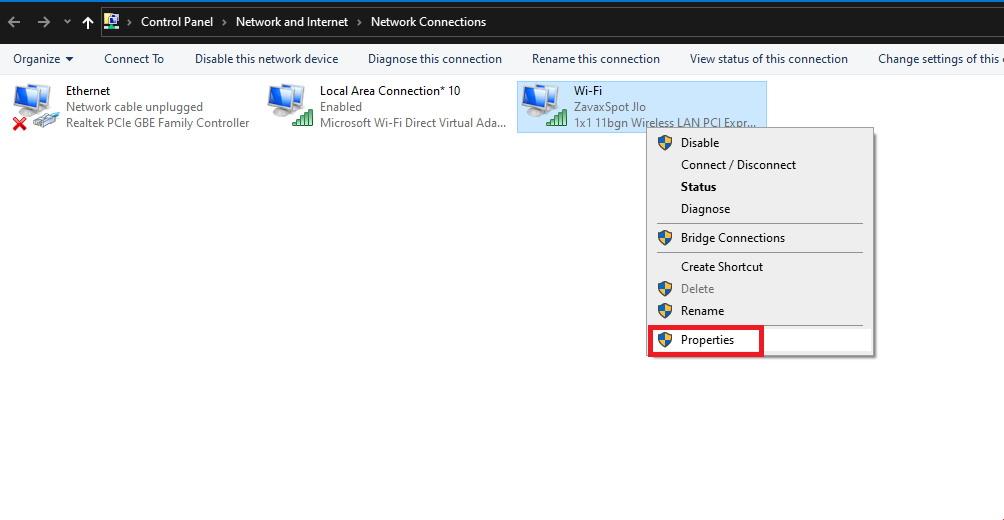
- Select Internet Protocol Version 4 (TCP/IPv4).
- Select Properties.
- Select Obtain an IP address automatically.
- Select Obtain DNS server address automatically.
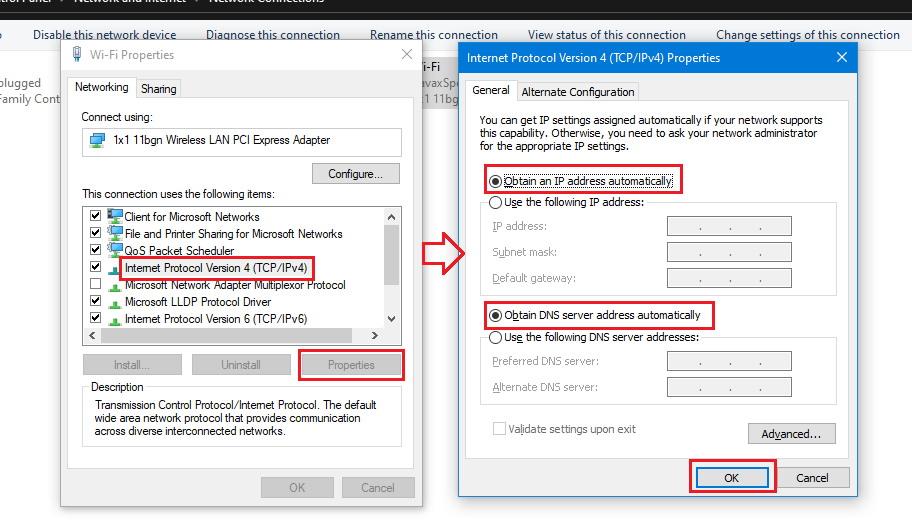
- Click in the IPv4 dialog.
- Click in the adapter properties window.
Reopen Chrome and test the affected page. If this computer gets its configuration from work, school, or a VPN, ask the administrator for the correct values instead of switching to automatic.
Method 6: Try a different DNS server in Windows
Still stuck? The resolver your PC uses may be handing back a stale or misdirected answer. Swapping it proves that in a few minutes. The steps below point the active adapter at Google Public DNS, 8.8.8.8 and 8.8.4.4.
- Search and open the Control Panel using the Windows Start menu.
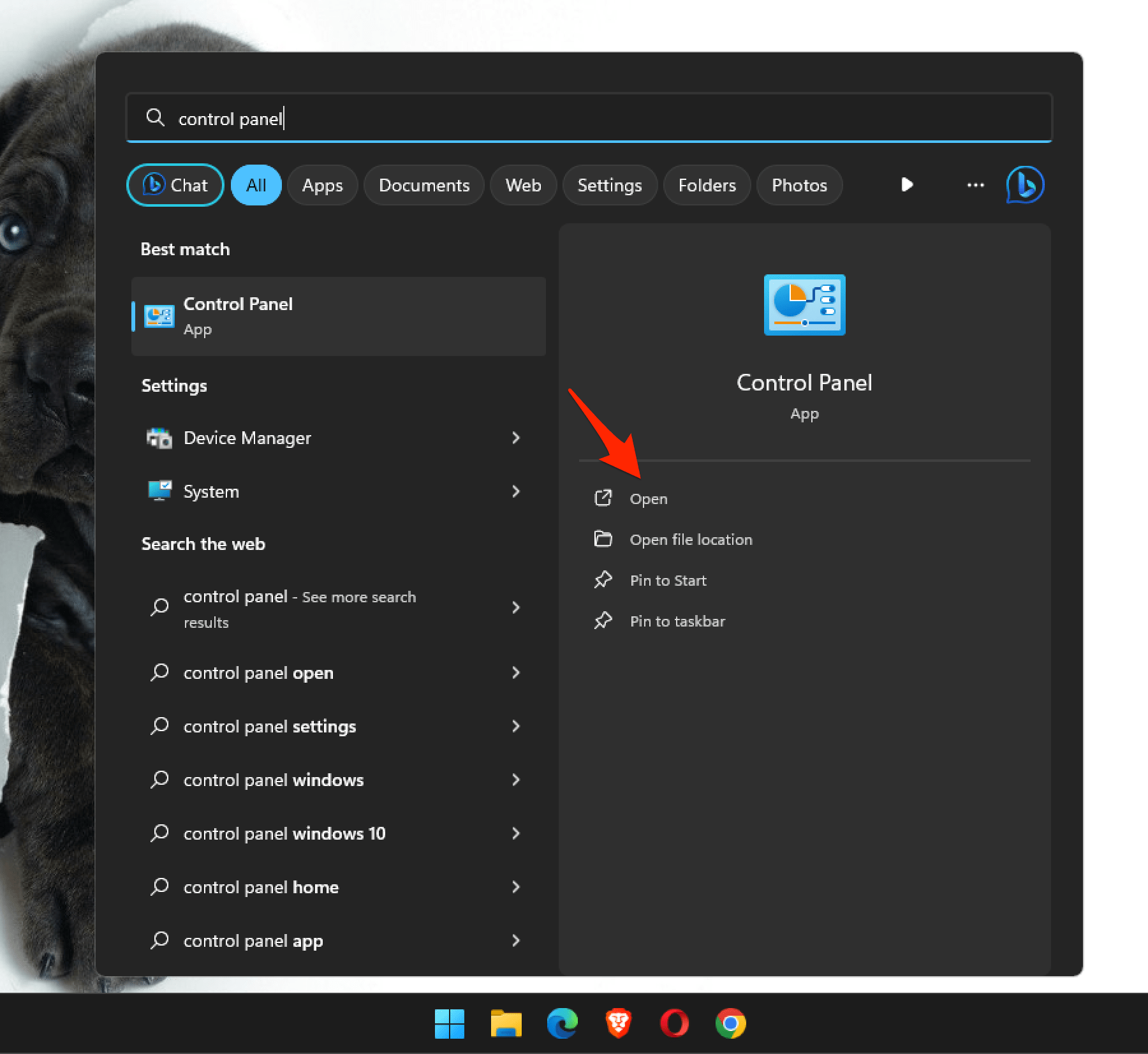 It will open the Control Panel window.
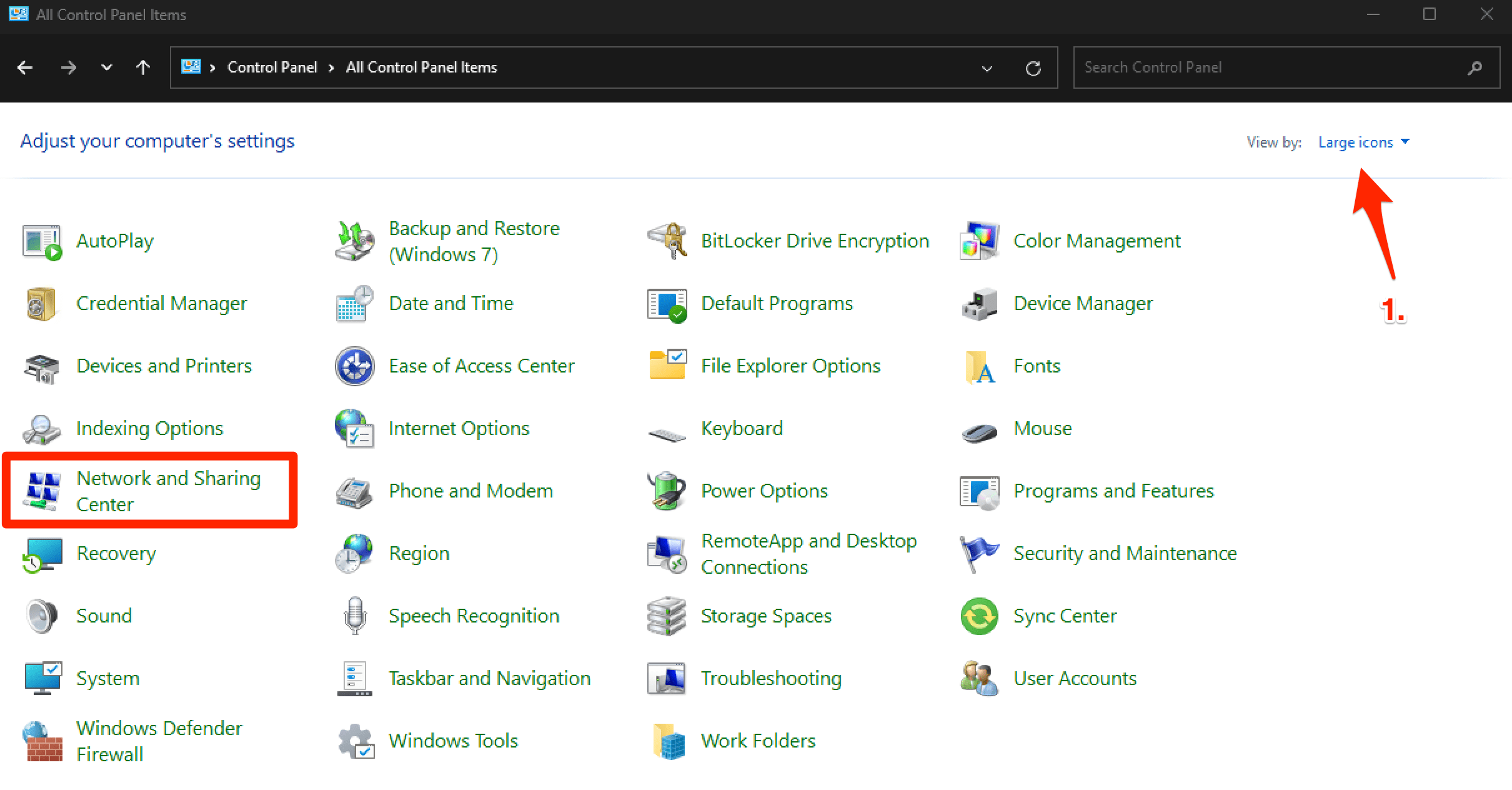
- Switch the View by to Large icons option, and select the Network and Sharing Center menu.
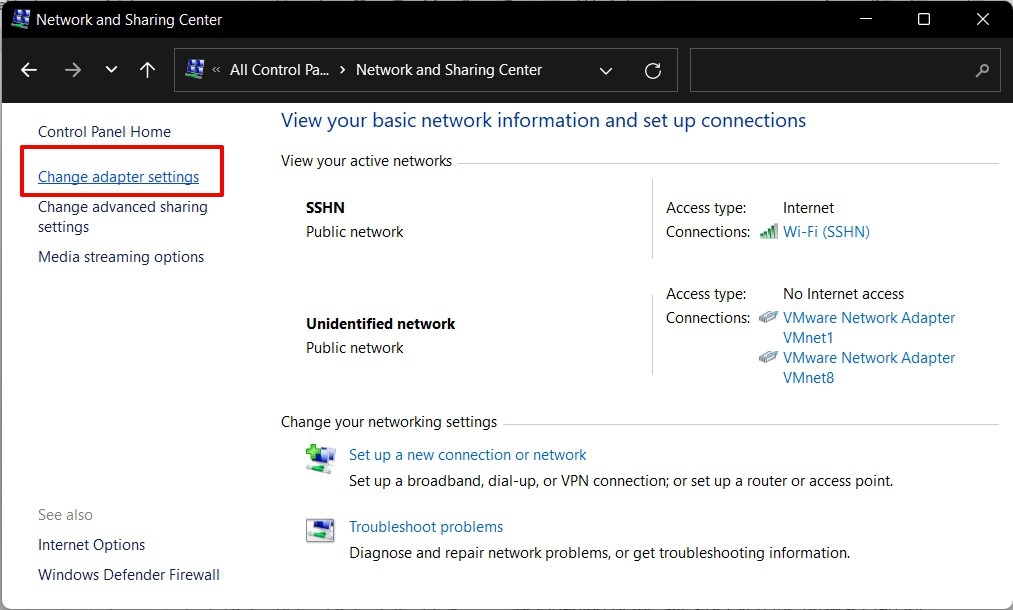
- Click on Change adapter settings from the left menu bar.
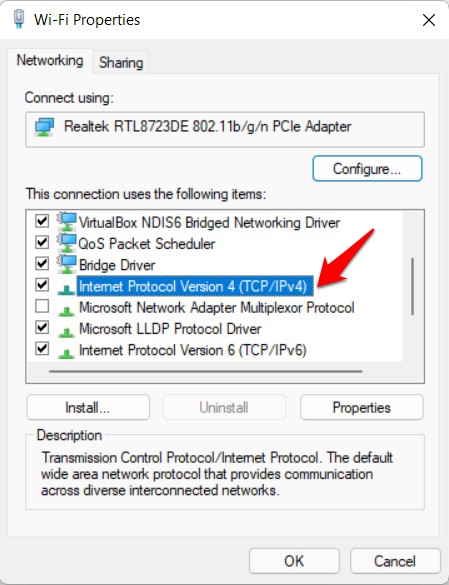
- Right-click on your active Network Adapter (Wi-Fi or Ethernet) for the context menu, and select the Properties command.
It will open the Adapters Properties pop-up window. - Double-click on the Internet Protocol Version 4 option.
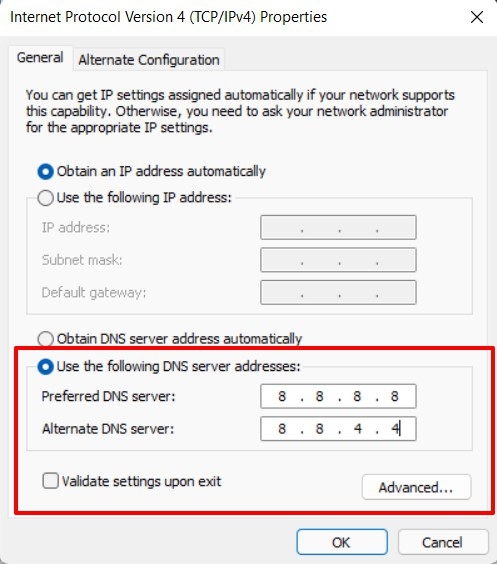
- Select Use the following DNS server addresses option, and input the following Google DNS Addresses.
Preferred DNS Address: 8.8.8.8
Alternate DNS Address: 8.8.4.4
- Hit the button to save the changes.
It will change the DNS addresses of your network adapter on your Windows PC.

If your PC belongs to a private DNS service or uses proxy-based connections, you can contact your network admins to get those configuration settings.
You’ll know it worked when the failing site opens in Chrome. If it does, your old resolver was the problem. If it does not, move on to the caches below.
Method 7: Clear Chrome’s DNS cache
Chrome keeps its own host cache, and it will hold on to a failed lookup long after you have fixed the resolver. Clear it before you test again.
- Launch Google Chrome on your Computer.
- Type in chrome://net-internals/#dns in the address bar, and hit key.
It will open the Chrome DNS network page. - Hit the command button.
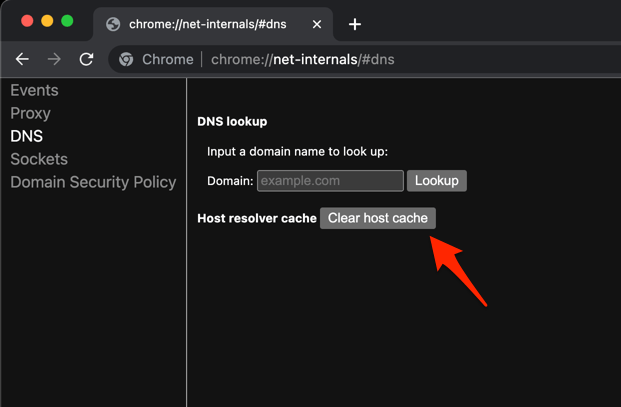
- Relaunch the Chrome browser.
It will clear the Chrome DNS host cache.
You’ll know it worked when the page loads after Chrome restarts. If the same error is still there, flush the Windows resolver cache next.
Method 8: Flush the Windows DNS resolver cache
Windows caches DNS responses too, so an old address can survive a resolver change. A flush forces a fresh lookup from the DNS server you configured.
- Open Command Prompt as administrator.
- Type ipconfig /flushdns and press .
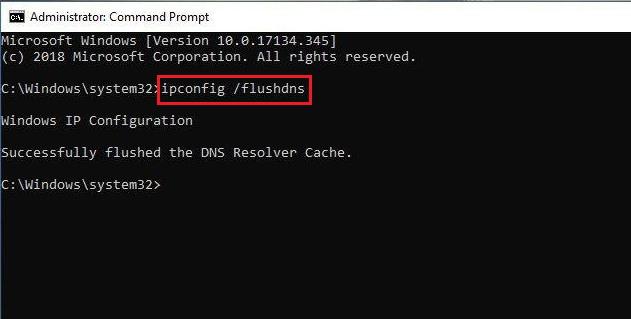
Look for “Successfully flushed the DNS Resolver Cache.” Reopen Chrome and test the affected site again.
Method 9: Update the Windows network driver
If the troubleshooter pointed at your Wi-Fi or Ethernet adapter, the driver is worth updating. A missing or incompatible driver stops Windows from using the network properly, and Chrome reports the failure as a name error.
- Press + to open the Run dialog.
- Type devmgmt.msc and press .
- Expand Network adapters.
- Right-click the active network adapter.
- Choose Update driver.
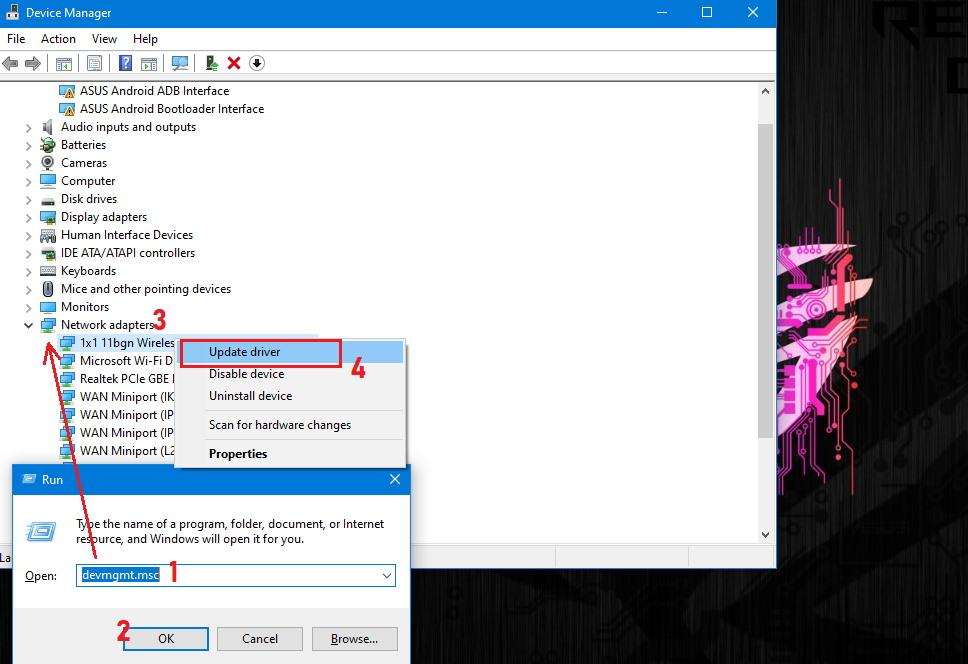
- Select Search automatically for drivers.
- Wait for Windows to check for a driver update.
- Restart Windows if prompted.
If Windows finds nothing, download the driver for your exact model from the PC or adapter maker and install it through Device Manager. Restart Windows and test the page again.
Method 10: Reset the Windows network stack as a last resort
Proxy, DNS, cache, and driver repairs have not helped, so the remaining suspect is the Windows network stack itself. A Winsock and IPv4 reset rebuilds it from scratch. Keep this last, because it changes deeper Windows network settings.
- Open Command Prompt as administrator.
- Type netsh winsock reset and press .
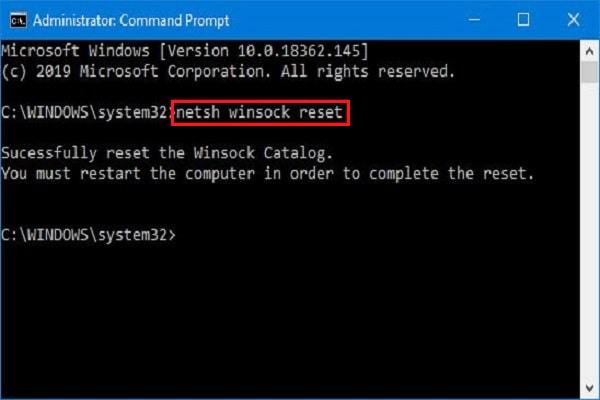
- Restart Windows.
- Open Command Prompt as administrator again.
- Type netsh int ipv4 reset reset.log and press .
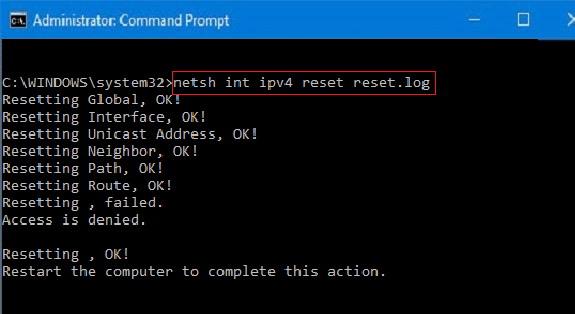
- Restart Windows again.
- Reopen Chrome and test the affected site.
The reset clears stale network-stack configuration without deleting your files, Chrome history, or saved passwords. Reconnect to the network, open Chrome, and test the affected site.
Frequently Asked Questions
Why does Chrome say “server IP address could not be found”?
Chrome could not resolve the domain name to an IP address. The cause can sit in local DNS, a proxy, a network driver, or on the website’s own DNS and server.
Why does www.google.com fail while other websites work in Chrome?
If only www.google.com fails across browsers and devices, its DNS record or server is the likely problem. If it fails only in Chrome, check the Chrome proxy and the Chrome DNS cache first.
Should I replace my DNS with 8.8.8.8 and 8.8.4.4?
Those public resolver addresses make a useful test when your current resolver fails. Do not replace a DNS configuration supplied by an employer, school, VPN, or network administrator without approval.
Does flushing the DNS cache delete Chrome history or saved passwords?
No. ipconfig /flushdns clears cached DNS lookups only. Chrome’s browsing history and saved passwords are stored separately.
Work down the list and stop at the first fix that brings the page back. If the site still fails on other devices and browsers in the same network while everything else loads, the problem is on the site’s side. No setting on your PC will change that.
obtain IP address automatically helped, Thanks a lot!!
helo dear sir
pls help me fix to the server ip addrass
This helped me a lot.. thanks
I appreciate you! Thank you so much. 🙂
THANK YOU SO MUCH
Of course, you’re always welcome, Katie!
🤩 this helped me!!!!
This was a very bizarre problem that started very suddenly and then only on selected websites. I started through the list and nothing improved until step 5. Reset IPv4 settings. I had almost given up, but hen I did this reset, everything started working again. I never would have figured this out on my own. Many, many thanks. I have saved all the steps in case this happens again.
Glad it helped you, John!
Thank-you!!!
“Obtain IP automatically” did help! Also, after this, time settings got back into the correct line, as before whenever I logged in, always had to fix it manually.
Glad it helped, Rita!
guys if you get an error it’s not a connection error it’s a blocked error because server IP address happens to me all the time and it’s not a DNS error it’s one of those things where you get blocked from also see those when an ad pops up on anything and then once it doesn’t work it will show the Google ad server IP address could not be found and that’s a block don’t fall for this
I have tried all of the recommended steps above, and all appears to be as it should.
Still, every few days I get a message “no internet connection – IP address invalid”.
Then I run “Troubleshoot Problems” and after a minute or two, the issue is resolved.
The only thing not connected under “Network Connections” WI-FI is not connected. Do I need this? My system is hard wired Ethernet cable.
Thanks,
Bud Laws
Hi Raymond, you do not need the Wi-Fi connection since you’re using the wired Ethernet. However, the steps mentioned above need to be tried on the Ethernet connection. Check your Ethernet connection settings as mentioned. If you still face any issues, it’s better to check with your ISP. Probably it might be something to do with your ISP provider.