Safari keeps a cached copy of most pages so they open faster. That copy is usually harmless, until a site ships new files and you keep staring at the old version. That's when you need Safari's Reload Page from Origin command.
Press Option+Command+R, or pick View > Reload Page from Origin from the menu bar. If the page stays stale, check site permissions and clear Safari data only after everything else fails.
In this guide, I have covered:
Contents
Hard Refresh a Page in Safari on Mac
Safari saves a cached copy of most pages so they open faster. Harmless, until a site ships new files and you keep staring at the old version. That is the moment you want Safari’s Reload Page from Origin command.
Safari never says “hard refresh” itself. The term comes from Chrome and Firefox, where it means the same thing: fetch the page fresh from the server instead of leaning on the cache.
Fastest route: + + , also written ⌥⌘R.
- Open the affected website in Safari on your Mac.
- Press + + .
You’ll know it worked when the page reloads and the updated version appears: new styles, correct images, working scripts. Still stale? Work through the checks below.
Reload from the Safari View Menu
Prefer not to memorize keystrokes? The same command sits in the menu bar, and it is the one to use when the shortcut does nothing on your Mac. Older Safari releases label it Reload from Origin.
- Open the affected website in Safari on your Mac.
- Click View in the macOS menu bar.
- Select Reload Page from Origin.
You’ll know it worked when the current page reloads and pulls its files from the origin server rather than from the cache. If the old version still shows up, the cause sits somewhere beyond the cache, so keep reading.
Reload a Safari Page Normally
Most of the time you do not need the hard version. A plain reload covers a page that stalled halfway, a comment you just posted, or any moment when the content itself is probably fine.
- Press + , or click the reload
 button at the right side of Safari’s toolbar, beside the address field.
The reload button sits outside the URL bar, so do not hunt for it inside the address field. If a normal reload leaves old files on the page, switch to Reload Page from Origin.
What Safari’s Hard Refresh Actually Clears
A hard refresh sounds destructive. It isn’t.
Reload Page from Origin bypasses cached copies while the page loads. It does not touch cookies or website data, does not remove saved passwords, and does not sign you out of anything.

Save long form entries before reloading. The current page gets replaced, and whatever you typed goes with it.
Check Other Safari Data Before Clearing Everything
If the page behaves in Private Browsing but misbehaves in your normal window, you have already narrowed it down. The fault likely sits with your regular session or its saved site data, not with the site’s server.
Run that comparison with How to Open Private Browsing Mode and New Tabs in Safari on Mac. When the page loads fine there but one feature stays blocked, the site’s Safari permissions are the next thing to inspect.

Clear Safari Website Data as a Last Resort
Nothing above worked, and you are willing to lose data for every site rather than just the broken one? Then clear Safari’s website data. Cookies go with it, so expect to sign in again on the sites you use.
- Launch the Safari app on your Mac computer.
- Click on the Safari menu from the menu bar, and select the Settings... sub-menu.
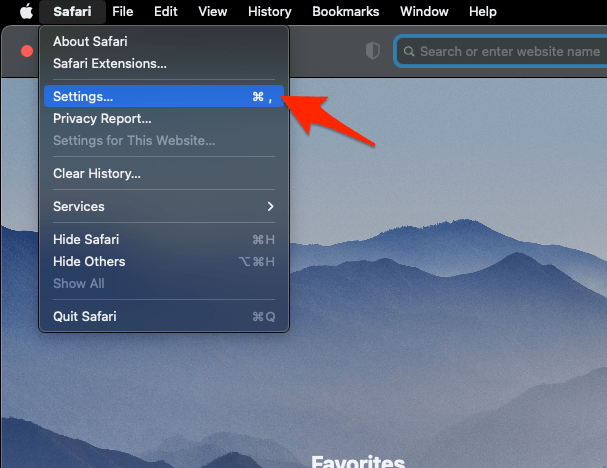 It will open the Safari Settings window.
- Switch to the Privacy tab, and click to open the button.
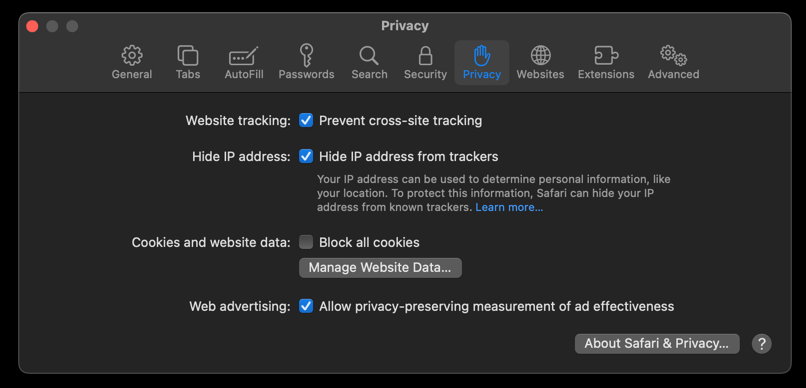 It will load the list of websites currently storing the cache and cookies in the browser.
- Hit on the command and then the button.
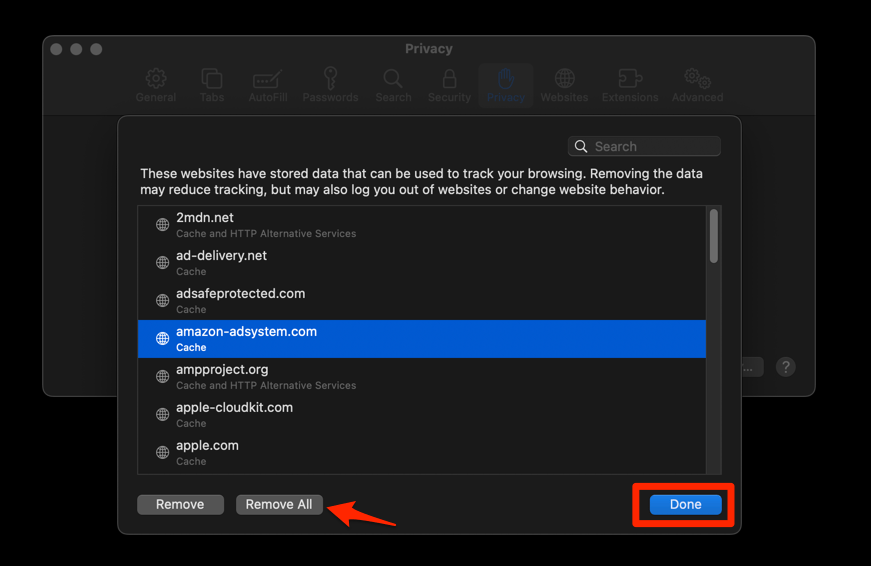 It will flush the cookies and cache for all sites in Safari.
You’ll know it worked when the site loads clean after the data is gone. If it still fails, a cached copy was never your problem. The site, its server, or your connection is the likelier culprit.
Refresh Safari on iPhone or iPad
Mobile Safari has no Reload Page from Origin command, so the Mac shortcut does not carry over. The steps are different, and shorter.
For those, see hard refresh and reload in Safari on iPhone or iPad.
Frequently Asked Questions
What is the hard refresh keyboard shortcut in Safari on a Mac?
Press + + (⌥⌘R). Safari runs Reload Page from Origin, which bypasses cached copies while the page loads.
How do I hard refresh Safari on Mac without the keyboard?
Click View in the macOS menu bar and choose Reload Page from Origin. Older Safari versions may call it Reload from Origin.
What is the difference between Command+R and Option+Command+R?
+ makes a standard reload and may reuse cached resources. + + reloads the page from the origin.
Does a Safari hard refresh delete cookies or sign me out?
No. A hard refresh leaves cookies and website data alone, so you normally stay signed in. Clear Safari website data only if a site-specific problem persists.
Is Shift+Command+R the hard refresh shortcut in Safari?
No. + + is Safari’s Reader shortcut. The hard refresh is + + .