Chrome shows ERR_TOO_MANY_REDIRECTS when a site keeps sending the browser from one URL to another until the page gives up. The loop can start on the server, in stale Chrome data, in an extension, or in an old host entry.
Test the same URL in a Guest profile and a second browser first. Then clear browsing data, disable extensions one at a time, and clear Chrome's DNS host cache.
In this guide, I have covered:
Contents
Why Chrome shows ERR_TOO_MANY_REDIRECTS
You click a link, the address bar flickers through one URL after another, and the page never lands. Chrome stops the request and shows ERR_TOO_MANY_REDIRECTS.
That status means the site kept sending the browser to a new address until Chrome gave up. The loop can start on the website, in stale Chrome data, in an extension, or in host information that still points to the old address.

The error text does not say which layer is broken. Test a clean profile first, then change one thing at a time, so you can tell a local Chrome problem from a redirect loop built into the site.
Check whether the redirect problem is limited to Chrome
One site loops while everything else loads fine. That is a useful clue, so test the exact URL in a clean Chrome Guest profile before you delete anything from your normal profile.
A Guest profile opens without your extensions and without your stored browsing data.
- Click the Profile icon in the top-right corner of the Chrome window.
- Click Guest profile.
You’ll know it worked when the page opens in Guest but still fails in your usual profile: the cause is in profile data or an extension. If sign-in cookies are part of the loop, blocking or allowing browser cookies in Chrome on a computer covers the matching setting.
Test the same URL in another browser
A second browser answers one question: is the loop inside Chrome, or is it on the site?
- Open Edge, Firefox, or Safari on the same computer.
- Go to the exact address that produced the redirect error.
- Compare the result. A loop in every browser points at the website’s redirect configuration.
Method 1: Clear Chrome browsing data and cached files
Old cookies and cached files can keep sending Chrome back to the same redirecting address. Clear them for the affected site, or for all sites if you don’t mind the wider cleanup.
If you are unsure what each category removes, clearing Chrome cookies and cache explains the difference before you start.
- Go to chrome://history/clearBrowserData in the address bar.
- Select the Time range from the drop-down.
- Enable the checkboxes for Browsing history, Cookies and other site data, and Cached images and files.
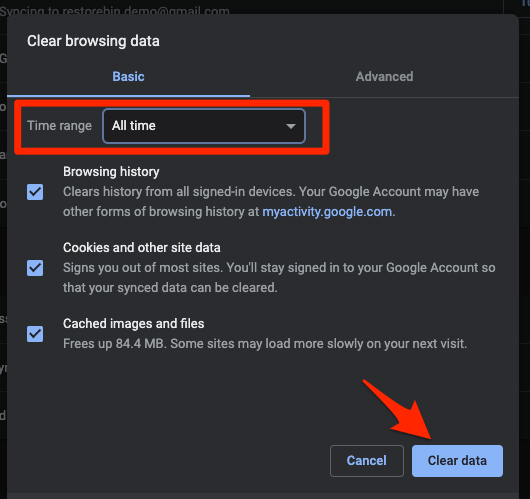
- Hit the Clear data button.

The cleanup covers every site in the selected time range, and clearing cookies signs you out of sites you were logged into.
You’ll know it worked when the site loads on the first attempt after the cleanup. If the loop comes back, stored site data was not the cause, so move on to extensions and the DNS cache.
Method 2: Disable extensions that may trigger the redirect loop
Ad blockers, privacy tools, and VPN extensions rewrite requests before they leave Chrome, and a rewritten request can land in a loop. Switch them off one at a time and reload the site after each change.
Enabling and disabling extensions in Chrome shows where the toggles sit if you have never used that page.
- Launch the Google Chrome on your computer.
- Click on the More
 for the list menu.
- Hover on the More Tools menu and choose the Extensions sub-menu.
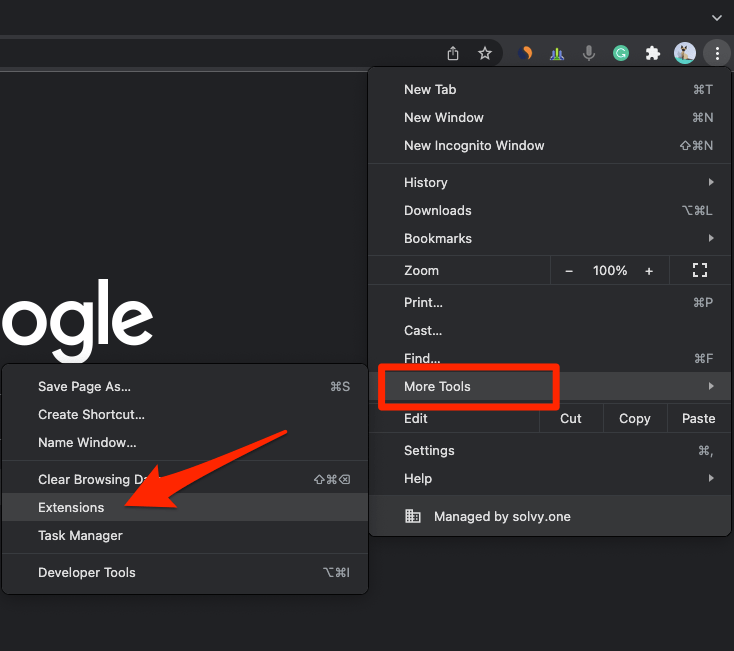 It will open the Chrome Extensions Manager page with the list of installed extensions.
- Toggle the switch to Disable the extension.
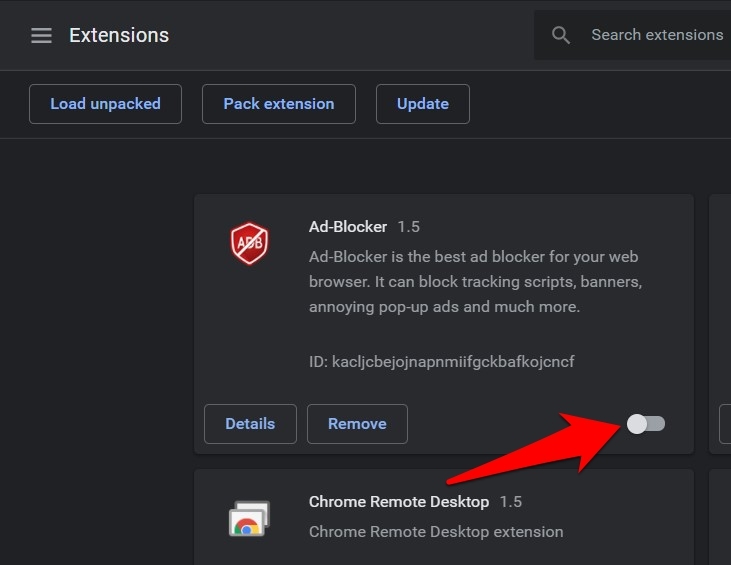
If the error disappears with one extension off and returns when you switch it back on, you have found the culprit. Leave it disabled or remove it.
VPN and proxy extensions deserve a closer look because they route traffic through another server. If you use one to browse from a different country or region using a VPN, review its settings before you reinstall it.
Remove an extension that caused the loop
Once you know which extension is responsible, remove that one instead of stripping them all.
- Type chrome://extensions into Chrome’s address bar.
- Press .
- Find the extension that caused the loop.
- Click its button.
- Confirm the removal if Chrome displays a prompt.
- Reload the affected site and check the result.
Method 3: Clear Chrome’s DNS host cache
The site moved to a new host and Chrome keeps knocking on the old door. That is what a stale DNS host cache can do after a domain change, and clearing the DNS cache in Chrome resets it.
- Launch Google Chrome on your Computer.
- Type in chrome://net-internals/#dns in the address bar, and hit key.
It will open the Chrome DNS network page. - Hit the command button.
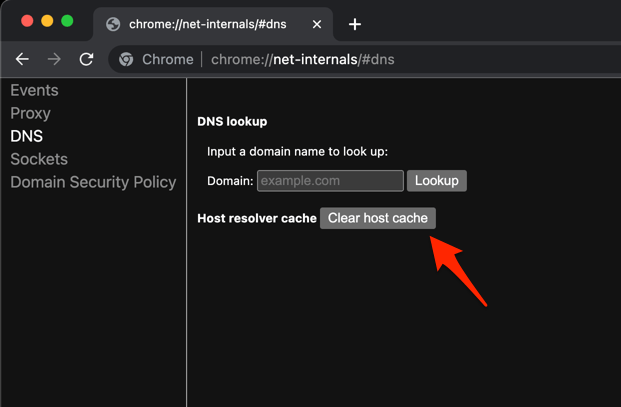
- Relaunch the Chrome browser.
It will clear the Chrome DNS host cache.
Chrome restarts during this procedure, so reopen the affected URL when it comes back. The page should now reach the current address. If the loop survives, the problem sits on the server side.
When the website is causing the redirect loop
Every method above tests your side of the connection. If the exact URL still loops in a Guest profile and in a second browser after all three methods, the redirect rule lives on the server and Chrome cannot repair it.
That is a job for the site owner. Report the URL, the browser you used, and the error text. Common causes sit in HTTPS redirect rules, canonical domain settings, and plugins that force a trailing slash.

Frequently Asked Questions
Why do I keep getting the ERR_TOO_MANY_REDIRECTS status in Chrome?
Chrome stops the request once a site has sent too many redirects. The loop can come from a broken site configuration, stale Chrome data, an extension, or host information that still points to the old address.
Will clearing cookies and cache fix too many redirects?
Sometimes. If old site data is making Chrome repeat a request, the cleanup breaks the cycle. It applies to every site in the selected time range, and clearing cookies signs you out.
How do I find the extension causing the redirect loop?
Disable one extension at a time and reload the site after each change. If the page opens, remove that extension or leave it disabled.
Does clearing the DNS cache fix ERR_TOO_MANY_REDIRECTS?
The DNS cache stores host information, not a site’s redirect rules. Clearing it helps when Chrome still uses an old destination for the domain, but it cannot fix a loop configured by the site.
Is ERR_TOO_MANY_REDIRECTS always a Chrome problem?
Not always. If the same URL loops in a Guest profile or another browser, the site’s redirect configuration is the likely cause. Contact the site owner when the local Chrome checks change nothing.