

Chrome on iPhone and iPad puts the Back and Forward arrows on the same row as the address bar. Move the bar to the bottom and the arrows follow it. Rotate the device and Chrome keeps the bar at the top.
Tap the left arrow to revisit the page you just left, then tap the right arrow to return. Press and hold either arrow to jump to a recent page in the current tab, or open History when the page you want is older.
In this guide, I have covered:
Contents
How Back and Forward Work in Chrome on iPhone & iPad
You tap a link, read the page, and now you want the page you came from. Chrome for iPhone and iPad keeps two arrows for that job: a left-facing Back chevron and a right-facing Forward chevron.
Both sit on the address bar row. With the address bar at the top, the arrows are in the top toolbar. Move the bar to the bottom and the arrows move with it.
The left arrow takes you to the previous page. The right arrow returns you to the page you moved away from, but only after you have gone back.
Watch the short demonstration if you prefer visual instructions. The written steps below show how to find the arrows, move between pages, and open recent history.
Watch the Video Tutorial
If the video matches your screen, use the steps below to repeat the same moves on your device.
Go Back to the Previous Page
You followed a link and need to return to the page you just left. Tap the left-facing Back chevron.
Chrome keeps this back-and-forward sequence separate for each tab, so one tab’s history does not change another tab’s arrows.
- Open Chrome on your iPhone or iPad.
- Open a website.
- Follow a link so the tab has more than one page in its history.
- Tap the back arrow
 in the address bar row.
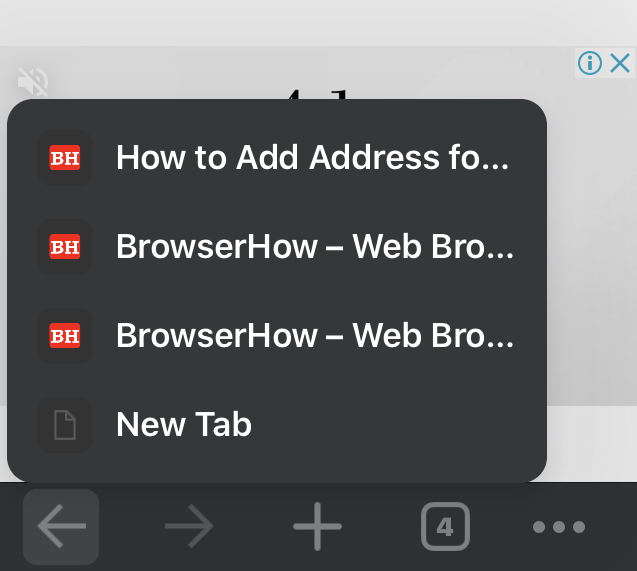
The previous page should appear. If you use Chrome on a computer instead, see Navigate Forward and Backward between Pages in Chrome on the Computer.
Go Forward to the Page You Left
You moved back a page and now want to return. The right-facing Forward chevron becomes active after you go back.
- Use the back arrow to move to an earlier page.
- Tap the forward arrow
 in the address bar row.
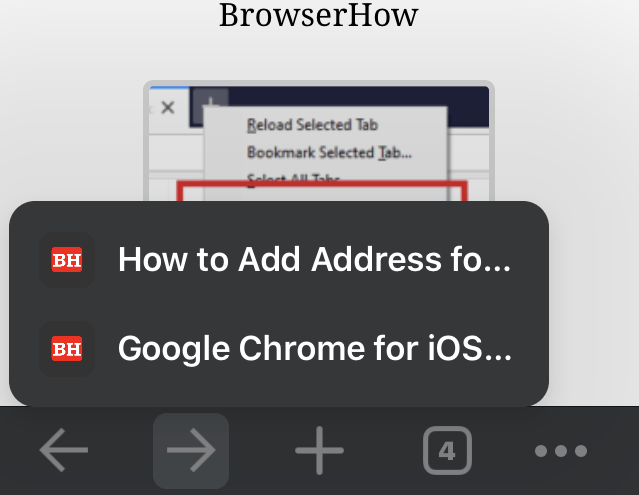
The page you came from should load again. For the different Android toolbar layout, see Navigate Forward and Backward between Pages in Chrome on Android.
Press and Hold an Arrow for Recent Pages
You need to jump back several pages, not just one. Press and hold an arrow to open a list of recent pages in the current tab.
- Open Chrome on your iPhone or iPad.
- Move backward or forward at least once.
- Press and hold the back arrow or forward arrow .
- Tap the page you want in the history list.
The page you chose should open, and the arrows will update to match its place in the tab’s history.
A long press does not open a new tab. If you need one, use Chrome’s new-tab control instead.

Open Full History When the Recent List Falls Short
The long-press list only shows recent pages from the current tab. If the site you want is older than that list, open Chrome’s full History screen and pick the page there.
- Open the Chrome app on your iOS device.
- Tap on the Menu
 for options and choose the History menu.
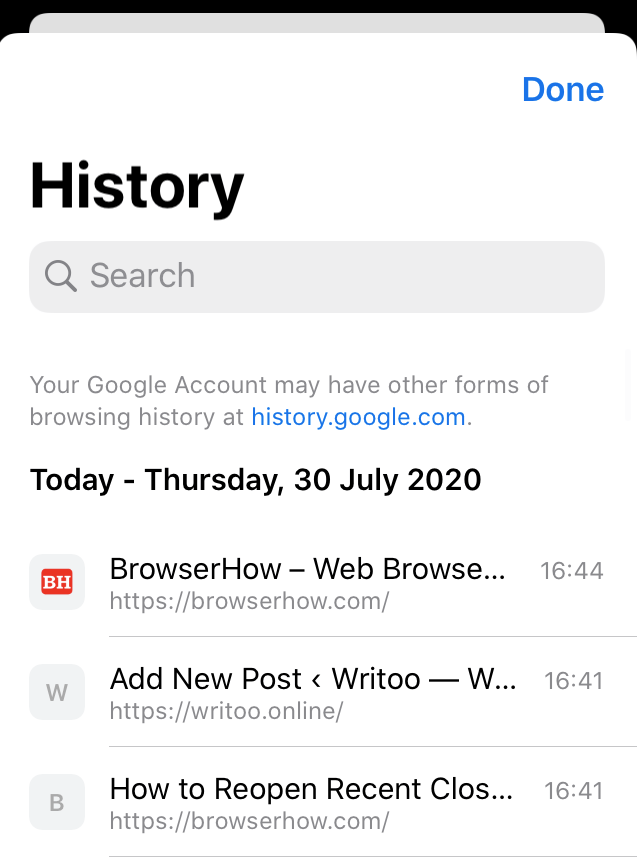
- Select the site to reopen from the history page.
You’ll know it worked when the selected site opens in Chrome. From there, the Back and Forward arrows move within that tab’s page sequence.
Find the Arrows After Moving the Address Bar
You moved the address bar and now the arrows seem to be missing. They are still on the same row, so they move with the bar.
- Open Chrome on your iPhone or iPad.
- Tap the
 menu.
- Choose Settings.
- Tap Address bar.
- Choose Top or Bottom.

You can also touch and hold the address bar and choose Move address bar to bottom or Move address bar to top.
The address bar and navigation arrows should now appear in the location you selected. On iPhone and iPad, landscape mode keeps the address bar at the top.
See Google’s Chrome help page about address bar position for the current device behavior.
Why a Swipe Across the Page Won’t Move You Forward
You swipe across the page, expecting to go forward, and nothing happens. A swipe across the page is not a reliable way to go forward or back in Chrome.
A swipe from the left screen edge may trigger the iOS system back gesture. Use the left-facing arrow for Back and the right-facing arrow for Forward when you want to move through Chrome’s tab history.
Fix Missing or Grayed-Out Navigation Arrows
The arrows are there, but one is gray or you cannot spot them after rotating the device. These checks cover the common causes.
- Back arrow is grayed out: there is no earlier page in the current tab.
- Forward arrow is grayed out: you have not moved backward, or you already returned to the newest page.
- You cannot find the arrows: check the top and bottom address bar layouts, especially after changing the setting or rotating the device.
- The long-press list has no older page: open full browsing history and choose the site there.
Frequently Asked Questions
These are the quick answers to the questions that come up most often.
Where are the Back and Forward buttons in Chrome on iPhone and iPad?
They sit on the same row as the address bar. If the address bar is set to Bottom, the arrows move with it. In landscape, Chrome keeps the bar at the top.
Can I swipe to go backward or forward in Chrome on iPhone?
Use the Back and Forward chevrons for reliable navigation. A left-edge swipe may trigger the iOS system back gesture, but a swipe across the page is not a forward control.
Why is the Forward button gray?
The Forward control is unavailable until you move backward. It becomes unavailable again when you reach the newest page in that tab’s history.
What does pressing and holding the Back arrow do?
It opens a list of recent pages from the current tab’s history so you can jump directly to one. It does not create a new tab.




How do I relocate the forward and back buttons on any web browser for Iphone to right side of screen? I am right handed and I want to have them closer to my right hand instead of the other side of the screen.
Hi Jared, unfortunately, there is no such feature to customize the button and screen location in chrome.