

Chrome is preinstalled on many Android phones, so the Play Store may not offer a normal Uninstall option. The switch that actually stops it sits in Android's app settings, not inside Chrome.
Disable Chrome from its App info page, use Uninstall when your phone offers it, and set a replacement default browser so links from other apps don't stall. Force stop and Uninstall updates do different things.
In this guide, I have covered:
Contents
Disable Chrome from your Android app settings
You’ve decided Chrome shouldn’t open on this phone anymore. There’s one snag: Chrome has no self-disable switch, so the control you need lives in Android’s app settings, not inside the browser.
Whether Chrome can be removed at all depends on the device. Check Google Play first. If no Uninstall button turns up, Disable is your option.
Menu labels shift between Android versions and phone makers. You may see Apps, Apps & features, or Apps & notifications.
- Open Settings.
- Scroll to and tap Apps & features. If your phone uses a different label, tap Apps or Apps & notifications instead.
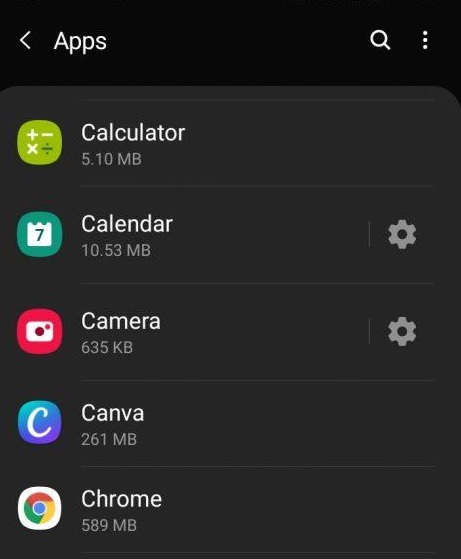
- Tap See all apps.
- Tap Chrome.
- Tap .
- Tap again to confirm.
You’ll know it worked when Chrome refuses to open from the app drawer and tapping a web link no longer launches it. Android may gray out the icon or list the app as disabled.

If Chrome is your default browser, Android may ask you to choose another one. Set the replacement first to avoid that interruption.
Uninstall Chrome when Android allows it
Some Android phones let you remove Chrome completely. Check Google Play before you settle for Disable.
If the Play Store listing shows an Uninstall button for Chrome, removing it deletes the app instead of parking it in a disabled state.
- Open Google Play Store.
- Search for Google Chrome.
- Open the Google Chrome listing.
- Tap .
You’ll know it worked when Chrome disappears from your list of installed apps. If Google Play offers no Uninstall button, Android is treating Chrome as a preinstalled app on that device, so go back to the Disable method.
Set another default browser before you disable Chrome
Chrome is usually the default handler for links you tap in Gmail, Messages, and other apps. Disable it while it still holds that role and those taps land nowhere.
Pick a replacement first. If Chrome is currently the default, change the default browser on Android before disabling it.
- Open the Settings app on the Android Phone.
- Select the Apps settings and scroll down to the Default apps section.
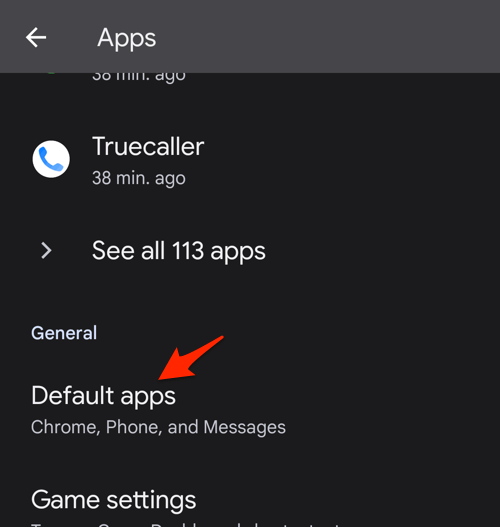
- Choose the Browser app option within the Default apps settings screen.
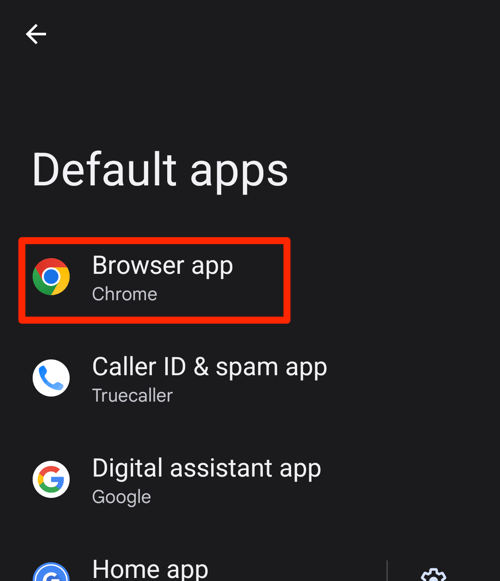 It will display the list of available web browser apps on your device.
- Choose the new Default browser for Android from available apps.
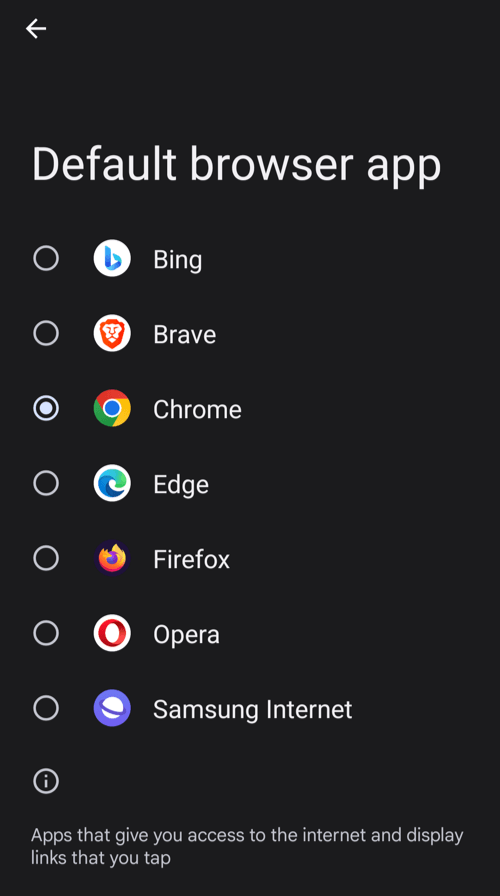 The newly selected browser will be set as the default browser on your Android smartphone.
You’ll know it worked when a link opened from another app lands in the browser you picked.
Still deciding? Our list of Chrome alternatives for Android can help you choose one.
Know the difference between Force stop, Disable, and Uninstall updates
Three controls on Chrome’s App info page look like they do the same thing. They don’t, and picking the wrong one costs you a step.
- Force stop closes the running app. It does not disable the app or remove its updates.
- Disable stops you from opening Chrome and keeps the app installed in an inactive state.
- Uninstall updates removes downloaded updates and restores the version that shipped with the phone. Chrome stays available.
Use Disable when you want Chrome to stop launching. Choose Uninstall updates only when you specifically want the phone’s bundled version.

Clear Chrome cookies and cache before removing it
Disabling Chrome doesn’t erase what it stored. History, cookies, and cached files stay on the phone until you clear them yourself.
For a full cleanup, clear your browsing data first.
The procedure below handles cookies and cached files. If a site’s cookie behavior is the reason you’re switching, read how to allow or block cookies in Chrome on Android.
- Open the Chrome app on your Android phone.
- Tap on the More
 for options and select the Settings menu.
- Open the Privacy and Security settings and select the Clear Browsing Data option.
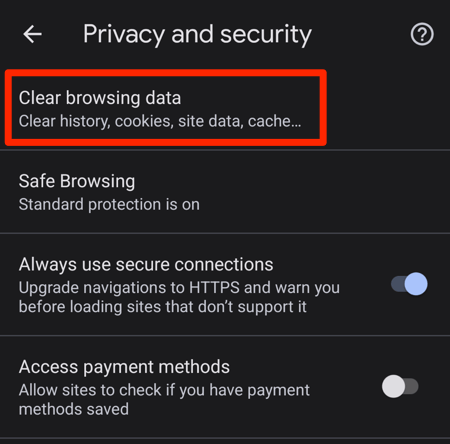
- Select the Time range from the drop-down and enable the checkboxes for the 'Cookies and site data' and 'Cached images and files' options.
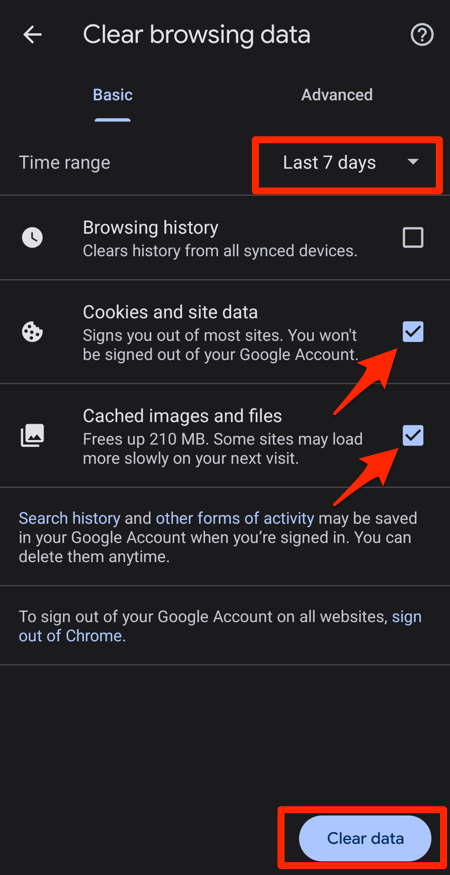
- Hit on the button.
You’ll know it worked when a site where you were signed in asks you to sign in again.
This clears cookies and cached files. Saved passwords and autofill data survive it.
Frequently Asked Questions
Can I uninstall Chrome on an Android phone?
Yes, if Google Play shows an Uninstall button for Chrome. If that button is missing, Android is managing Chrome as a preinstalled app on that device, and you can use Disable if Android shows it.
Does disabling Chrome delete my bookmarks and history?
No. Disable stops Chrome from opening but leaves bookmarks, history, cookies, and saved app data on the phone. Clear the data separately if you want it removed.
Do I need to force stop Chrome before disabling it?
No. Force stop only closes the current Chrome process. Tap Disable in Chrome’s App info page to prevent Android from launching it.
Why can’t I find a Disable button for Chrome?
Some Android builds treat Chrome as a preinstalled app and do not offer a normal Uninstall button in Google Play. Check the Chrome App info page for Disable or Uninstall updates. If neither Uninstall nor Disable appears, your device does not provide a standard way to remove Chrome.
Chrome is disabled or gone at this point, and the phone runs the same with another default browser. If a link still opens in Chrome, recheck the default browser setting before anything else.

I disabled Chrome before & suddenly lost 6/9 pages of info/resources, on homescreen, I’d spent years researching. Also lost 2/4 gaming apps, one I’d played >3 years & amassed >$6: was told “should have backed up with FB.” NEVER. I was shocked & could find no help, DON’T want this to occur again. Should let people know what to anticipate so don’t lose all, like I did.