Chrome keeps cached images, cookies, and other data for every site you visit in the same browser. When one site grows too large or starts misbehaving, you need to separate temporary cache files from the data that keeps you signed in.
Open Chrome's site data list to check storage per site, remove one site's data, or use Clear browsing data for a wider cleanup. Look at the time range and selected categories before you confirm.
In this guide, I have covered:
Contents
What Chrome Keeps as Cache and Site Data
You went into Settings to find out how much space one website is eating. Chrome splits the answer in two. Cached images and files are temporary copies, while Cookies and other site data can hold logins, preferences, and permissions.
Chrome’s on-device site data view shows the total storage used by each site, not a separate cache-only figure. Google’s guide to on-device site data explains what Chrome keeps for each website.
Watch the Video Tutorial
Menu labels move between Chrome releases, so follow the current paths below if the video shows an older screen. The site list is where the per-site storage figures live.
View Site Storage Usage for Each Site in Chrome
Open this list when you need to find the domain using the most space, or when you want to reset one site without touching everything else. Chrome’s Chrome help for viewing and deleting site data shows the current route.
- Open Google Chrome on your computer.
- Click the More
 menu in the top-right corner.
- Select Settings.
- Select Privacy and security in the sidebar.
- Select Third-party cookies.
- Select See all site data and permissions.
- Type a site name in the search box, then compare the Storage used values in the results.
You’ll know it worked when the All sites view lists each matching domain with its Storage used value and permissions. Use the search box to narrow the list before you delete anything.

Older Chrome builds may still show Site settings > Cookies and Site Data. If Third-party cookies is missing from your sidebar, use that older label to reach the same site storage list.
Checking on a phone instead? Our guide to view the cache storage and clear the data from Chrome on Android covers the same task there.
Clear Storage for One Website in Chrome
When a single site keeps loading incorrectly or you want a clean start on it, deleting that one entry beats clearing Chrome’s whole cache.
- Click the More menu in the top-right corner of Chrome.
- Select Settings.
- Select Privacy and security.
- Select Third-party cookies.
- Select See all site data and permissions.
- Type the site’s domain in the search box.
- Click the trash
 button beside the site entry.
- Confirm the deletion.
You’ll know it worked when the entry vanishes from the site data list. Expect to sign in again, since that site’s cookies went with it, and any saved preferences for the site can reset.

Clear Cache and Site Data for All Sites
Several sites have piled up data and you want a broader reset without hunting down each domain. That is when the Clear browsing data dialog does the job.
- Open the Google Chrome on your computer.
- Click on the More for menu options, and hover on the More Tools menu.
- Select the Clear Browsing Data... sub-menu from the list.
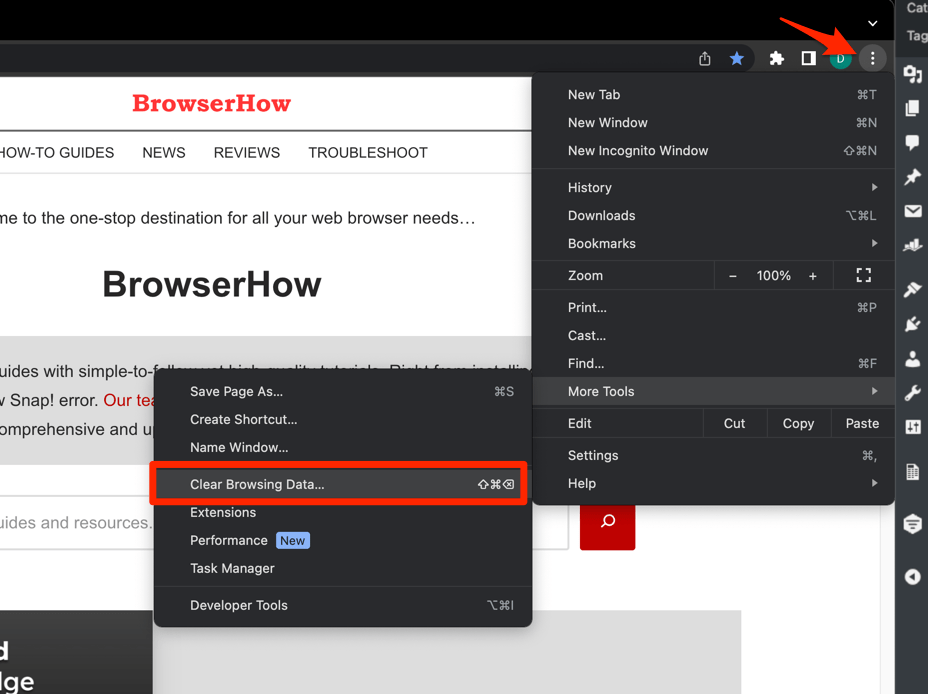 It will open the Clear browsing data settings window.
- Choose the Time Range from the drop-down and select the checkboxes for the 'Cookies and other site data' and 'Cached images and files' options.
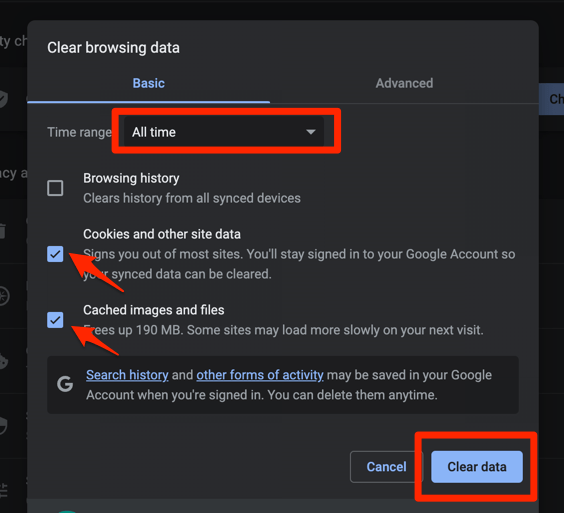
- Finally, hit the command button.
It will delete the stored cookies and cache data from your Chrome browser.
You’ll know it worked when pages load fresh again and any site that used a deleted cookie asks you to sign in. Check the time range in the Clear browsing data dialog before you confirm.

TIP: Only want the space back? Leave Cookies and other site data unchecked and clear cached images and files alone. You stay signed in.
On a phone, Clear Browsing and Site Data in Chrome on Android covers the wider cleanup controls on that device.
What to Do If Chrome Storage Still Looks Full
Cleared everything and the numbers still look big? Delete the largest site entries first, then clear cached images and files across Chrome. Reopen the site list afterward and compare the remaining Storage used values. Sites write new data the moment you visit them again.
Chrome measures website data only. Downloads, other apps, and general disk usage show up in your computer’s storage tools, not in this list.
Frequently Asked Questions
Where can I see which site is using the most storage in Google Chrome?
Open Settings > Privacy and security > Third-party cookies > See all site data and permissions. Compare the Storage used values. They show total site storage, not a separate cache-only breakdown.
Can I clear cached images and files without signing out of websites?
Yes. In the Clear browsing data dialog, select only Cached images and files. It is Cookies and other site data that deletes a site’s login session.
Why does clearing storage for one site sign me out?
Deleting a site’s data removes its cookies along with everything else stored for it. You will need to sign in again, and the site may restore some preferences on your next visit.
Will clearing the Chrome cache delete bookmarks or saved passwords?
No. Bookmarks and saved passwords are separate from the cache and stay put when you clear cached images and files only.
Does Chrome’s site storage list show everything taking up space on my computer?
No. That list only covers data Chrome stored for websites. Downloads, other apps, and disk usage need to be checked separately in your computer’s storage tools.