Pop-ups, fake download buttons, and overlays that cover the page still show up on plenty of sites in Chrome on a computer. Chrome has a built-in control for them, though it works at site level, not ad by ad.
Open Chrome Settings, then Privacy and security > Ad privacy, and turn on blocking for intrusive and misleading ads. Add a trusted domain to Exceptions if its ads vanish, and remove it later to restore blocking.
In this guide, I have covered:
Contents
Turn on Chrome’s ad blocking for misleading ads
Fake download buttons, full-screen overlays, and ads that shove the page around are the usual reasons people go looking for this setting. Chrome ships with a switch for exactly that, and turning it on takes about half a minute.
The switch targets sites that serve intrusive or misleading advertising. It does not strip every ad from every page.
- Open Google Chrome on your computer.
- Select the
 menu in the top-right corner.
- Choose Settings.
- In the left sidebar, select Privacy and security.
- Select Ad privacy.
- Find the Ad blocking controls on that page.
- Turn on Block ads on sites that show intrusive and misleading ads.

In older Chrome versions, the same switch is under Site settings > Additional content settings > Ads.
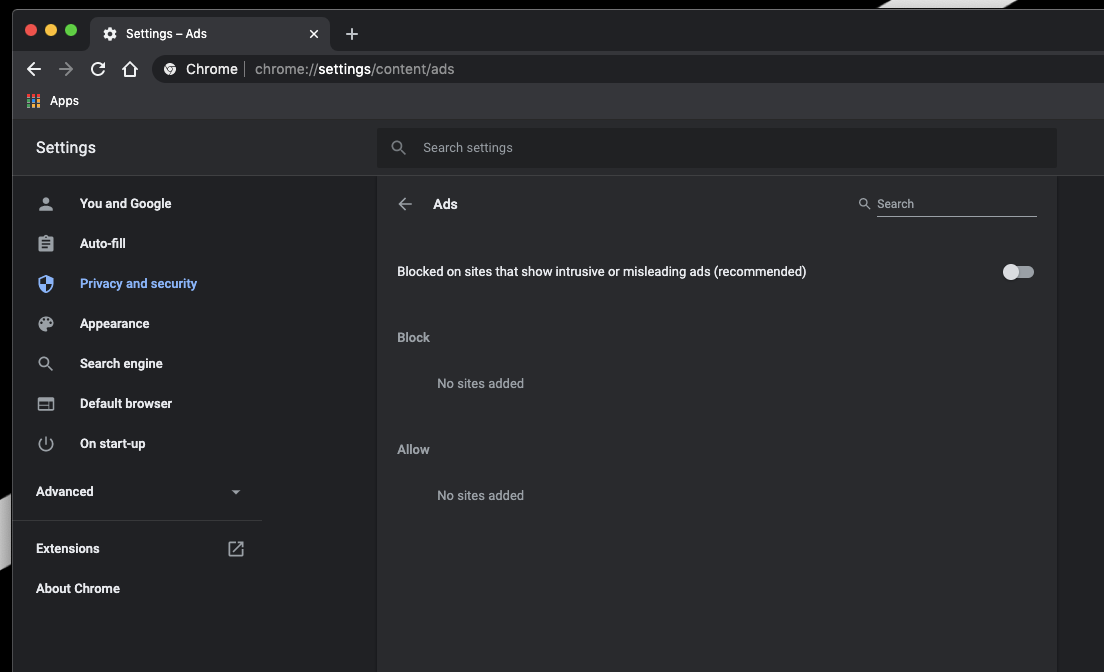
You’ll know it worked when a reload clears the overlay or the deceptive banner on that site. Ordinary ads elsewhere can stay.
What Chrome’s blocking control does
Wondering why a banner still shows up after you turned blocking on? The answer sits in how Chrome decides.
Chrome’s automated checks use the Better Ads Standards to flag sites that run intrusive or deceptive ads. When a site fails those checks, Chrome blocks the ads on it. It does not filter each ad one by one.
That makes protection feel uneven. A banner can still load on one page while every ad is blocked on a site known for disruptive behavior. The switch cuts the worst of it; it is not a full-page ad filter.
The same feature exists in Chrome on Android, with a different menu path. On a phone, follow the steps to block misleading ads in Chrome on Android.
Allow ads on a trusted site
A site you actually want to support can lose its ad revenue the moment you flip that switch. Exceptions fix it: you name the domain, and Chrome leaves its ads alone.
The exception applies only to the site you add. Blocking stays on everywhere else.
- Open Ad privacy in Chrome Settings.
- Find the Ad blocking controls.
- Scroll to Exceptions.
- Select .
- Enter the site’s domain, such as example.com.
- Select to save the exception.
You’ll know it worked when the site’s ads come back after a reload and the main blocking switch is still on.
Restore blocking for an allowed site
Changed your mind about a domain you allowed? Remove it from the list and Chrome applies its normal site-level rules again.
- Open Ad privacy in Chrome Settings.
- Find the Ad blocking controls.
- Locate the domain under Exceptions.
- Select trash
 beside the domain.
- Confirm the removal.
Exceptions behave like other per-site permissions in Chrome, much the way you block or allow browser cookies for single sites. Reload the tab, then check whether the ads are blocked again.
When Chrome’s built-in blocker is not enough
Chrome will not stop every ad, and it was never built to. If deceptive banners keep slipping through on the sites you visit, an extension that filters ads more broadly is the practical next step.

TIP: Pop-ups and redirects are a separate permission. If the ad that bothers you opens a new window or hijacks the tab, look for Pop-ups and redirects under Site settings instead of Ad blocking.

RELATED: install ad blocker extensions
Frequently Asked Questions
Does Chrome’s ad blocker remove every ad?
No. Chrome’s built-in control blocks ads at the site level when a site is associated with intrusive or deceptive advertising. Ads on other sites can still load.
Why do ads still appear after I enable blocking?
Ordinary ads can still load, and a domain listed under Exceptions will keep its ads even when the blocking switch is on.
Can I allow ads on a specific website?
Yes. Add the site’s domain under Exceptions. Chrome then allows ads for that site while keeping the blocking switch on for other sites.
Does this setting block pop-ups and redirects?
No. This setting controls site-level ad blocking. Chrome’s separate Pop-ups and redirects permission handles pop-up windows and redirects.
Where is the setting in older Chrome versions?
Current Chrome places the controls under Privacy and security > Ad privacy > Ad blocking. Older builds use Site settings > Additional content settings > Ads.