Chrome on iPhone and iPad has no hard refresh command, so an outdated page can survive a plain Reload. The menu reload is the first thing to try.
If the old version still shows, clear cached images and site data, then load the page again. That cleanup can sign you out of sites, so use it only when a normal reload has already failed.
In this guide, I have covered:
Contents
Can You Hard Refresh a Page in Chrome on iPhone and iPad?
There is no hard refresh button in Chrome on iPhone or iPad, and no hidden gesture that forces one. A normal Reload asks for the page again, but Chrome can still reuse files it already stored. The closest thing to a hard refresh on iOS is to clear cached images and site data, then reload.
That cleanup is wider than a desktop hard refresh. It touches every site in the selected time range and removes sign-in cookies. Try a plain Reload first.
The desktop shortcut works differently, and you can compare both approaches in Hard Refresh or Reload Page in Chrome on Computer.

Note: Clearing cookies and site data can sign you out of your accounts. You may need to sign in again after the cleanup.
The video below walks through the menu-based method.
Watch the Video Tutorial
Reload a Page in Chrome on iPhone and iPad
If a page looks outdated or a form will not update, reload it before you touch any browser data. On iPhone the Reload command hides in the More menu at the bottom of Chrome. On iPad it sits at the top left of the window.
iPhone
- Open the affected page in the Chrome app.
- Tap the
 menu labeled More at the bottom right.
- Tap Reload, the reload
 control.
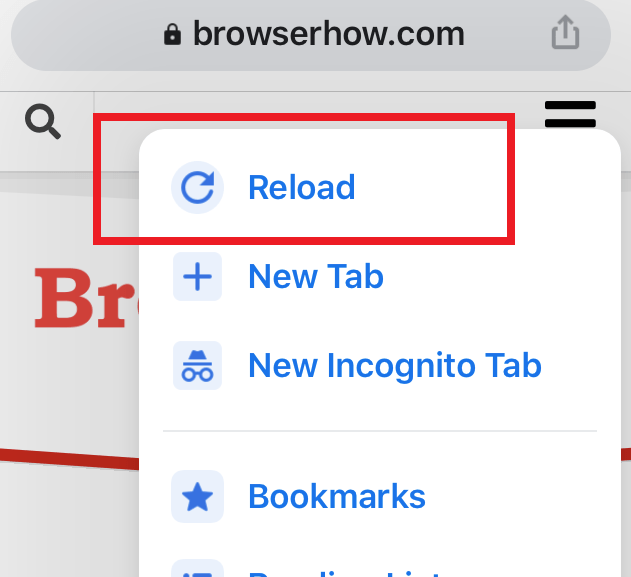
The page redraws after a brief loading indicator. If the old version is still on screen, move on to the cache and site-data cleanup below.
iPad
- Open the affected page in the Chrome app.
- Tap the reload button at the top left of the Chrome window.
Chrome reloads in place. The tab you have open stays put, so you keep your spot on the site.
Pull down to refresh instead
Some pages accept a pull-down gesture, which skips the menu entirely. It only works when the page is already at the top.
- Scroll to the top of the page.
- Pull the page downward until Chrome shows its refresh control.
- Release your finger to reload.
The page starts loading the moment you let go. If nothing happens, the page does not support the gesture and you will need the More menu.
Chrome on Android uses a different menu layout, so follow its own procedure rather than the iOS steps above.

Clear Cached Images and Site Data Instead
You need this step only when a normal Reload keeps serving an outdated image, script, or layout. Pick a time range that covers the visit where things broke, or All time for a full cleanup.
On current iPhone and iPad versions the command is labeled Delete Browsing Data. If your version still shows Clear browsing data, pick that label. Both open the same panel.
Google’s Chrome help page for deleting browsing data on iPhone and iPad lists the current menu. The same command is also reachable from History in the More menu.
- Open the Chrome Browser on your iPhone or iPad.
- Tap on More for the options list.
- Select the Clear browsing data option from the list.

- Select the Time range and enable the checkboxes for the 'Cookies, Site Data' and 'Cached Images and Files' options.

- Tap on the Clear Browsing Data command and confirm deleting the selected data.
Go back to the affected page and tap Reload. The first load may feel slower because Chrome has to download the files again. You’ll know it worked when the page shows the current version instead of the stale one. If Chrome asks you to sign in, that is the cookie cleanup at work.
What to Do if Reload Still Does Not Fix the Page
The page is still wrong after a reload, so the cached copy is not the only suspect. Work through these checks in order.
- Close the affected tab.
- Open the site again in a new Chrome tab.
- If every site in Chrome has the same problem, reset the Chrome browser instead of deleting data one page at a time.

TIP: Quick test: open the page in a private tab. Private browsing starts without your usual cookies and stored site data, so if the page looks right there, the cached copy is the culprit. Here is how to open a private tab in Chrome on iPhone or iPad.
If the same website fails in a different browser or on another device, the problem sits with the site or your network, not the page cache.
Frequently Asked Questions
How do I hard refresh Chrome on an iPhone?
Chrome on iPhone has no hard refresh command. Tap Reload from the More menu first. If old files survive that, use Delete Browsing Data to clear cached images and site data, then reload.
Can I reload a page on Chrome for iPad?
Yes. Tap the reload button at the top left of Chrome on iPad. If it is not visible, try the pull-down refresh gesture on a page that supports it.
Does clearing Chrome browsing data on iPhone sign me out?
It can. Clearing cookies and site data removes stored sessions for affected sites, so you may need to sign in again.
Why does a normal Reload not always fix an outdated page?
A Reload requests the page again, but Chrome may reuse cached images and other files. Deleting cached images and site data removes those files before the next load. If the page still looks wrong after that, the site itself is serving the old content.