Opening Safari and hunting through bookmarks just to reach one site gets old fast. Safari's Add to Home Screen option puts that page one tap away on your iPhone or iPad home screen.
In iOS 26 and iPadOS 26 the same panel adds an Open as Web App toggle, so you can pick a chrome-less app-style window or the classic Safari shortcut with the address bar.
In this guide, I have covered:
Contents
How to put a website on your iPhone or iPad home screen
You open the same three or four sites every day, and every time it starts with Safari, a new tab, then a bookmark or a typed address. A home-screen shortcut skips all of that. One tap on the icon and the page loads.

Looking to put the Safari app itself back on your home screen? Follow add Safari browser on the home screen instead. The steps below are for website shortcuts.
In iOS 17 and earlier, that shortcut is a bookmark that opens inside Safari with the address bar visible. iOS 26 and iPadOS 26 changed the default to a web-app style window with no Safari chrome, which is why an extra toggle now shows up in the Add to Home Screen panel.
- Launch the Safari app on your iPhone or iPad.
- Open the website URL you want to pin to the home screen.
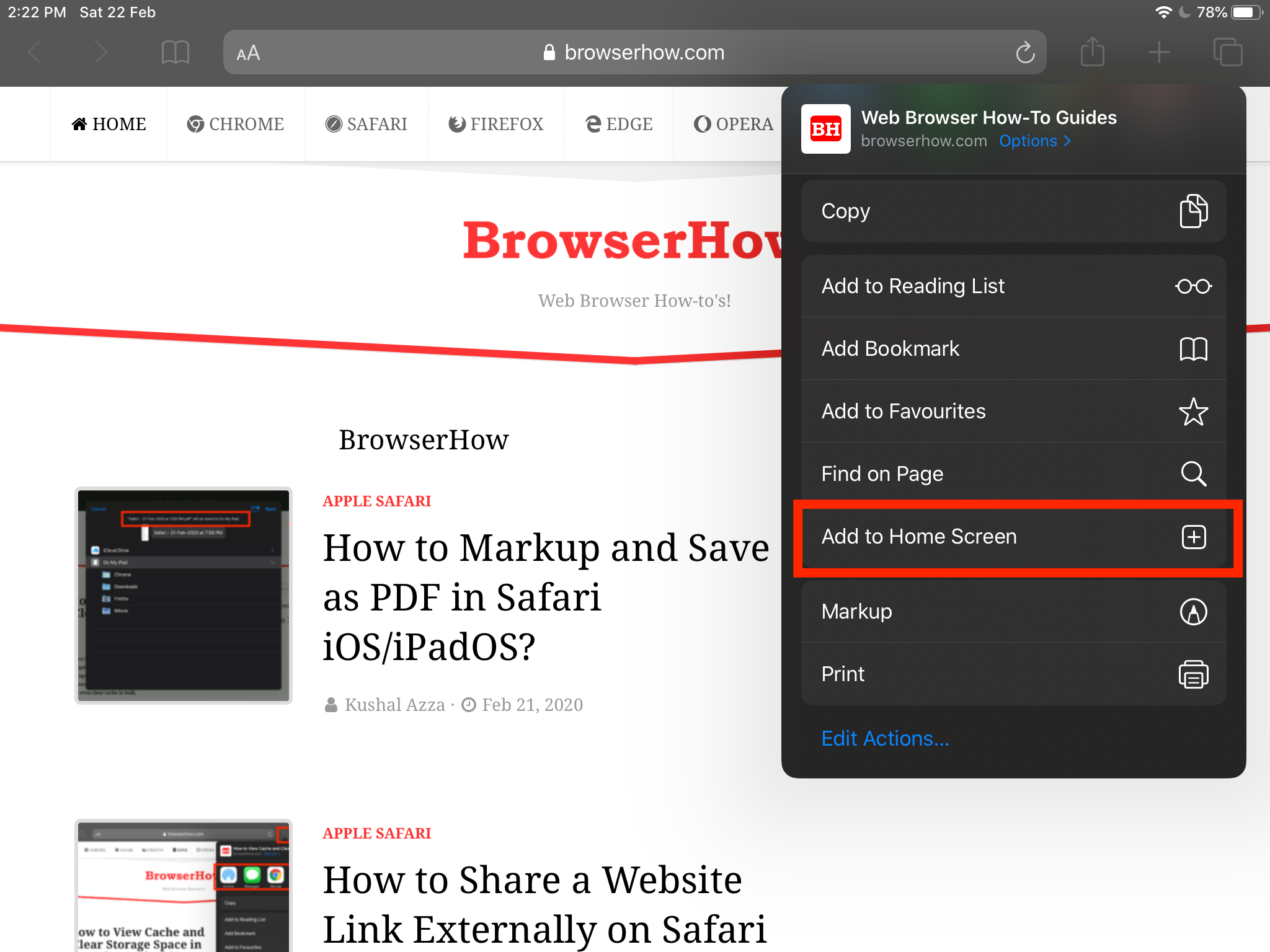
- On iOS 26, tap the aA page-menu button at the left of the address bar, then choose Share from the pop-up. On older iOS, tap the Share button in the Safari toolbar instead.
- Pick Add to Home Screen from the share-sheet action list.
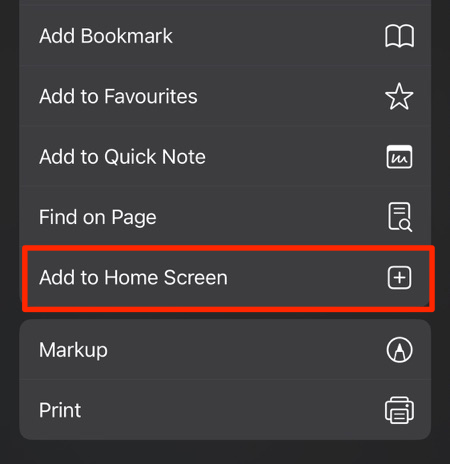
- (iOS 26 and iPadOS 26 only) Turn off Open as Web App if you want the classic Safari-bookmark shortcut with the address bar. Leave the toggle on for a focused web-app window without Safari chrome.
- Edit the title if you want a custom name, then tap in the top-right corner.
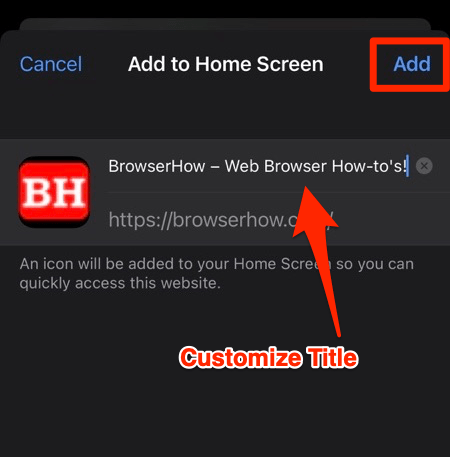
The icon lands on the home screen with the website name underneath. Tap it and the page opens inside Safari, or in the chrome-less web-app window if you left the new toggle on. You’ll know it worked when the icon sits next to your other apps and opens the right page in one tap.
Switch off ‘Open as Web App’ to keep the Safari-bookmark style
Your new shortcut opens without an address bar, and there’s no Back or Done button either. That’s the iOS 26 default, not a bug.
iOS 26 and iPadOS 26 turn the Add to Home Screen action into a web-app shortcut by default, even for sites that do not natively support PWA features. You get a separate window with no Safari tabs or toolbar, which surprises anyone expecting the old bookmark behavior.
The fix sits in the same panel where you typed the title: flip Open as Web App off before you tap . Apple’s Open as Web App guide for iPhone walks through what each option does once the icon is on the home screen.

TIP: Leave the toggle on for pages you want to feel like standalone apps, such as webmail or a chat dashboard. Turn it off for reference sites you’ll want to bookmark, share, or open in a new tab.
Already added one? Long-press the icon and choose Open in Safari to relaunch the page inside Safari once. To make the change permanent, delete the shortcut first, then re-add it from Safari with the toggle off during setup.
Remove a Safari shortcut from the home screen
Home screens fill up, and that shortcut you added months ago may no longer earn its spot. Removing it only deletes the quick-launch icon, not the original bookmark, so the URL stays saved in Safari’s bookmarks or Reading List.
- Press and hold the shortcut icon on the home screen.
- Tap Delete Bookmark from the pop-up menu. iPadOS sometimes shows the option as Remove from Home Screen.
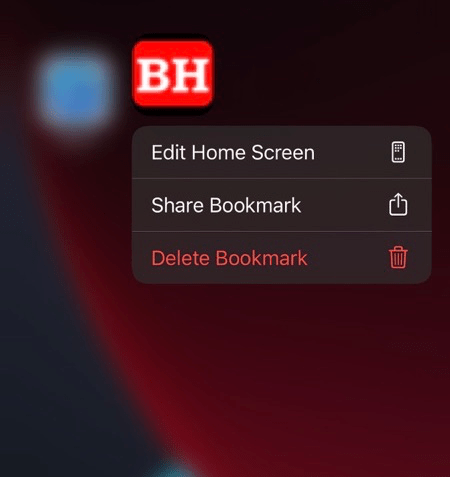
- Tap on the confirmation to drop the icon.
If the shortcut keeps reappearing with odd behavior after you remove it, clearing Safari’s browsing history and website data wipes the cached state the shortcut was using.
Same steps work on iPad
Everything above applies to iPad too, with a couple of label differences along the way.
The Share sheet, the Add to Home Screen panel, and the iOS 26 web-app toggle behave the same way in Safari on iPad. The long-press menu uses slightly different labels in split view and Stage Manager, but Delete Bookmark still removes only the quick-launch icon, not the original bookmark stored inside Safari.

Bottom Line
A Safari home-screen shortcut is still the fastest way to keep a specific page one tap away on iPhone or iPad. The only thing to remember in iOS 26 and iPadOS 26 is to flip the Open as Web App toggle off in the setup panel if you want the classic Safari-bookmark shortcut with the address bar visible.
If you keep the same sites open across devices, you can do the same on a Mac: create a website shortcut on the Mac desktop with Safari.
Frequently Asked Questions
Why does my Safari shortcut open without an address bar?
iOS 26 and iPadOS 26 default the Add to Home Screen action to Open as Web App, which launches the page in a chrome-less window without Safari’s address bar or tabs. Flip that toggle off in the Add to Home Screen panel before tapping Add, and the shortcut reverts to opening inside Safari with the full toolbar.
Can I switch an existing shortcut back to Safari after it was added as a web app?
You can long-press the icon and tap Open in Safari to relaunch the page once in Safari, but the home-screen icon itself still opens as a web app the next time. To make the change stick, delete the shortcut, then re-add it from Safari with the Open as Web App toggle off during setup.
Will deleting the shortcut also delete the bookmark in Safari?
No, the home-screen Delete Bookmark or Remove from Home Screen action only removes the quick-launch icon. The original page stays in your Safari bookmarks or Reading List, so you can find it again through the bookmarks search.
Do the steps work the same on an iPad?
Yes. The share-sheet action, the Add to Home Screen panel, and (in iOS 26) the Open as Web App toggle work identically in Safari on iPad. The long-press menu uses iPadOS-style labels in some contexts, but the final result is the same.
What happens to my shortcuts if I change my default browser to Chrome or Firefox?
Safari-created home-screen shortcuts stay linked to Safari, so they keep working after you switch your default browser. Third-party browsers have their own Add to Home Screen feature that creates a separate icon tied to that browser only.