

Chrome on Android keeps site information and Site settings in separate places. The site information icon (lock or tune) on the address bar shows the current page's connection status, certificate, and Permissions list. Site settings under Chrome's menu handles defaults for every site.
This page covers both, with steps for viewing a site's certificate. Older Chrome versions used to show a Site Settings link in the popup, but that link is gone.
In this guide, I have covered:
Contents
Where to Find Site Settings and Site Information in Chrome on Android
Chrome on Android shows a small site information icon to the left of the address bar on every page. The icon changes shape depending on the site you are on.
On most sites, the icon looks like a small set of sliders, called the tune icon. On encrypted HTTPS sites, you may see a lock icon. On plain HTTP sites, Chrome shows an info icon or a ‘Not secure’ warning.
If you moved the address bar to the bottom of the screen (an option added in Chrome 124), the icon stays attached to that bar, on its left side. Tap the icon to open the popup with site information for the page you are on.
From this popup you can check the connection, view the certificate, and jump into Permissions for that one site. To manage every site or change a default, you need Chrome’s full Site settings menu, covered later.
View Site Security Information and the Certificate
The site information popup is the fastest way to confirm a site is encrypted and to inspect the certificate Chrome is using.
- Open Chrome on Android and load the site.
- Tap the site information icon (tune or lock) to the left of the address bar.
- Tap Connection is secure. If the page is not encrypted, this line reads 'Connection is not secure' instead.
- Tap Certificate is valid to open the full certificate details.
The certificate page lists the issuing authority, the validity period, the domains the certificate covers, the organization, and the key details Chrome used to verify it.
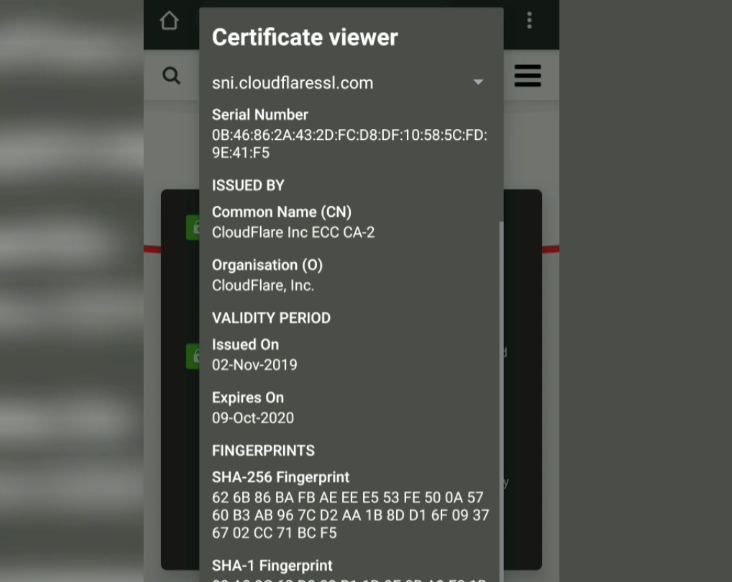
For everyday browsing, the ‘Connection is secure’ line is enough to know the page is encrypted. If you only need to confirm a site is not a phishing clone, you can stop after that line.
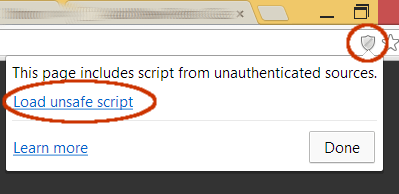
Chrome also blocks pages that load mixed content (a few resources over plain HTTP inside an HTTPS page). In that case you will see a warning instead. Learn more in our guide to unauthenticated source script warnings.
View and Change Permissions for One Site
If a site keeps asking for camera, microphone, location, or notification access, the Permissions list inside the site information popup lets you see what is allowed and turn individual permissions off for that one site.
Open the popup by tapping the site information icon, then tap Permissions. You will see a list of every access setting Chrome remembers for that site, including Camera, Microphone, Location (with both Approximate and Precise options), Notifications, Sound, Pop-ups and redirects, and Insecure content.
Tap any item to switch it between Allow and Block for the current site only. To wipe every granted permission at once, scroll to the bottom of the Permissions page and tap Reset permissions.
The exact steps for one of the most common permissions, notifications, are below.
- In Chrome, open the site whose notifications you want to control.
- Tap the tune icon
 on the left of the address bar. On older Chrome versions, tap the lock icon instead.
 - Tap Permissions.
- Find Notifications and choose Allow or Block.
You’ll know it worked when each permission on the list shows either Allow or Block. Reload the page after a change to apply it.
Open Site Settings to Manage Permissions for All Sites
Site settings is the global control panel. Use it to set a default for every site (for example, block all notification pop-ups) or to review which sites you have already allowed or blocked.
Older Chrome versions added a Site Settings link directly in the popup, but that link is gone. The popup now only opens Permissions for that one site. For the global Site settings screen, use the Chrome menu.
- Tap the
 menu in the top right corner of Chrome.
 - Tap Settings.
- Scroll down to Advanced and tap Site settings.
From there you can change a default for every site, see which sites have been granted or blocked each permission, and review on-device site data with Chrome’s site storage tool. To turn off all notification requests at once, open Notifications from the Site settings menu and toggle off Sites can ask to send notifications.
- Open Chrome on your phone.
- Tap the menu in the top right and choose Settings.
- Scroll to Advanced and tap Site settings.
- Tap Notifications.
- Toggle off Sites can ask to send notifications to block every new request going forward. Then use the Allowed sites and Blocked sites lists below to fine-tune what you have already decided.
If you use the same Chrome profile on a computer, the Site settings menu works similarly but is laid out a little differently. See our guide to viewing site information and settings in Chrome on a computer.
Site Settings vs. Site Information
Both screens deal with the same browser feature, so it is easy to mix them up. One covers the page you are on right now; the other covers every site.
Site information is the popup that appears when you tap the lock or tune icon. It shows details about the specific page you have open right now: connection security, certificate, and a quick link to that site’s Permissions list.
Reached from Chrome’s menu, then Settings, then Site settings, the global Site settings screen groups every permission type on its own page and lists every site that has asked. Use it to change defaults that apply to every site.
If you are fixing a single site that is misbehaving (a stuck notification, a permission you granted by mistake, a pop-up blocker false positive), start in site information. If you want to change a default for every site, go to site settings.
The same split exists in other browsers on Android. Edge and Brave work the same way but with their own menus. For the exact steps, see viewing site information in Edge on Android and viewing site information in Brave on Android.
For Google’s official walkthrough of these screens, see the Chrome help page on site settings.

Frequently Asked Questions
Why can’t I find Site Settings in Chrome on my Android?
The popup that opens from the lock or tune icon no longer says ‘Site Settings.’ It now says Permissions. To open the full Site settings screen, use Chrome’s main menu: tap , then Settings, then Site settings.
Where is the Site information icon in Chrome on Android?
It sits to the left of the address bar. Most sites show a tune icon (sliders), and HTTPS sites show a lock icon instead. If you moved the address bar to the bottom of the screen, the icon stays on the left side of that bar.
Can I see which sites I have allowed notifications on?
Yes. Tap , then Settings, then Site settings, then Notifications. The Allowed and Blocked lists at the bottom show every site that has asked, with your choice for each.
How do I check a site’s certificate on Android?
Tap the tune or lock icon to the left of the address bar, then tap Connection is secure, then Certificate is valid. Chrome opens a page with the issuer, validity dates, and the domains the certificate covers.
Does clearing Chrome’s browsing data reset site permissions?
It depends on what you clear. Wiping cookies and site data resets permissions for the affected sites to their defaults. The global toggles inside Site settings (such as ‘Sites can ask to send notifications’) are saved with your Chrome profile and are not affected.
There is no Site settings link on the Site information page.
Thank you, Alexey for your feedback. We are updating the content to reflect the new changes.
Meanwhile, you can visit the Site Settings option from Chrome apps’s Menu (3-dot) > Settings > Site settings and configure the permissions per your need.
Hi, question, going to a website an tapping the info icon shows all the different info but doesn’t show anything about permissions or any option to change permissions for that site. Thx
You begin with these words:
How to View Site Settings and Site Information in Chrome Android?
This is not a question; it is a title. If you want to ask a question, you need a subject and a verb, for example: “How do I view site settings….”The easiest solution, of course, is to eliminate the eroneous question mark.
Thank you, Mrs. Joan, for your feedback. We are updating all the titles accordingly.
I want to turn on cookies .
I want to stop adclick.com from re-directing my phone to CB2, a furniture store every few minutes
Looks like your phone is attacked by malware. Please consider clearing browser cache and storage.