

Edge for Android does not have a true hard refresh button the way Edge on a computer does. You won't find a keyboard shortcut or a hidden menu option that bypasses cached files in a single tap.
What works on a phone is one of three things: the reload icon in the address bar, the pull-to-refresh gesture, or clearing the cached files for the site. The first two are quick and still use cached content. Clearing cached files is the only method that gives you a fresh page.
In this guide, I have covered:
Contents
Hard Refresh and Reload Options in Edge for Android
Edge for Android is a touch-first browser, and Microsoft did not include a true hard refresh control. You won’t find a keyboard shortcut, a hidden “hard refresh” item in the  menu, or a single tap that bypasses the cache the way + + does on a PC.
When people say “hard refresh” on a phone, they usually mean one of three things: a normal page reload, a pull-to-refresh gesture, or clearing the cached files Edge saved for the site. The first two are quick but still reuse cached content. Only clearing cached files guarantees that Edge pulls a fresh copy of every file from the web.
Reload the Page with the Reload Icon
The quickest way to refresh a page in Edge on Android is the circular arrow icon in the address bar. By default, it sits to the right of the URL on the top toolbar.
If you have moved the address bar to the bottom, the reload icon moves with it. You can change that under Settings → Appearance → Address bar → Bottom.
- Open the page you want to refresh in Microsoft Edge.
- Tap the circular Reload icon in the address bar.
- Wait a moment while Edge refetches the document. A small progress indicator spins in the same spot until the page repaints.
This is a normal reload, not a hard refresh. Edge can still reuse the CSS, JavaScript, and images it already saved for the site. A broken layout or old data may not change.
Pull Down From the Top of the Page
The pull-to-refresh gesture also reloads the current page. It works whether you are reading an article, scrolling a feed, or sitting at the top of a long document.
- Place your finger near the top of the page and press down.
- Drag the screen downward until the Edge reload indicator appears.
- Release your finger. Edge reloads the page.

Pull-to-refresh is an optional gesture in current Edge builds. The setting that controls it sits under Settings → Accessibility. If the indicator never appears when you pull, check that toggle first. Some phone skins and accessibility modes disable it by default.
Like the reload icon, this is a normal reload and does not clear the cache. Use it when you only want to check whether the page has been updated on the server.
Clear the Site’s Cached Files for a Real Hard Refresh
When a normal reload keeps showing the same broken layout or stale data, the only true “hard refresh” on Edge for Android is to wipe the cached files the browser saved for the site. After that, the next reload pulls every CSS, JavaScript, and image file fresh from the web.
- Open the Microsoft Edge app on your Android phone.
- Tap in the bottom toolbar and choose Settings.
- Tap Privacy and Security, then open Clear browsing data.
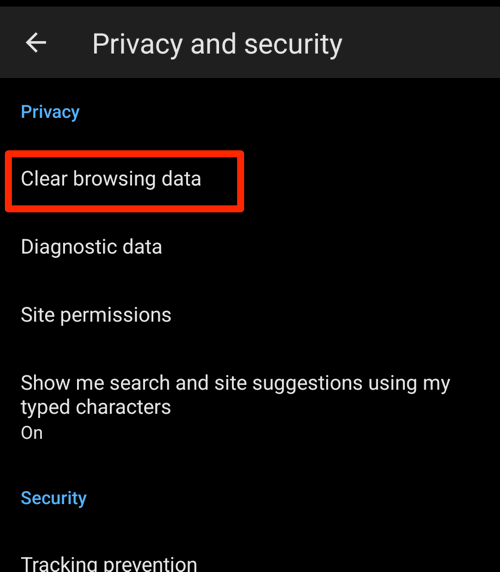
- Select a Time range, then check Cookies and other site data and Cached images and files.
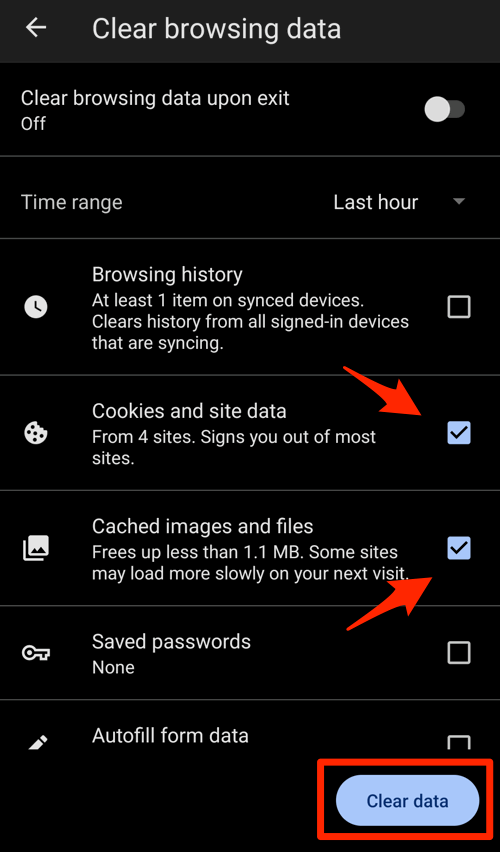
- Tap .
Edge deletes cookies and cache for the selected time range.
You’ll know it worked when you return to the page and tap the reload icon. Edge will repaint with the latest content from the server.

TIP: If you only want to refresh one specific site, choose Last hour or Last 24 hours as the time range instead of All time. That limits the cache wipe to recent files and keeps the rest of your browsing data in place.
Test the Page in an InPrivate Tab First
If you want to know whether a stale page is really a cache problem before you clear anything, open the same URL in an InPrivate tab. InPrivate tabs do not share cookies, site data, or cached files with your normal profile, so the page loads as if it were your first visit.
Tap the Tabs icon in the bottom toolbar. Switch to InPrivate at the top and tap the + button. Then enter the URL.
If the page renders correctly in InPrivate, the issue is cached data in your normal profile and the Clear browsing data step above will fix it. If the page looks just as broken in InPrivate, the problem is on the site itself and no refresh will help.

Bottom Line
Edge for Android has no one-tap hard refresh. The reload icon and the pull-to-refresh gesture both reuse cached content, so they will not fix a truly stale page on their own.
To force a real hard refresh, clear the cached files for the site. Or open the page in an InPrivate tab first to confirm the problem is really the cache.
The same goal is easier on a desktop, where the keyboard does the work for you. See the Edge on the computer hard refresh guide for the shortcuts and menu paths Microsoft ships on PC.
Frequently Asked Questions
Does Edge for Android have a true hard refresh button?
No. Edge for Android has no keyboard shortcut, menu item, or button that bypasses cached files in a single tap. The closest equivalent is clearing the cached files for the site, which forces the next reload to fetch a fresh copy of every resource from the web.
Is pull-to-refresh a hard refresh in Edge on Android?
No. Pull-to-refresh triggers a normal reload, and Edge still reuses the CSS, JavaScript, and image files it has cached for the site. Use it when you only want to see whether the page has been updated on the server, not to fix a stale layout.
Will clearing cached files sign me out of websites?
Only if you also clear Cookies and other site data. To refresh a single page without losing logins, set the time range to Last hour and tick only Cached images and files. That deletes the stale assets but leaves your sign-in cookies alone.
Why is the reload icon missing from the address bar?
It usually means the address bar has been moved to the bottom. The reload icon travels with the address bar, so it will be at the bottom of the screen instead of the top. To put it back on top, open Settings → Appearance → Address bar and choose Top.
What is the difference between a reload and clearing cached files?
A reload refetches the page document but reuses cached CSS, JavaScript, and images. Clearing cached files deletes those stored assets, so the next reload has to download them again. Try a reload first. Clear cached files only if the page still looks wrong afterward.




There is no refresh symbol on edge on an android
Hi X, there is a refresh icon on the edge which is present next to URL bar.
Hopefully you know by now that there is refresh symbol on edge on an android