Microsoft Edge on Android stores sign-ins in Microsoft Password Manager. Use the updated Passwords and autofill path to save new logins, view stored passwords, fix saved credentials, and delete entries you no longer need.
Passkeys sync through Microsoft Password Manager too, once you sign in with your Microsoft account.
In this guide, I have covered:
Contents
Watch the Video Guide for Edge Android Saved Passwords
If you would rather watch than read, the short video below covers saving, viewing, and deleting passwords in Edge for Android.
Open the Microsoft Password Manager in Edge on Android
If you are looking for the old Profile → Passwords menu, it is gone. Sign-ins, addresses, and payment methods now live under one Passwords and autofill section, backed by Microsoft Password Manager. Open that section whenever you need to add, edit, or remove credentials in Edge on Android.
- Launch Microsoft Edge on your Android phone.
- Tap the More
 menu in the bottom toolbar and choose Settings.
 - Tap Passwords and autofill.
- Tap Microsoft Password Manager to open the full list of stored sign-ins.
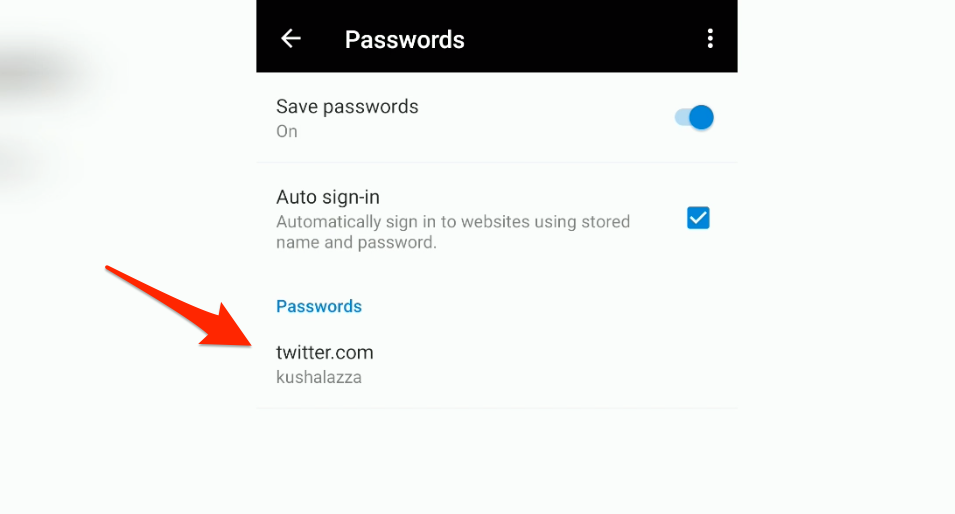
The manager is where you save new passwords, change stored credentials, view entries, copy a password, or delete a login. Changes sync to every Edge browser signed in to the same Microsoft account.
Save Passwords and Enable Auto Sign-in
When you sign in to a site for the first time, Edge on Android offers to save the password. Check that both the save prompt and autofill are enabled, so future logins fill themselves in.
- Open Microsoft Edge on your Android phone.
- Tap the More menu and choose Settings.
- Tap Passwords and autofill.
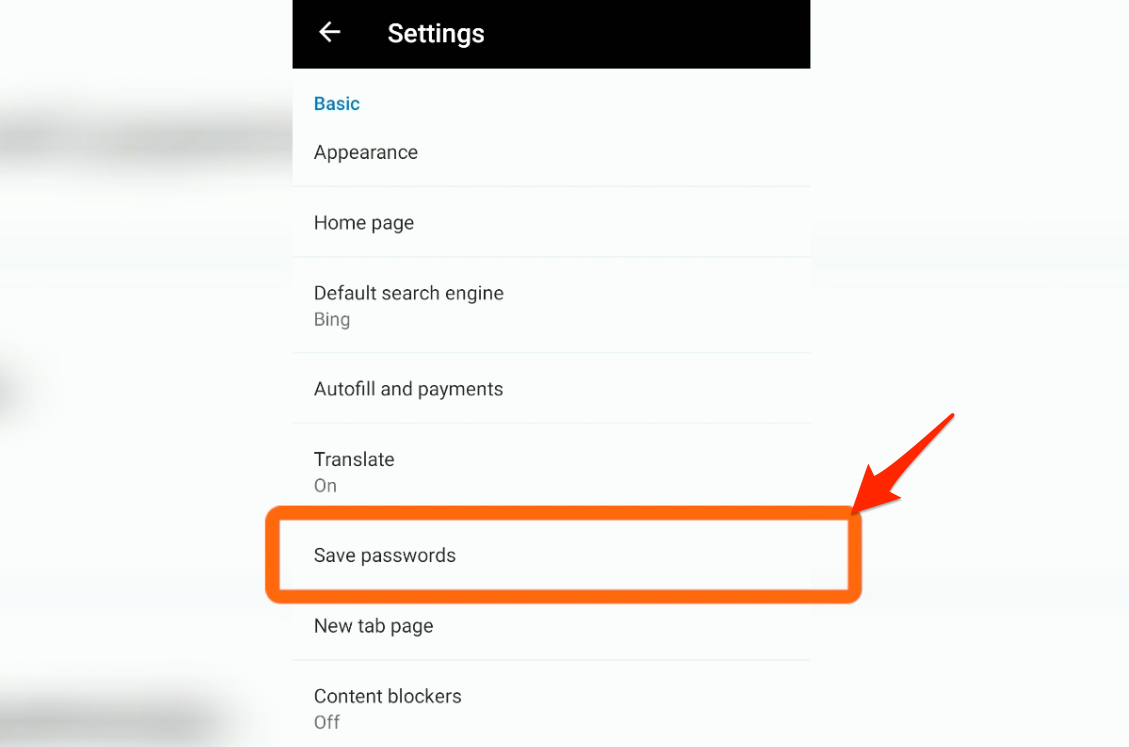
- Turn on the Offer to save passwords toggle so Edge prompts you on every new login.
- Turn on Auto sign-in if you want Edge to skip the password screen on your next visit to a saved site.
The next time you enter sign-in details on a website, Edge prompts you to save them. Accept and the entry shows up in Microsoft Password Manager and on your other synced devices. Decline and the password is not stored.
View the Saved Password
Edge hides stored passwords until you prove it is you. Use your phone PIN, pattern, or fingerprint to unhide one.
- Open Microsoft Edge and tap More , then Settings.
- Tap Passwords and autofill, then Microsoft Password Manager.
- Pick the entry you want to look at and tap the icon.
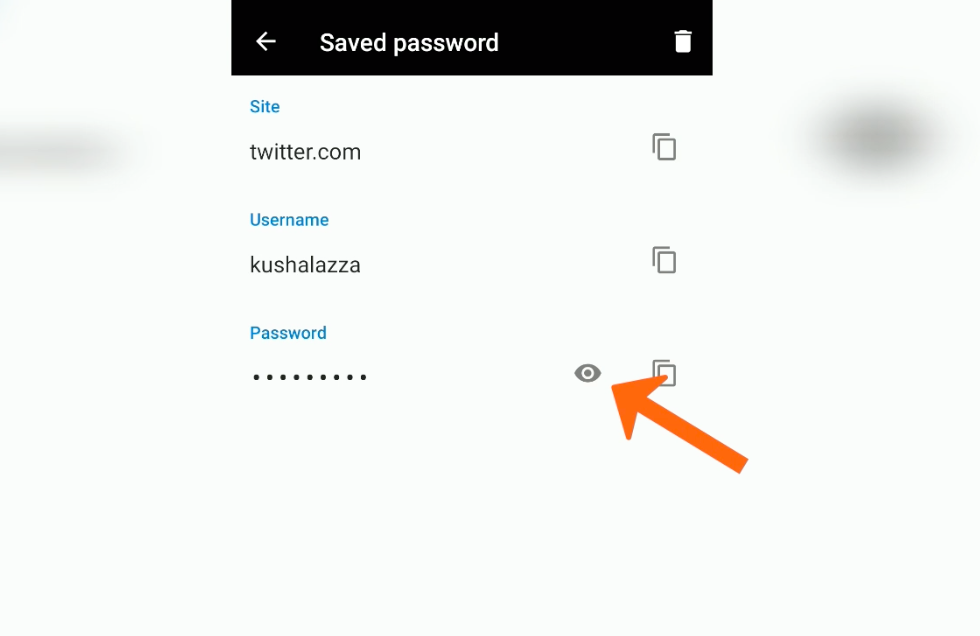
- Pass the device authentication prompt. The hidden password becomes readable on the screen.
The username and site address stay visible the whole time. If you only need to paste the password somewhere else, tap the icon next to the hidden field.
Edit Saved Sign-in Information
A saved login is not stuck the way you first entered it. Fix a typo in the username, change the site URL, or update the stored password itself inside Microsoft Password Manager.
The button on each entry opens a dialog where every field is editable.
- Open Microsoft Edge and tap More , then Settings.
- Tap Passwords and autofill, then Microsoft Password Manager.
- Tap the saved entry you want to change.
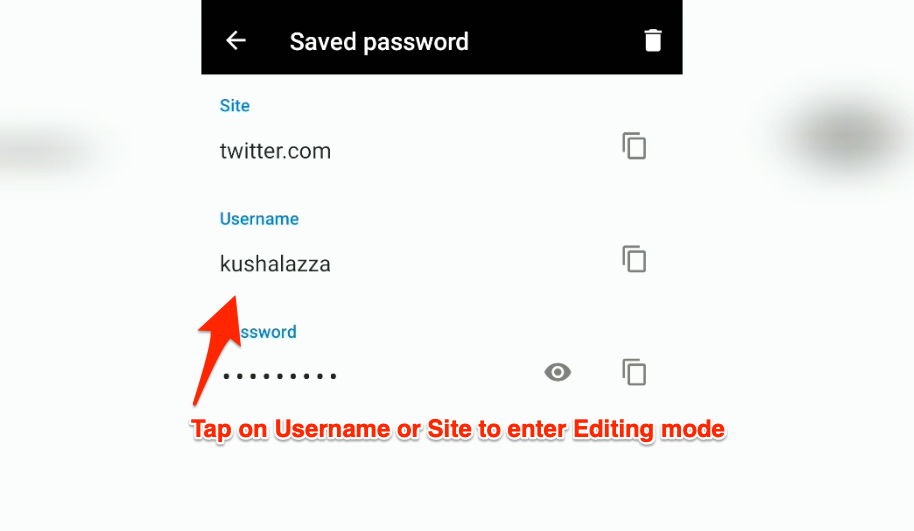
- Tap and update the username, site URL, or stored password.
- Tap to apply the change.
Updates sync to other devices signed in to the same Microsoft account within a few seconds.

Note: If the saved password is wrong because the site reset it and you cannot pick a new one inside Microsoft Password Manager for any reason, sign in to the online account with the new password and tap the prompt Edge shows when it detects the mismatch.
Delete a Saved Password
If you no longer use an account, delete the saved entry so it stops autofilling on your next visit.
- Open Microsoft Edge on your Android phone.
- Tap the More menu and choose Settings.
- Tap Passwords and autofill, then Microsoft Password Manager.
- Pick the saved password to remove and tap the icon.
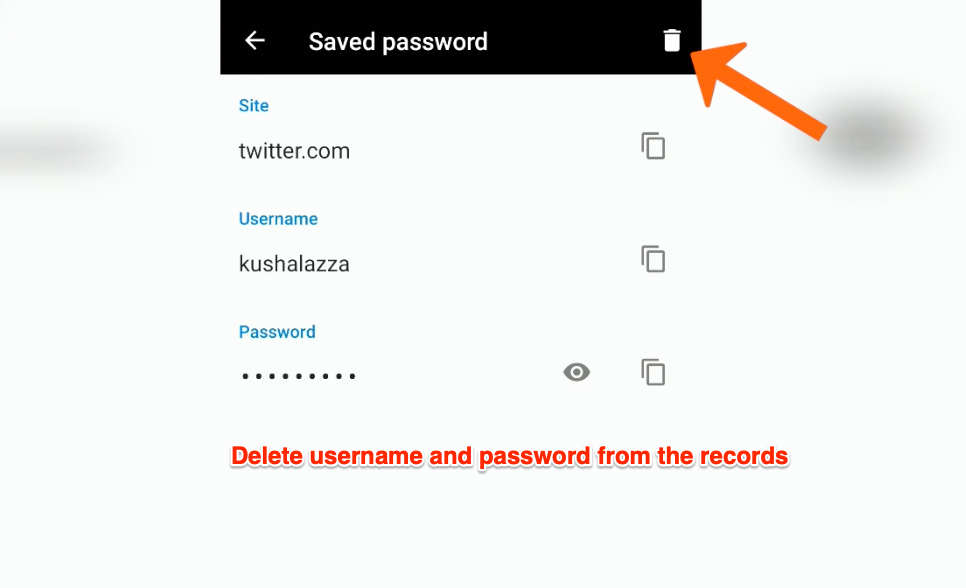
- Confirm the deletion when Edge prompts.
The credential is deleted locally and from every synced device that is online. Microsoft Password Manager does not keep an undo history, so a deleted entry cannot be recovered afterward.
Set Edge as the Android Autofill Provider
If you relied on Microsoft Authenticator for autofill, that option is gone. Microsoft retired Microsoft Authenticator’s autofill and password storage in mid-2025. To make Microsoft Password Manager fill forms in other apps, set Edge as the Android autofill service.
- Open Settings on your Android phone.
- Tap Apps, then Default apps (or Choose default apps on older Android builds).
- Tap Autofill app or Autofill password.
- Pick Edge instead of any other password manager listed there.
From now on, every app that asks for a saved password opens the Microsoft Password Manager list. You’ll know it worked when another app pops the Edge password list instead of a different manager.
Passkeys and Sync Across Devices
Microsoft now routes passkeys through Microsoft Password Manager as well. Any passkey you create in Edge on Android syncs to the rest of your signed-in devices, including Edge on your computer, as soon as Microsoft Password Manager picks it up.
Passwords and passkeys sync automatically when you are signed in with your Microsoft account across every Edge install. You’ll know sync worked when a passkey created on the phone appears on the computer in Edge.

Frequently Asked Questions
Where did the old Passwords menu in Edge for Android go?
The Settings → Profile → Passwords entry has been replaced by Settings → Passwords and autofill → Microsoft Password Manager. The new entry holds passwords, addresses, payment methods, and passkeys in one place, and it is the home for signing out, copying, and deleting any saved credential.
Can I edit the stored password itself inside Microsoft Password Manager?
Yes. Opening a saved entry shows an button that exposes the password field alongside the username and site URL.
Type the new password, tap , and the change syncs to every other signed-in device. If the menu still only exposes username and URL on an older build, sign in to the online account with the new password and tap Edge’s prompt on the next visit.
Do I still need Microsoft Authenticator for Edge passwords?
No. Microsoft retired Microsoft Authenticator’s autofill and password storage in mid-2025. Every sign-in now lives in Microsoft Password Manager inside Edge, or in the standalone Microsoft Password Manager app. Setting Edge as your Android autofill provider is what lets login forms outside the browser use those credentials.
Are saved passwords synced across my Android phone and computer?
Yes, as long as the same Microsoft account is signed in on every Edge install. New saves, edits, and deletions propagate to other devices within a few seconds when they are online. The same sync now also covers passkeys created in Edge after the late 2025 passkey update.