
Edge for Android treats JavaScript as a site permission, so one switch decides whether scripts run at all. Turn it off and pages load as plain HTML. Turn it back on and interactive sites start working again.
You can also make an exception for a single address, which is handy when one site needs scripts but you would rather keep the rest blocked.
In this guide, I have covered:
Contents
Turn JavaScript on or off for every site in Edge for Android
You want scripts to stop running everywhere, or you turned them off earlier and now need them back. Either way, Edge for Android keeps this behind one site-permissions switch that applies to the whole browser.
- Launch Microsoft Edge on your Android phone.
- Tap the
 menu in the bottom toolbar and choose Settings.
 - Tap Privacy and Security, then tap Site Permissions.
- Choose JavaScript from the list.
- Toggle Sites can use JavaScript off to block scripts, or on to allow them. On older Edge builds, the same switch reads Allowed or Blocked instead.
Open a site in a new tab to check the result. With JavaScript off, menus, embedded video, and login forms stop responding on most pages. You’ll know it worked when a page that once threw a pop-up or auto-played a video now loads as plain HTML.
Switching to the desktop version of a site won’t bring those controls back, because the script block follows the page, not the layout mode.
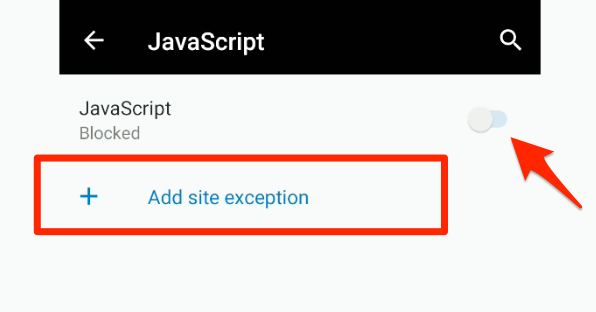
Allow or block JavaScript for a single site
If one site breaks while everything else works fine, an exception beats re-enabling scripts everywhere. Per-site rules override the master toggle for the addresses you list, so the rest of your browsing stays locked down.
- Stay on the JavaScript settings page from the previous section.
- Tap Add site exception.
- Type the full site address, for example example.com, then confirm with Add.
- Open the new entry and choose Allow or Block, depending on whether scripts should run there.
Reload the site and the new permission takes effect right away. To undo it later, tap the entry and choose Remove.
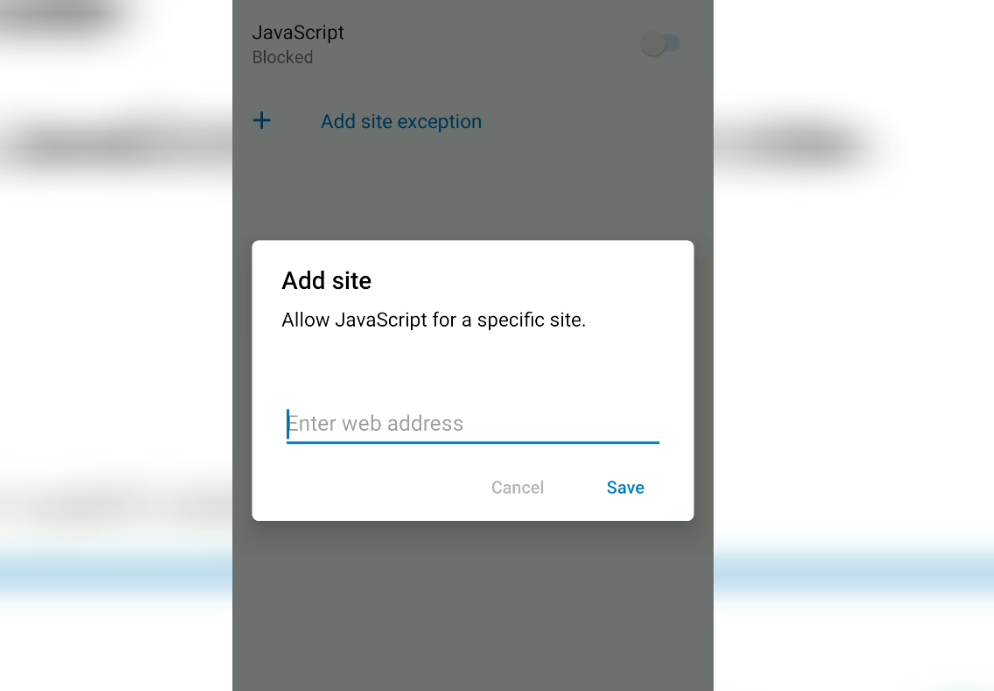
What changes when you block JavaScript
Turn that switch off and pages will look different. Most modern sites lean on JavaScript to draw menus, validate forms, load product lists, and play embedded video, so expect these to break:
- Pages render as plain HTML. Buttons, drop-downs, and infinite scroll often stop working.
- Login forms may fail to submit, leaving you stuck on a loading spinner.
- Online stores, banking portals, and web apps may refuse to load at all.
- Some sites show a “Please enable JavaScript” banner instead of their normal layout.
Per-site exceptions are the fix. Point them at the handful of sites you actually need, and leave everything else blocked.
If Edge starts to feel slow, scripts are rarely the cause. Clearing the browsing data in Edge for Android usually sorts out a sluggish session.
Why turn JavaScript off at all
Blocking scripts is a debug step, not a permanent security setting, and that’s why most people leave it off for only a few minutes. The common reasons to switch it off:
- A site keeps redirecting you, firing pop-ups, or freezing the tab.
- You want to read an article without tracking scripts or auto-playing video.
- You are chasing a layout bug and want to see if the page holds up without scripts.
For everyday browsing, leave JavaScript on and use exceptions for the occasional site that misbehaves. The same per-site approach covers other Edge for Android permissions, including sound playback for individual sites.

Frequently Asked Questions
Is JavaScript blocked by default in Edge for Android?
No. Edge for Android ships with JavaScript enabled, so interactive sites work out of the box. Turning the Sites can use JavaScript switch off is the only way to block scripts everywhere.
Can I allow JavaScript on just one site while keeping it blocked everywhere else?
Yes. On the JavaScript settings page, tap Add site exception, enter the site address, and set it to Allow. That URL runs scripts normally while every other site stays blocked.
Does blocking JavaScript protect me from malware and tracking?
It cuts off one attack surface, but it is not a complete shield. Many trackers, fingerprinting scripts, and malicious payloads arrive through other channels such as images, fonts, and first-party HTML. Use the block alongside Edge’s built-in tracking protection if you want real cover.
Why does the JavaScript page show “Sites can use JavaScript” instead of Allow or Block?
Microsoft matched the Android label to the desktop wording. The switch behaves the same way.
On means every site can run scripts. Off blocks them everywhere. Per-site exceptions override either state.
What is the difference between the global toggle and an exception?
The global toggle sets the default for every site. An exception overrides that default for a single URL. Leave the toggle in the state you want for most sites, then use exceptions to flip the rule for pages you trust or distrust.