

Picking between Firefox and Chrome is rarely about a spec sheet. It comes down to where your work lives and how much tracking you will accept by default.
Run both browsers for a week with your usual mix of email, video calls, and heavy web apps. Compare tab memory use, extension availability, and sign-in continuity, then pick the one that stayed out of your way.
In this guide, I have covered:
Contents
Quick Verdict: Firefox or Chrome?
You want a straight answer before you read a word about benchmarks. Here it is. Chrome suits anyone whose day runs through Gmail, Docs, Drive, and a Google account. Firefox suits anyone who wants trackers blocked by default and a browser that does not route search and sync through Google.
Both are good browsers, and that is the frustrating part. The one that feels fast on your most-used sites, keeps your accounts tidy, and blocks the tracking you care about will beat a longer feature list every time.
| What matters most | Better fit | Why |
|---|---|---|
| Google Workspace and account integration | Google Chrome | Google services share sign-in, profile, and sync details more readily. |
| Privacy-focused defaults | Mozilla Firefox | Enhanced Tracking Protection and less dependence on a Google account. |
| Mainstream extension choice | Google Chrome | Its Web Store carries a broad range of commercial productivity and communication tools. |
| Interface customization | Mozilla Firefox | Firefox offers more direct control over themes, toolbars, and tab layout. |
| Many tabs on a low-RAM computer | Test both | Active tabs, extensions, and media-heavy sites often matter more than the browser name. |
Browsing Experience and Interface
You open the browser dozens of times a day, so how it feels matters more than any spec sheet. Chrome is familiar from the first launch. Firefox asks for a few minutes of setup, then hands you more control over how everything looks and behaves.
Google Chrome
Chrome bundles tab search, saved tab groups, profiles, bookmarks, and a right-click image search through Google Lens. The toolbar stays clean, and profiles keep work, personal, and side accounts apart. Sign in and Chrome, Gmail, Drive, and Calendar recognize each other without extra steps.
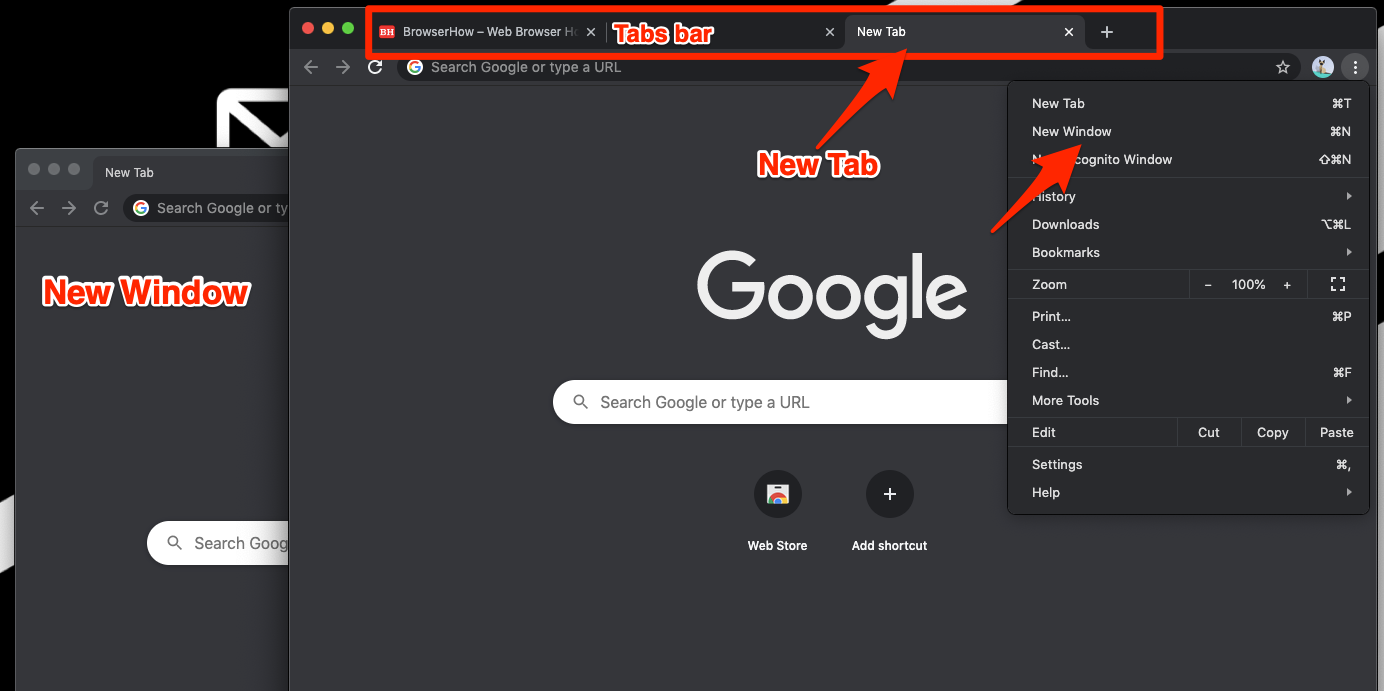
Both browsers scroll a crowded tab strip, so that trick alone should not decide anything. Chrome’s tab search, groups, and separate profiles are the bigger draw if you keep dozens of pages open and need to find one fast.
Mozilla Firefox
Firefox ships tab groups, saved searches, themes, and a toolbar you can rearrange. If your tab strip gets out of hand, our tab management in Firefox guide shows how to organize pages without losing track of them. Firefox also supports vertical layouts when you want more room for page content.
The old claim that Chrome cannot be customized is out of date. Both browsers do dark mode and themes. Firefox simply gives you more visible control over toolbar and tab layout.
Verdict: Chrome wins for minimal setup and Google integration. Firefox wins when interface control and distance from Google’s ecosystem are priorities.
Features and Customization
Counting features on a checklist is a poor way to pick a browser. Ask a narrower question instead: does this browser support the services, devices, and tweaks you touch every day?
Google Chrome
Chrome covers Google Password Manager, a PDF viewer, translation, reader mode, profiles, tab groups, casting, bookmark sync, and history tools. Google apps share account details with the browser, which saves clicks when you move between mail, documents, calendar, and cloud storage.
Mozilla Firefox
Firefox covers PDF handling, translation, reader view, a screenshot tool, password storage, bookmarks, history, sync, and private browsing. You can switch the search engine without tying every search to a Google profile. Firefox for Android adds options such as night mode and a QR reader.
The differences that matter are narrower than the feature lists suggest. Firefox gives you privacy controls and freedom to rearrange the interface. Chrome gives you Google services, casting, and simpler account continuity. Neither has a lock on essential features, so your routine decides.
If you are weighing a third option, our Opera vs. Firefox comparison runs the same checks on privacy defaults, speed, and extensions.
Verdict: Chrome wins for Google-centered productivity. Firefox wins for stronger privacy controls and more say over the browser itself.
Speed, Memory Use, and Heavy Tabs
Your browser crawls to a stop with twenty tabs open, and you wonder whether the other one would handle it better. Memory pressure is usually the culprit, not page-loading speed. A single video call, one heavy web app, or a stack of extensions can outweigh any benchmark lead.
Chrome often feels quicker on Google-owned sites. Firefox sometimes uses less memory across a long multi-tab session. No dependable winner exists, because site code, network conditions, extensions, ad blockers, and background processes can flip the result.
Both browsers shed the load from tabs you are not using. Chrome’s Memory Saver discards inactive tabs, and Firefox unloads them when memory runs short. Before you blame Firefox for a broken setup, resetting Mozilla Firefox browser settings rules out a corrupted configuration.

Privacy and Security
Privacy and security sound like the same thing. They are not. Tracking protection limits cross-site profiling.
Safe Browsing and certificate checks go after dangerous sites, downloads, and insecure connections. Each browser handles both jobs differently.
Mozilla Firefox
Firefox has options that enhance its level of security. Enhanced Tracking Protection blocks known trackers and cross-site tracking cookies. HTTPS-Only Mode upgrades connections and warns you when a page cannot load securely.
The optional Primary Password (called Master Password in older guides) protects logins saved on that computer. It is not a master key for everything synced to the browser.
Tracking protection also does not erase what is already stored. If you want a clean slate, clearing your browsing history in Firefox takes a couple of clicks.
Google Chrome
Chrome’s security and protection settings center on Safe Browsing. Enhanced Protection checks dangerous URLs and downloads more aggressively and sends relevant browsing data to Google for real-time checks. Standard Protection relies on a list that updates periodically and lives on your device. Signing into Chrome also ties more of your setup to a Google account.
Both browsers flag an insecure connection, so that warning is not a Chrome exclusive. HTTPS protects data in transit. It does not make a deceptive site trustworthy.
Firefox is the better default if you want fewer tracking links into Google and a cleaner break from an account ecosystem. Chrome gives you active real-time threat checks with Enhanced Protection turned on, at a privacy cost worth weighing on purpose.
Extensions and Add-ons
Extension choice only matters if the tool you need actually exists on your side. Check the specific add-ons you rely on rather than comparing catalog sizes. Chrome leans toward mainstream commercial extensions. Mozilla Add-ons leans toward privacy tools and open-source projects.
Chrome’s extension catalog covers productivity, communication, design, and shopping. Some tools are built for Chromium only, so a Chrome extension may not install in Firefox even when the two listings look identical.
Mozilla reviews every listing in its official collection and requires extensions to be signed. For a curated starting point, see our best Firefox add-ons roundup. Firefox has fewer commercial choices for some tasks, though ad blocking, bookmarks, privacy, and productivity all have strong alternatives.
Both stores carry extensions that ask for broad permissions. Fewer trusted add-ons means better security and lower memory use, so read the permissions before you port an extension between browsers.
Verdict: Chrome wins the widest mainstream catalog. Firefox wins for privacy-focused add-ons and a more open review process.
Which Browser Should You Choose?
You have read the trade-offs and still need to commit. The answer depends on your normal workload, not on a feature count. Match the browser to how you actually spend the day.
Choose Google Chrome if…
- Your work and communication run through Google Workspace, Gmail, Calendar, and Docs.
- You want the largest mainstream extension catalog with little configuration.
- You rely on Chrome profiles, tab groups, casting, and Google account sync across devices.
Choose Mozilla Firefox if…
- You want tracking protection and the option to use a non-Google search engine without signing into Google.
- You prefer more control over themes, toolbars, and tabs.
- You want to test whether Firefox’s inactive-tab unloading works better on a low-RAM computer.
A one-week trial with your normal mix of email, documents, video calls, and heavy web apps will tell you more than any synthetic benchmark. Keep extensions and privacy settings similar in both browsers so the browser itself is the only variable.
If you decide to leave Firefox, uninstalling Mozilla Firefox and deleting its stored files walks through the cleanup. Sync or export bookmarks and passwords before you remove the profile.
Frequently Asked Questions
A few questions come up every time someone weighs these two browsers. Here are the short answers, plus the caveats that change the outcome.
Is Firefox better than Chrome for privacy?
Usually, yes, if you compare default settings. Firefox turns on Enhanced Tracking Protection, offers HTTPS-Only Mode and an optional Primary Password, and does not require a Google account. A signed-in Chrome setup shares more with Google, and your own settings can narrow the gap.
Which browser is faster and uses less RAM?
There is no fixed winner. Firefox may use less memory in some multi-tab sessions, but extensions, active media, web apps, and background services often have a larger effect. Chrome tends to feel faster on Google-owned sites, so test your own workload.
Can I use Chrome extensions in Firefox?
Some Chrome extensions work in Firefox. Chromium-only tools may not. Search Mozilla Add-ons before switching and check the permissions, since an extra or poorly matched extension can also cost you performance.
Does Firefox still use a Master Password?
Modern Firefox calls it Primary Password. It is optional, protects logins saved on that computer, and is not required for Firefox Sync.
Which is better if I use Google apps?
Chrome is usually the smoother choice because Google services share account, profile, and sign-in details with the browser. Firefox runs those sites fine and syncs its own data, but you lose some of that built-in continuity.
Still torn? Install both, sign into the same accounts, and give each a few days on different tasks. The winner is usually obvious well before the week ends.

Firefox crashed on me at least once a week, sometimes more.
I am a Firefox user since the mid 2000s, hardly had any problems with it. I tried other browsers like Opera or Chrome. With Chrome I had the worst experience as it’s not very user friendly, but that’s a personal issue. I just don’t like the interface, very unintuitive. But the main reason I hated it was that I always felt like there is a creepy guy looking over my shoulders making notes of every action I made.
Opera is good, but I stuck with Firefox as I kinda grew up with it. 😀
“The two factors that made Chrome move ahead in the race”
I think this is “Firefox” instead of “Chrome”
firefix coz I’m a fury..
i do hope someone creates a perfect browser.
Let’s support internet freedom – STOP USING FIREFOX
what ‘freedom’ are you talking about?
Walter must be talking about the freedom to spy on people.
#1 is firefox for me .
On bookmarks and bookmark management. In my experience with both browsers (Firefox is my main though) I’ve found using bookmarks in Firefox far better than in Chrome. Especially the bookmark “Tagging” system which I use extensively. By grouping certain similar websites, all with separate bookmarks of course, using a single “tag” I can type in that “tag” in the address field of Firefox and a list of entire group of the related”tagged” bookmarks drops down from the address field letting me choose the one I want (or several in separate tabs. Chrome doesn’t have this feature which makes is one of the reasons I can’t use it.
I love Firefox but it’s absolutely the worst performing browser for Windows right now. When it comes to performance the new Microsoft Edge beats the alternative. Any Chromium browser beats Firefox for that matter. Firefox lacking quality extensions and since recently not supporting Chrome extensions is a huge disadvantage. No support for TTS, page translation, web app installation and a myriad other things puts the browser on the last position. The only thing I really like about Firefox is devtools.
Firefox is the worst browser ever, it’s ridiculous how much problems I have now with pages slowing browsers down, always youtube. Also sick and tired of these so called IT experts with their useless knowledge and solutions.