

Picking a browser for a Mac comes down to what you actually do all day: privacy, extensions, sync, or tight Apple integration.
Nine options are compared below, each with the trade-off worth knowing before you switch. Download the official build, import your bookmarks and passwords, and give it a few days of real use.
In this guide, I have covered:
Contents
Which Mac Browser Fits You? Nine Options Compared
Most readers arrive with a shortlist already and one question left: which of these deserves the default slot on the Mac. The table below pairs each browser with the job it does best and the trade-off that comes attached.

Our Review Process: We consider various parameters for review, which include but are not limited to ease of usability, built-in features, popularity, user rating, frequency of updates, support, and most importantly, customer satisfaction. We rate the products or services compared to its peers under the same category. Hence, a product/service rating on Page 'A' can be different than Page 'B'.
Ratings are relative to the browsers compared here. A few tenths of a point should never outweigh your own priorities.
| Browser | Best for | Main consideration |
|---|---|---|
| Google Chrome | General use, Google accounts, and cross-device sync | Close integration with Google services |
| Apple Safari | Apple devices, efficiency, and built-in privacy tools | Fewer extensions and customization options |
| Mozilla Firefox | A non-Chromium browser with strong tracking protection | Some Chromium-focused sites can behave differently |
| Microsoft Edge | Microsoft 365, Chrome extensions, and productivity tools | More Microsoft-oriented features |
| Opera | Built-in tools and extensive interface customization | Browser VPN is not a full-device VPN |
| Brave | Ad blocking and tracking resistance | Smaller extension catalog than Chrome |
| Vivaldi | Detailed control over tabs, panels, and menus | Can use more memory than lightweight options |
| Puffin | Low-resource browsing through cloud rendering | Complex web apps may not work identically |
| Avast Secure Browser | Mac users who already rely on Avast security tools | Less value outside the Avast ecosystem |
Compatibility note: Every major browser in this guide ships builds for both Intel and Apple silicon Macs. Your installed macOS version decides which build you receive, and Safari is already on the system.
Read the two or three sections below that match your priorities, then download the official build and run it next to your current browser for a few days. You’ll know it worked when logins, video calls, and your daily sites behave exactly as they did before.
Google Chrome
Chrome is the safest bet when you want one browser that behaves identically on a MacBook, a phone, and an office PC. The address bar doubles as a search field, pages load predictably, and everyday work rarely throws a surprise.
Best for: General use and Google accounts. Our rating: 4.5/5.
Signing in with a Google account synchronizes data such as bookmarks, history, and settings across every device where you use Chrome.
You can also customize the appearance of Chrome browser and tune tabs, downloads, and profiles to match the way you work.
The library of extensions is the bigger draw. Work tools, accessibility add-ons, and small quality-of-life fixes are nearly always built for Chrome first.
The cost is how tightly it ties you to Google. If data minimization or reduced platform dependence matters more than convenience, compare Safari, Firefox, or Brave before you make Chrome your only browser.
- One field for search and addresses
- Cross-device bookmark, history, and settings sync
- Broad extension support
- Sandbox model that limits browser access to certain operating system functions
- Family controls for supervised accounts
Apple Safari
Your Mac already has a browser installed, and it happens to be a good one. Safari is the least-effort choice for anyone whose devices are a Mac, an iPhone, and an iPad.
Best for: Apple users and everyday privacy. Our rating: 4.7/5.

Apple manages Safari as a built-in system app and updates it with macOS. Syncing across Apple devices runs through iCloud to keep bookmarks, tabs, and other shared items close at hand, while intelligent tracking protection limits cross-site tracking without any setup.
If you use a private session regularly, our guide to opening private browsing and new tabs in Safari on Mac covers the controls and the workflow.
Extension choice is where Safari falls short. The catalog is smaller and customization stays lighter than Chrome or Vivaldi, and there is no standalone download. Safari arrives with macOS and updates through system software updates.
- Preinstalled with macOS
- Designed for efficient use on Apple hardware
- Tracking protection and privacy controls
- iCloud handoff between Apple devices
- No separate installer required
Mozilla Firefox
Firefox is for anyone who wants off Chromium without giving up a modern browser. It runs its own rendering engine, and tracking protection sits up front instead of buried three menus deep.
Best for: Privacy-minded users and an alternative to Chromium. Our rating: 4.6/5.

Firefox’s interface can be adjusted with themes and layout controls, and it performs well on macOS. Extension support covers the essentials, and a Mozilla account for sync is optional rather than required.
Compatibility is the catch. Some complex web apps are still tested against Chromium first, so open your work tools in Firefox before you move your default browser.
- Independent, non-Chromium rendering engine
- Strong tracking protection
- Open extension choices
- Cross-platform availability
- Optional Mozilla account sync
Microsoft Edge
Your workday runs on Microsoft 365, or you want a Chromium browser with a different set of built-in tools. Edge for Mac is worth a test, and the interface will feel familiar the moment you open it after Chrome.
Best for: Microsoft services and Chrome extension compatibility. Our rating: 4.6/5.

Edge supports Chrome extensions, so an existing extension setup usually transfers without hunting for alternatives. Tracking protection is on by default, and vertical tabs help when one window holds thirty tabs.
One correction worth making: Internet Explorer mode is a Windows-only Edge feature. The Mac version does not have it, and Edge for Mac is Chromium underneath with an interface that has nothing to do with Internet Explorer.
Edge earns its place when Microsoft accounts and Windows machines are already part of your week. Chrome has broader recognition, while Brave or Firefox suit privacy-first priorities better.
- Chrome extension compatibility
- Built-in tracking protection
- Vertical tabs for dense workspaces
- Microsoft account integration
- Chromium-based rendering
Opera Browser
Ad blocking, a free VPN, and a sidebar without installing five extensions to get them. That is Opera’s pitch, and the extra interface controls back it up.
Best for: Built-in utilities and heavy customization. Our rating: 4.6/5.

The Built-in Ad Blocker strips many third-party ads before a page finishes loading, which makes ad-heavy news sites far easier to read.
Our guide to the Free VPN explains what the Opera desktop feature covers and where it stops. It protects traffic sent through the browser, not every app on your Mac.
Opera runs on Chromium, so extension compatibility is broad. Its defaults lean toward convenience rather than the granular tracking controls you get in Firefox or Brave.
Turbo mode cuts data use on slow connections. It won’t make every website faster.
- Built-in ad blocker
- Free browser VPN
- Sidebar and extensive layout customization
- Turbo and data-saving modes
- Chromium extension support
Brave Browser
Ads and tracking scripts are the reason you are switching. Brave is built around that single job, and its Shields block many third-party ads and trackers before they load while keeping a familiar Chromium layout.
Best for: Ad blocking and tracker resistance. Our rating: 4.6/5.
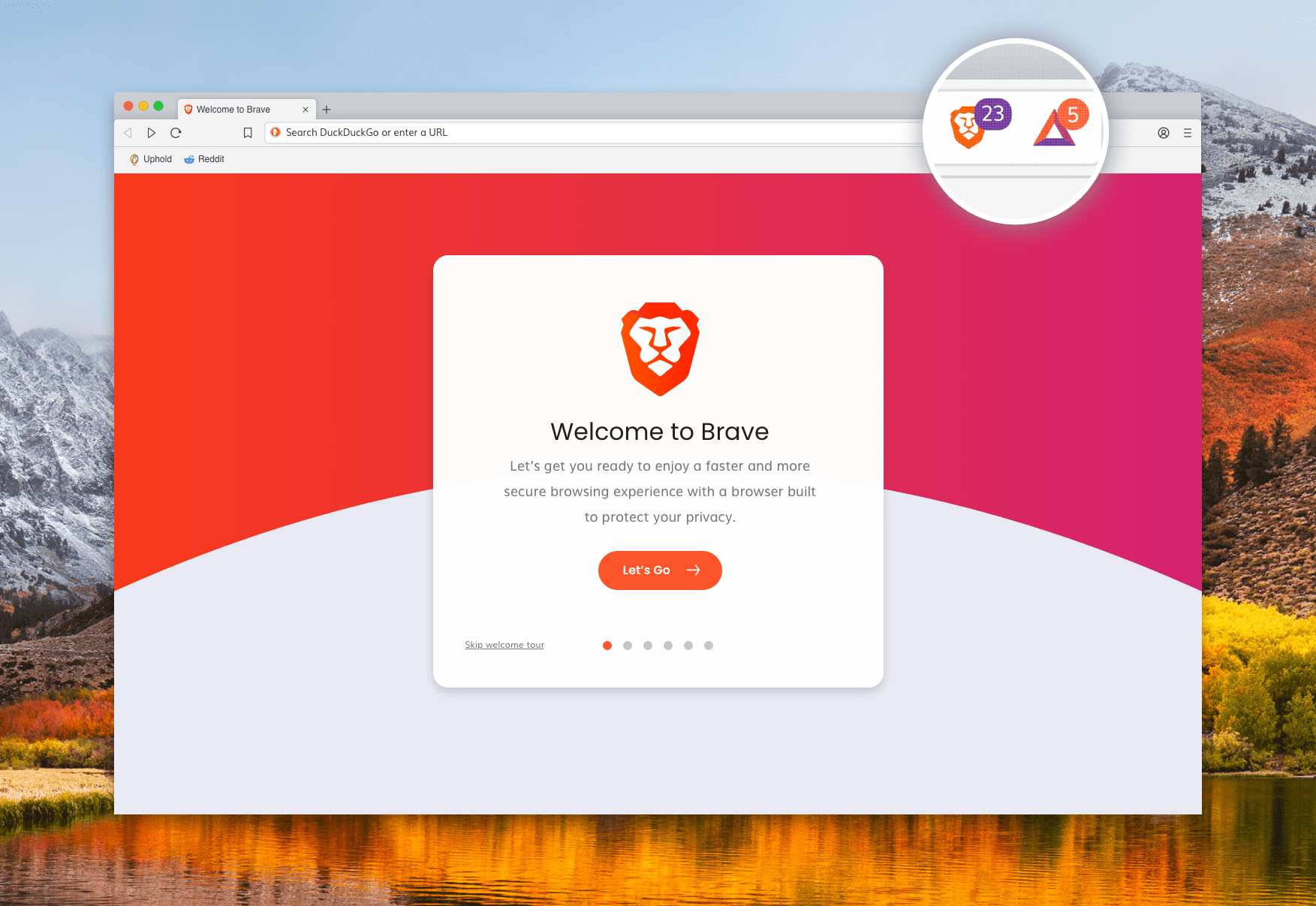
For stronger network-level separation, Brave also offers Tor private browsing in a separate window. Treat it as a different tool from an ordinary private window, and don’t mistake either one for a VPN.
Aggressive blocking changes how some sites behave, and the extension catalog is smaller than Chrome’s. Brave suits people who want privacy controls without relearning how a browser works.
- Shields blocks third-party ads and trackers
- Tor private window in a separate mode
- Familiar Chromium layout
- Built-in page cleanup for easier reading
- Support for Chromium-based extensions
Vivaldi
Vivaldi is for people who want the browser to bend to their workflow instead of the other way around. Tabs, panels, notes, menus, and toolbars all take orders from you, and it runs on Chromium without feeling like a reskinned Chrome.
Best for: Interface and workflow customization. Our rating: 4.3/5.
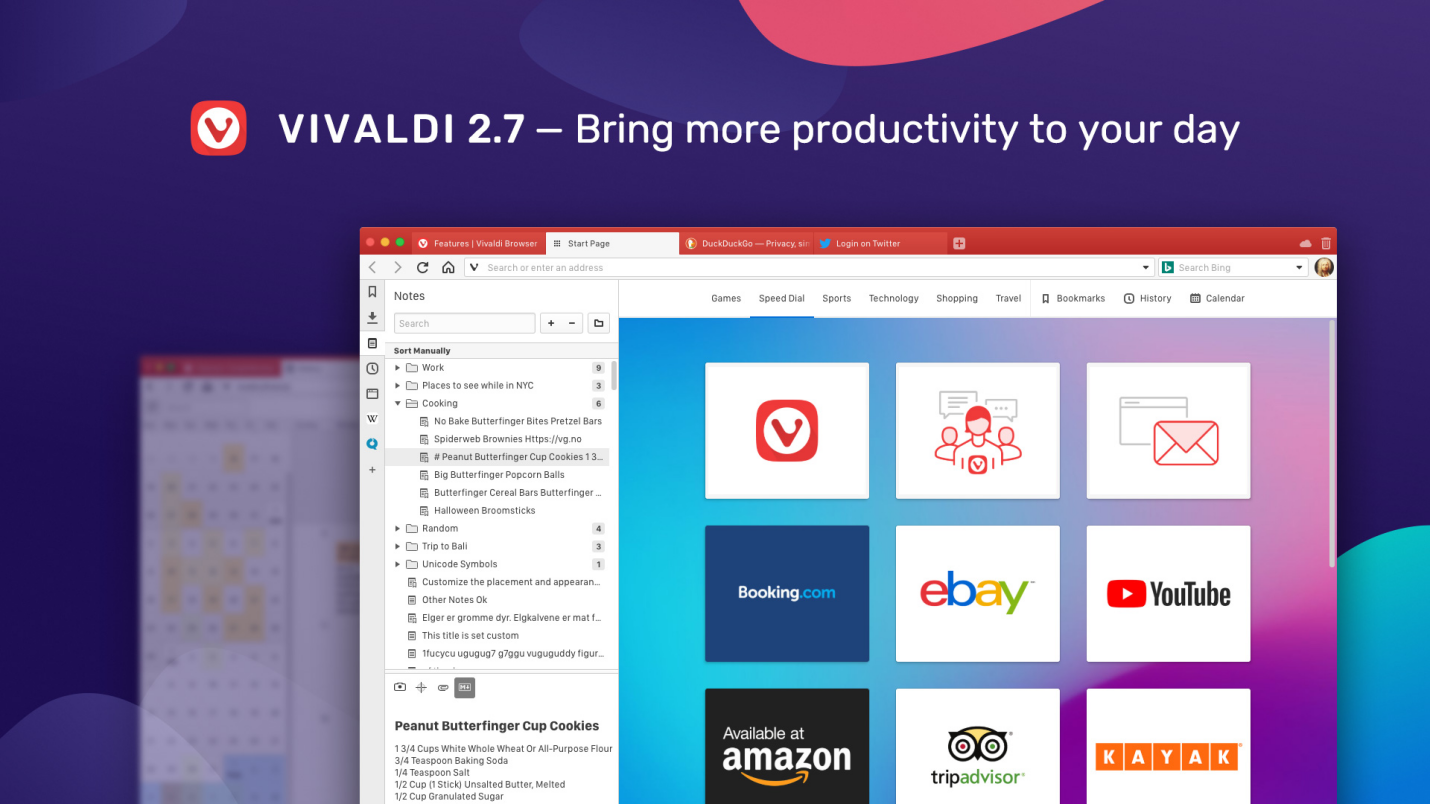
Notes, screenshots, and reader mode are built in, and tab stacks earn their keep during long research sessions. Chrome extensions install normally because the engine underneath is the same one.
Memory is the weak point. Vivaldi’s extra interface and background features can use more RAM than lightweight options, so try it on an older Mac before committing.
- Detailed control over tabs, panels, and menus
- Built-in notes and screenshot tools
- Reader mode
- Themes and custom interface elements
- Chrome extension compatibility
Puffin
Your Mac is getting old, memory is tight, and Chrome sends the fans spinning. Puffin renders pages on its servers and sends a simplified version to the device, so the Mac itself processes far less.
Best for: Low-resource browsing and cloud rendering. Our rating: 3.9/5.
That architecture is the reason Puffin belongs on a list of the best browsers for Mac at all. On low-power hardware it can feel quick, and Data Saver filters unnecessary content before the page reaches you.
Modern web apps are where it stumbles. Complex work apps, extensions, and some sign-in flows may not behave exactly as they do in Chrome, Safari, or Firefox, so test yours before moving your default browser.
- Cloud-based page rendering
- Reduced local page data
- Data Saver controls
- Lower local processing demand
- Focused interface
Avast Secure Browser
You already pay for Avast and want those security tools sitting next to the address bar. Avast Secure Browser is a Chromium browser built around that idea. Outside the Avast ecosystem, the appeal drops off quickly.
Best for: Existing Avast users. Our rating: 3.5/5.
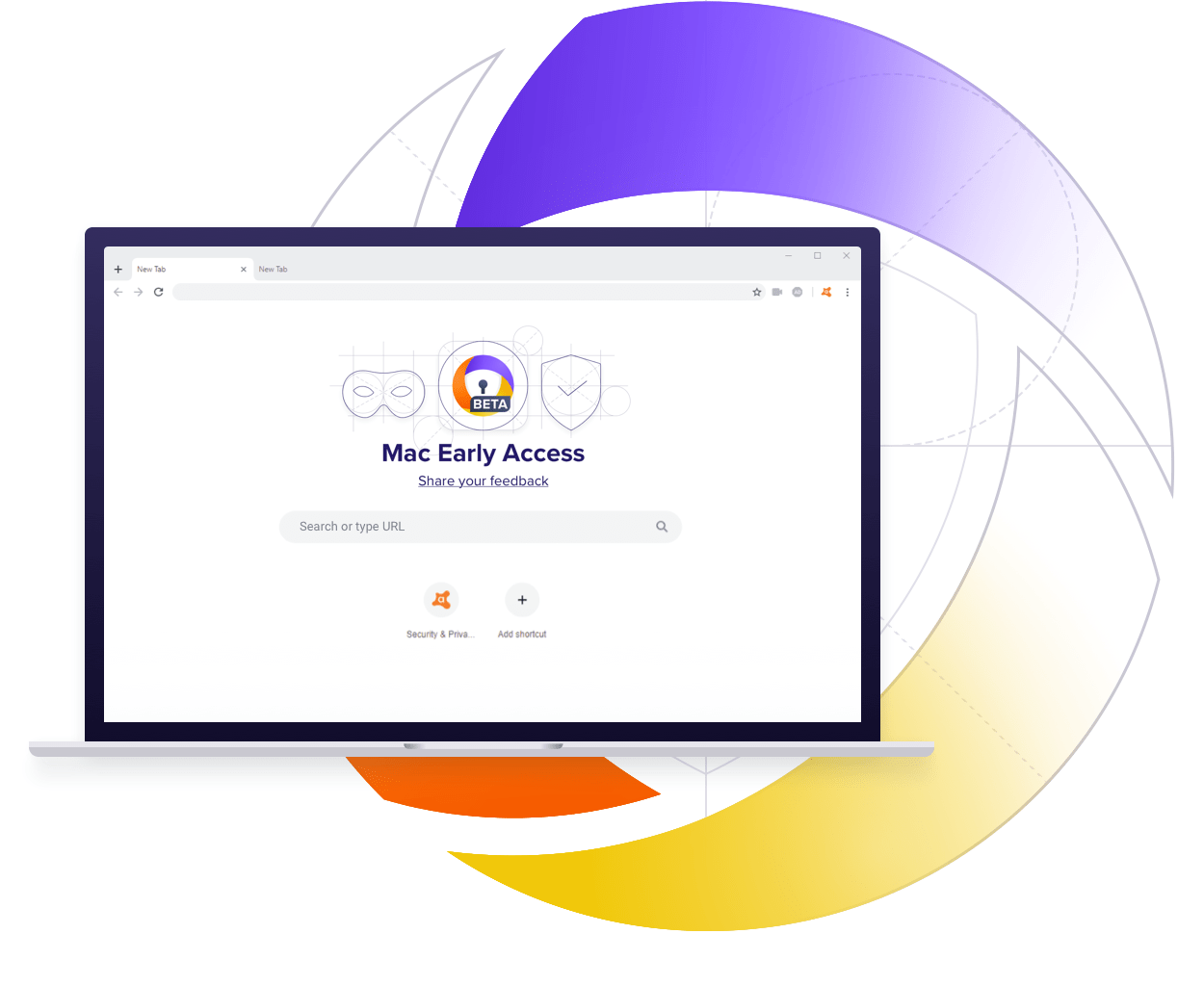
Ad and tracker blocking, a password manager, and privacy controls all ship in a familiar layout. They add convenience, but they do not replace macOS updates or careful account security.
Pick it when it complements an Avast setup you already run. Starting from scratch, Chrome has the widest extension ecosystem, Brave is the stronger privacy pick, and Edge fits Microsoft-heavy work.
Before you make it your default, confirm that Avast still offers a current Mac build for your version of macOS.
- Chromium-based browsing
- Ad and tracker blocking
- Built-in password manager
- Security tools for Avast users
- Familiar desktop interface
How to Choose the Best Browser for Your Mac
Start with what you actually open every day. Google Workspace, Microsoft 365, iCloud, banking portals, and one or two work apps will narrow the engine and extension set faster than any spec sheet.
Then weigh privacy against convenience. Built-in ad blocking, tracking protection, account sync, and interface customization all cost something, usually memory or extension breadth.
Install the runner-up beside your current browser and import bookmarks, passwords, and extensions. Give it a few days of real use: logins, video calls, downloads, and the sites your work depends on.
Once the new browser holds up, set it as the default. Keeping a second one around for testing is fine. Running four all the time is not, and it leaves you with duplicate download folders, notification prompts, and background processes.

TIP: Do not delete your current browser until bookmarks, saved passwords, two-factor logins, and important sessions work in the replacement.

Frequently Asked Questions
Which is the best browser for Mac?
Chrome is the best all-rounder for compatibility and extensions. Safari is the best default if you are all-in on Apple. Firefox is the strongest non-Chromium privacy choice, and Brave leads when blocking ads and trackers is the priority.
Do I need to download Safari on a Mac?
No. Safari is included with macOS and receives updates through system software updates. There is no separate Mac App Store download.
Does Microsoft Edge for Mac have Internet Explorer mode?
No. Internet Explorer mode is a Windows-only Edge feature and is not available in the Mac version of Edge.
Is Opera’s built-in free VPN a full VPN?
No. It is designed to protect traffic routed through the Opera browser, not every application on your Mac. Use a separate systemwide VPN if you need coverage beyond the browser.
Can I use more than one browser on my Mac?
Yes, and it helps during testing or for work that needs a separate account. Set one as the default, close the rest when you are done, and you skip the duplicate prompts and background processes that come with running several at once.

Nice article, I do think two items are missing.. 1) Chrome uses sophisticated tracking algorithms with little to no simple way to remove and Torch which was great… no longer offers support for a Mac. I do like how you said it was a personal choice, it is and sometimes based on the combination of laptop/tablet and phone differences can play a large role – thanks again for a very succinct article
i’m using 4 of the above mentioned browsers (opera, safari, google chrome and firefox)…all of them bring my older iMac to its knees in a fairly short amount of time. mostly, it seems, that social media participation(facebook) seems to be the worst at resource hogging. i use an app to free up physical memory after shutting down each browser before moving to the next one, to resume browsing. i came here to check out alternatives. there was a browser called Shiira(iirc) but i see it has been dustbinned.
27″ iMac, late 2009, 16 gig ram, os 10.13.6
All 4 browsers cripple my late 2009, no social media involved, or anything else, I am wondering if moving up to a late 2012 Imac @ $500.00cdn (the late 2009 was $150.00) will be a solution, or another $500 down the mac toilet of built in obsolescence?
Big thumbs up to you here at browserhow.com. I am not a geek, yet can actually understand what I read here, and to my surprise find it relevant. Thank You
Do you know which (if any) of these browsers have already been prepared to run on the new M1 processors? Or would it be advisable to simply install the IOS version on an M1 Mac Mini?
Also, there are some features of Google Chrome for MacOS that install with the browser that preform functions even when the browser isn’t running. They are related to Chrome’s automated updating feature and have been show to adversly affect system performance. It has also been stated the Chromium based browsers have omitted this function, making them better, in some respects, than Chrome.
Hello William, I perhaps think that all these browsers should support as long as Apple’s Mac OS supports the M1 processor. These browsers are made for the software and not for the hardware. There will be performance implications though (M1 is considered to be the fastest compared to its predecessor).
Secondly, yes – I agree with the fact that Google Chrome consumes a tonne of processing power to keep the CPU engaged. You can of course limit these processes and Fix the high CPU usage.
I have heard several reports that Google Chrome’s RAM hunger slows powerful Macs to a crawl. I’m reading this to find an alternative to Chrome. Safari is my default but I encounter enough instances of website incompatibility (especially regarding executing financial transactions) with Safari to want a back-up browser.
Hello Craig, I agree with the fact that Chrome is a resource-hungry browser. However, I personally use it on my Macbook Air 2017, I find it pretty smooth. Occasionally there are issues when I use along with another heavy program like Video Editor, etc.
Having said that, you can use the Microsoft Edge browser which is a tweaked version of Google Chrome that supports Microsoft 365 instead of Google Account.
There is a bug in Brave Renderer subsystem which goes CPU and memory bound, consuming full cpu and power resources. I finally had to abandon Brave and banish it from our company computers. This has been the topic of numerous reports and the developers have not been able to fix or isolate the issue. Numbers of threads with detailed reports have been closed by Brave without successful resolution of this bug. It appears to affect linux as well.