

Chrome on an iPhone or iPad brings Google's browser, Google account sync, Incognito mode, translation, QR scanning, and saved passwords to Apple's mobile devices, with a few gaps worth knowing before you switch.
Check the features you would actually use, confirm sync and password settings, and compare the iOS limits with Safari before you commit.
In this guide, I have covered:
Contents
What you get with Chrome on iPhone and iPad
You’re putting a Google browser on an Apple device, so it’s fair to ask how much of desktop Chrome actually comes with it. The core is all there: tabs, the three-dot menu, Google sign-in, and sync. If you live inside Google’s ecosystem, it feels familiar within a minute.
It is not desktop Chrome in a phone case. The iOS app doesn’t run the same browser extensions, hides most flags, and skips several computer-only tools, so the feature list differs from Chrome on Windows, macOS, and Android.
Install Google Chrome on iPhone and iPad
You can’t judge Chrome’s menus until the app is on your device. It comes from the Apple App Store and runs on both iPhone and iPad.
- Open the App Store on your iPhone or iPad.
- Search for Google Chrome and select the app from the search results.
- Tap the button and authenticate the download request with Face ID or Passcode.
- Finally, hit on the command.
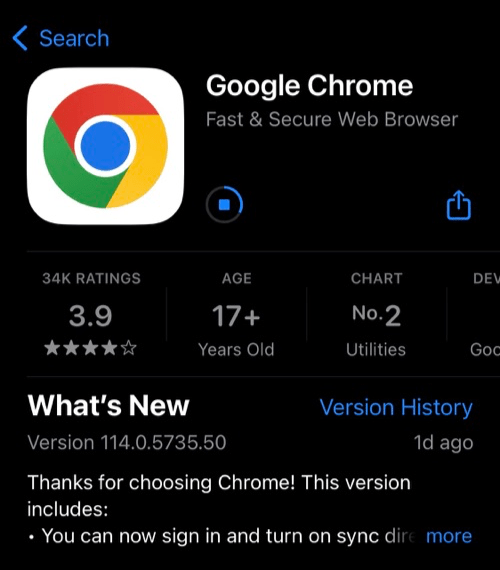 It will start the download, and you can see the progress.
Once installed, Chrome appears on the Home Screen. Want links from Mail, Messages, and other apps to open in Chrome instead of Safari? Set it as your default browser on iPhone or iPad.
Find Chrome’s menu and settings
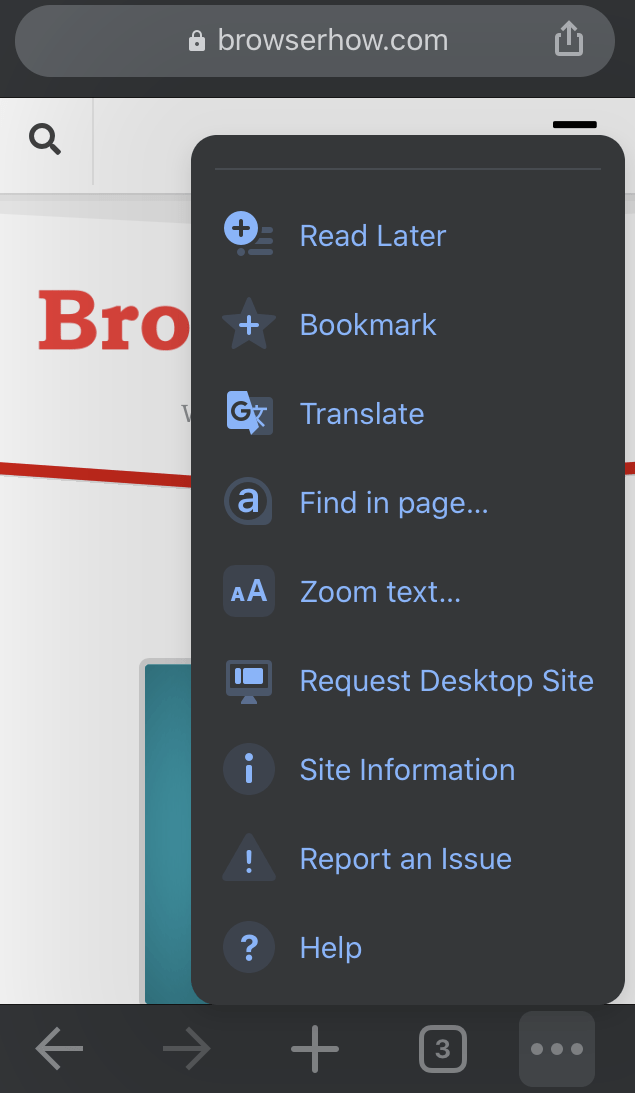
If you can’t find a setting, it is almost certainly in one place: the More menu, the three-dot  menu in the toolbar. It opens history, bookmarks, downloads, tabs, sharing tools, and Settings without leaving the page you’re on.
The toolbar layout differs between iPhone and iPad, and Google moves things around in updates. Go by the labels rather than where a button sat in an old screenshot.

Inside Settings, you can change search, passwords and autofill, downloads, and browsing data. The main menu also gives quick access to History, Bookmarks, and Downloads.
Portability between devices
The main reason to pick Chrome over Safari is what happens when you sign in. Chrome Sync carries bookmarks, browsing history, saved passwords, addresses, and other supported data from your iPhone or iPad to a computer or an Android phone, depending on which categories you enabled.
Sync is not the same as Send to your devices, which hands the link you’re reading to another signed-in device. If you juggle several accounts, see how to manage multiple Google logins in Chrome.


Not every desktop setting travels. If a bookmark or password shows up on your laptop but not on your iPad, check the account’s sync choices before assuming something broke.
Use saved passwords and autofill
Typing a long password on a phone keyboard is a chore. Google Password Manager in Chrome can save credentials and fill them into supported sign-in forms on iPhone and iPad.
Our guide to Add, Edit, and Manage Passwords in Chrome on iPhone & iPad covers the available controls.
Password sync needs the same Google account and password sync turned on. It won’t surface desktop-only Chrome settings on iOS.
Incognito mode
Some searches should not land in your history. Incognito keeps those pages out of normal browsing history, and closing the last Incognito tab ends the session and clears its temporary data.
Incognito is not anonymity. Websites can still collect information about the visit, and anything you download stays on the device.

Search, scan, and use keyboard shortcuts
The address bar takes a search term or a typed URL, whichever you have. Voice search helps when typing is inconvenient, and Chrome includes a QR code scanner for codes you point the camera at.
The QR code scanners guide also covers creating a code for the page you’re viewing.

Replace 3D Touch with press-and-hold
Earlier versions of this guide called these “3D Touch options.” Current iPhones don’t have 3D Touch, so Haptic Touch and a plain press-and-hold do that job now.
Press and hold the tab switcher and you get actions such as a new tab or a new Incognito tab. Long-press the search field for voice search and QR tools.
With a Bluetooth keyboard, Chrome accepts shortcuts for opening, closing, and switching tabs, plus starting voice search. That matters on an iPad, or on an iPhone with a keyboard case.

Translate, share, and find text on a page
Three tasks come up constantly on a phone: a page in a language you don’t read, a link you want to send someone, and a word you need to find in a long article.
Translate pages
Chrome detects a page in another language and offers to translate it into yours. The Translate guide walks through the mobile prompts.
Share a page
Sharing runs through the standard iOS sheet. Share sends the current URL to contacts or another app, and you can copy the link from the same sheet.
Find text on a page
The Find in Page… tool searches inside the current page and highlights each match. It earns its keep on long articles, receipts, and reference pages.
Bookmark pages and create Home Screen shortcuts
When a page is worth keeping, save it. The Bookmark action adds it to Chrome’s bookmark list, where you can organize it and sync it.
Chrome can also put a page on your Home Screen as a shortcut. The Add to Home Screen guide covers the iOS side and how it differs from a bookmark.
They serve different purposes. Delete the shortcut and the bookmark is still there.
Request the desktop layout when a mobile page is cramped
Plenty of sites hide tables, tools, and controls on a small screen. Request Desktop Site asks the page for its desktop layout so those elements come back.
This changes the page, not the browser. You get the desktop layout, not desktop Chrome features or extensions.

Check website security information
Before you type a password or a card number, look at what Chrome reports about the connection. The app shows connection status and certificate details, as explained in View Website Security Information in Chrome on iPhone & iPad.
A secure connection protects data in transit. It says nothing about whether the site is honest or harmless. Check the site’s identity and behavior before sharing anything sensitive.
Know the limits of Chrome on Apple devices
This is where the iOS app parts ways with the desktop version. Extensions are the biggest gap: Chrome on iPhone and iPad doesn’t run the browser extensions you’d install on a computer, and some desktop-only settings and flags are missing too.
On iOS and iPadOS builds where Apple requires WebKit, Chrome renders pages with Apple’s WebKit engine. The interface looks like Chrome. Page compatibility and layout can still differ from desktop Chromium.
Requesting a desktop site reveals a desktop layout, but it doesn’t turn the app into desktop Chrome. Check the features you actually rely on, extensions and account sync in particular, rather than assuming both versions behave the same.
Keep Chrome up to date on iPhone and iPad
Google ships features and menu changes through App Store updates, so an old install can look nothing like the current app. Updates also deliver browser security fixes without waiting for an iOS release.
- Open the App Store on your iPhone.
- Tap on your Profile icon in the top right corner.
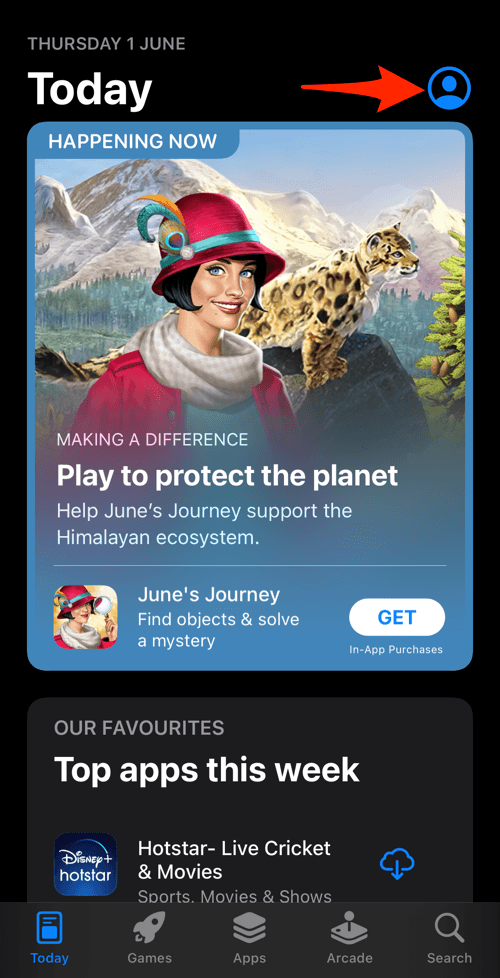
- Scroll down to the Available Updates section.
- If an update for Chrome is available, tap on next to it.
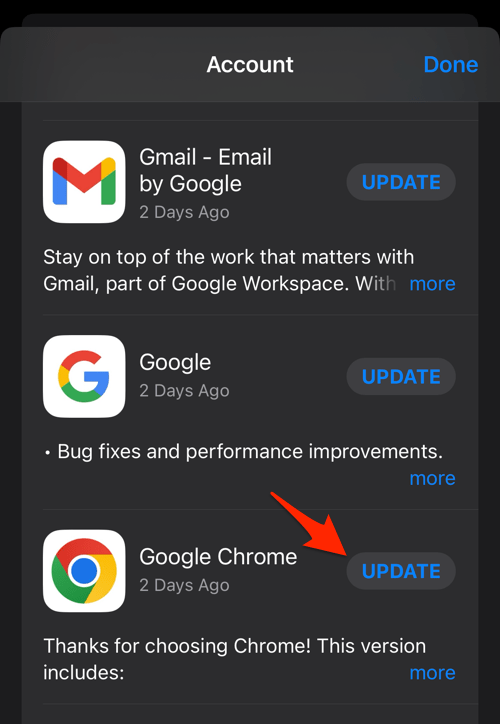
After updating, reopen Chrome and check the More menu. Features sometimes arrive gradually, so a tool may show up on one phone before another.
Chrome or Safari on an iPhone or iPad?
Pick Chrome if your priority is your Google account, bookmarks and passwords that travel between iOS, Android, and desktop, or Chrome tools such as translation, QR scanning, and Incognito.
Pick Safari if you lean on iCloud, Apple’s continuity features, and tight integration with iOS settings. Neither browser is automatically safer for everyone. The better choice depends on the services, devices, and privacy settings you actually use.
Frequently Asked Questions
Can I install Google Chrome on an iPhone and iPad?
Yes. Download the official Google Chrome app from the Apple App Store, open it, and sign in if you want Chrome Sync. The app is available for both iPhone and iPad.
Is Chrome better than Safari on an iPhone or iPad?
It depends on your devices and accounts. Chrome is a stronger fit for Google account sync and mixed Android and Apple use, while Safari fits closely into iCloud and Apple’s ecosystem.
Does Chrome on iPhone and iPad support desktop extensions?
No. It doesn’t provide the same extension support as desktop Chrome. Requesting a desktop website changes the page layout only.
What does Incognito mode hide in Chrome for iPhone and iPad?
Incognito pages aren’t added to normal browsing history, and temporary session data clears when the last Incognito tab closes. It doesn’t hide your activity from websites, and downloaded files stay on the device.
Why can Google Chrome feel slow on an iPad?
Heavy pages and many open tabs increase memory use, especially on an older iPad. Close unused tabs, update Chrome, and restart the iPad if the interface stays sluggish.
How do you change the search icons under the search bar on Chrome? You can delete them, but how do add or edit them?
You can check this detailed guide for setup on changing Default Search Engine in Chrome iOS
No, it’s the icons below the search bar.
Oh sorry, my bad. Those are called top site icons. Unfortunately, Chrome does not allow editing or adding the top site icons. It’s basically the recommendation from Chrome which can only be removed.
Hi! Finding this page has helped immensely with using Chrome on my iPhone. But 1 frustration: as I navigate around any web page the navigation bar disappears. The only way I find to get it back it to touch the address bar (at the top of my screen). Very inconvenient. Safari easily give me the navigation bar by touching anywhere on the far bottom portion of the screen. I would so appreciate your help.
The chrome is built to have a better and bigger viewport for browsing. Unfortunately, we cannot customize the navigation bar behavior it is auto-hidden as we scroll through the page.
Thx. I always forget that there’s more menu options if you scroll. Is there a way to edit the order the items are listed with the items I use most at top?
Hello Jennifer, unfortunately, the web browser does not allow to customize the positions of the menu or options.