

Every browser on Windows claims to be fast, private, and packed with features. The differences that actually matter are extension support, account sync, built-in privacy tools, memory use, and how much setup you want to do.
Work through eight options, see who each one suits, and check the main drawback before you download. Once you have picked, set it as the Windows default so links open where you expect.
In this guide, I have covered:
Contents
Which Browser Is Right for Your Windows PC?
Edge is already installed, and it may still not be the browser you want. The right pick for a Windows PC comes down to what fills your day: extensions, long tab sessions, privacy, or settings you can shape yourself.
Below are eight established options for everyday browsing. The list covers Chromium-based browsers, Firefox, and a few that bundle extra tools straight into the interface.

Our Review Process: We consider various parameters for review, which include but are not limited to ease of usability, built-in features, popularity, user rating, frequency of updates, support, and most importantly, customer satisfaction. We rate the products or services compared to its peers under the same category. Hence, a product/service rating on Page 'A' can be different than Page 'B'.
Quick comparison
| Browser | Rating | Best for | Main consideration |
|---|---|---|---|
| Google Chrome | 4.5/5 | All-around use | Extension-heavy sessions can use more memory |
| Microsoft Edge | 4.4/5 | Windows and Microsoft integration | Some built-in tools only matter if you use Microsoft services |
| Mozilla Firefox | 4.6/5 | Independent, privacy-focused browsing | Chrome-only extensions are unavailable |
| Opera Browser | 4.6/5 | Built-in privacy tools and a sidebar | Some Chrome extensions can behave differently |
| Vivaldi Browser | 4.3/5 | Customization and tab workflows | Can use more memory and system resources |
| Brave Browser | 4.6/5 | Strong built-in tracking protection | Smaller extension catalog than Chrome |
| Maxthon Cloud Browser | 4.1/5 | Built-in utilities and cloud features | Smaller add-on ecosystem |
| Chromium | Not rated | Advanced and open-source workflows | Update and media support vary by build |
Scores reflect ease of use, built-in features, update habits, popularity, support, and user feedback rather than a single speed test.
Start with the table if you want the short answer, then read the section for the browser you are considering.
If you still run Windows 10, check each vendor’s current system requirements before installing. Windows 10 reached end of support on October 14, 2025.
Google Chrome: Best All-Rounder for Windows

You want one dependable browser for work, shopping, video, and web apps. Google Chrome is the easiest all-rounder, and it updates on a regular schedule with the same familiar tools across profiles.
Chrome is built on Chromium and supports multiple profiles, tab groups, bookmarks, saved passwords, autofill, and private windows. Its sandbox limits what web content can do with operating-system functions, and it includes parental controls.
The main drawback appears when many tabs or extensions remain open, which can cause memory and CPU optimization issues. On an older PC, compare that behavior with Firefox before making a switch.
For everyday sign-ins, the guide to passwords shows how Chrome stores and manages saved credentials.
Forms fill faster once address autofill is set up with the addresses you use most.
You can also match the browser to your desktop. The guide to changing the color and themes shows where those options live.
The Chrome Web Store is the strongest reason to choose Chrome for extension-heavy work. Its library of extensions is the broadest of the browsers here.
If an extension-based workflow matters to you, read how to Enable Auto-Refresh in the Web Browsers using Extensions before you switch away from Chrome.
Chrome also runs on macOS, Linux, Android, and ChromeOS, so bookmarks and passwords follow you between devices when you sign in.
Microsoft Edge: Best for Windows and Microsoft Integration

Pick Edge when you want a browser that feels built into Windows and connects cleanly with a Microsoft account. It already sits on Windows PCs and also runs on macOS, Linux, Android, and iOS.
Current Edge uses Chromium rather than the retired EdgeHTML engine. It renders modern sites like Chrome, supports Microsoft 365, Hotmail, and Live accounts, and can install Chrome extensions.
Signing in lets Edge sync your data across the signed-in devices. The extension route is separate from Chrome’s, so follow the guide to Chrome extensions on Edge when you need one that is not installed by default.
Edge also blocks common disruptive ads and tracking requests, and the guide to ad-blocking trackers explains what its built-in protection covers.
Edge’s AI experience is now branded Copilot rather than Discover chat. For background on the feature, see our guide to Bing AI.
For moving links between your phone and PC, see how to share website links directly from Edge on Windows.
Windows users can also make Edge their default web browser when they want all web links to open in it.

Mozilla Firefox: Best Independent Browser for Privacy

Firefox is the strongest mainstream browser that does not depend on Chromium. It suits people who want open-source software development, a broad catalog of Mozilla Add-ons, and less reliance on Google’s browser ecosystem.
Its clean Windows interface includes bookmarks, password management, form autofill, guest browsing, and account sync. With few add-ons installed, it can also feel lighter than a browser carrying many extensions.
Enhanced Tracking Protection is the feature to learn first. The walkthrough to tracking protection explains how to review the built-in controls.
Sign in with a Mozilla account to sync data via logging into the free Mozilla Firefox account.
The interface is highly customizable, with themes, spacing, and toolbar settings available without an extension. Firefox is also available for macOS, Linux, Android, and iOS.
Opera Browser: Best for Built-in Privacy Tools and a Sidebar

Choose Opera if you want ad blocking, website tracking protection, and a browser VPN without installing separate extensions. Its left sidebar keeps tabs, bookmarks, and web apps in one compact panel.
Modern Opera is based on Chromium and uses Blink. It supports Chrome extensions, which makes it easier for Chrome users to move over without giving up the Opera interface.
Use the guide to Ad Blocker to see what the built-in blocker handles.
The built-in VPN is a proxy for browser traffic, not a full system VPN. It does not make every kind of online activity anonymous or risk-free, including activity in other applications.
The guide to VPN support in private mode explains where the feature appears and how to test it.
Opera can also cross-device sync with the Opera account after you sign in, keeping bookmarks available on desktop and mobile.
Opera runs on Windows, macOS, Linux, Android, and iOS. Turbo mode can reduce page data use on supported pages, but the browser may feel heavier than Firefox in memory-heavy sessions.
Vivaldi Browser: Best for Customization and Sidebar Workflows

Vivaldi is built for people who want control over the browser without installing an extension for every adjustment. Created by former Opera leaders, it uses Chromium and Blink, so most Chrome extensions are available.
Its sidebar brings together tabs, bookmarks, history, notes, and custom web panels. Mouse gestures, split-screen viewing, Reader View, and a configurable status bar suit heavy multitaskers.
The feature set can use more memory and system resources than a simpler browser, especially with several panels and extensions open. Its denser controls also take longer to learn than Chrome or Edge.
Vivaldi is available for Windows, macOS, and Linux.
Brave Browser: Best for Privacy Controls Without Extensions

Brave is a strong choice when you want tracking protection and ad blocking switched on by default. Shields blocks third-party trackers, harmful ads, and cross-site tracking scripts while keeping Chromium compatibility.
You can also switch to private mode and open new tabs when you want one session kept away from your main tabs.
Brave’s optional Rewards and Wallet features provide value for some users. The guide to Earn Rewards explains how the opt-in system works.
Brave runs on Windows, macOS, Linux, and Android, supports sync, and can install extensions from the Chrome Web Store. Its own catalog is smaller than Chrome’s, so check that the one extension you rely on is available before switching.
Maxthon Cloud Browser: Best for Built-in Utilities
Maxthon is worth a look when you would rather have several small tools included than install each one as an extension. Its modern desktop browser is Chromium-based and includes an ad blocker, screenshot tool, night mode, password manager, notepad, calculator, and page capture tools.
Maxthon also provides cloud-oriented features and account sync across Windows, macOS, Android, and iOS.
Older Maxthon releases used WebKit and Trident rendering, but that no longer describes the modern browser. A smaller extension catalog is the main reason it trails Chrome, Edge, and Vivaldi for extension-heavy users.
Chromium: Best Open-Source Browser for Advanced Users

Chromium is the open-source project behind Chrome, not Google Chrome under another name. It gives experienced users a build closer to the upstream project and can suit testing or open-source workflows.
Choose it only if you are comfortable checking who supplies the build. Automatic updates, bundled media codecs, and default settings depend on the distributor rather than Chromium itself.
For most Windows users, Chrome or Edge is easier because both deliver regular updates and familiar media support. Chromium is better viewed as a specialized alternative than a universal replacement.
Which Browser Should You Choose?
Pick Chrome for the most consistent extension ecosystem, Edge for Windows and Microsoft services, Firefox for a non-Chromium browser, and Brave for privacy tools that work out of the box. Opera and Vivaldi suit anyone who wants a sidebar and built-in utilities, while Maxthon and Chromium are more specialized choices.
Test a browser with the sites and extensions you actually use. Startup speed alone does not tell you which one will stay responsive after a full day of tabs, downloads, video calls, and web apps.
Make Your Pick the Default Browser in Windows
After installing the browser you chose, set it as the Windows default so links from email, messaging apps, and other programs open in it.
- Click on the Start menu and select the Settings option.
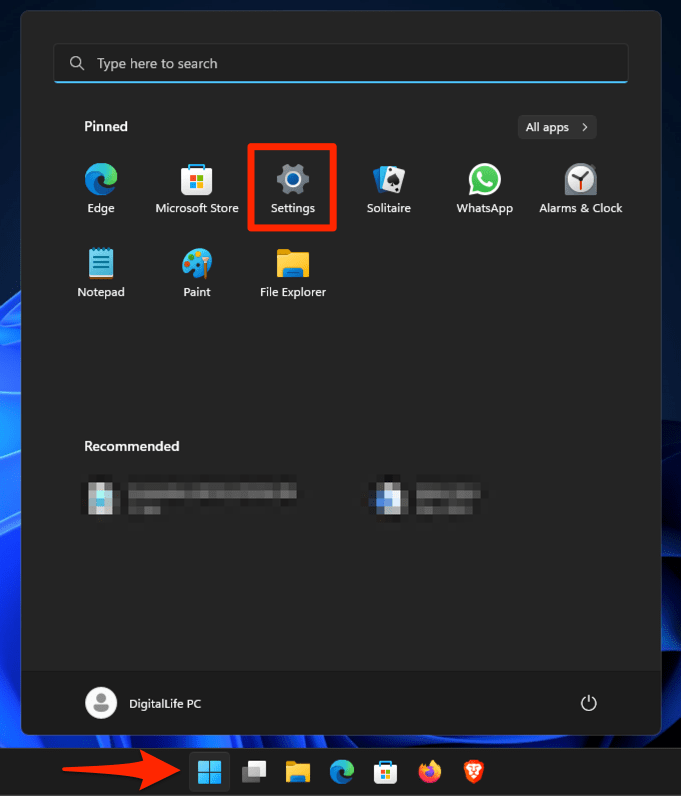 It will open the Windows System settings window.
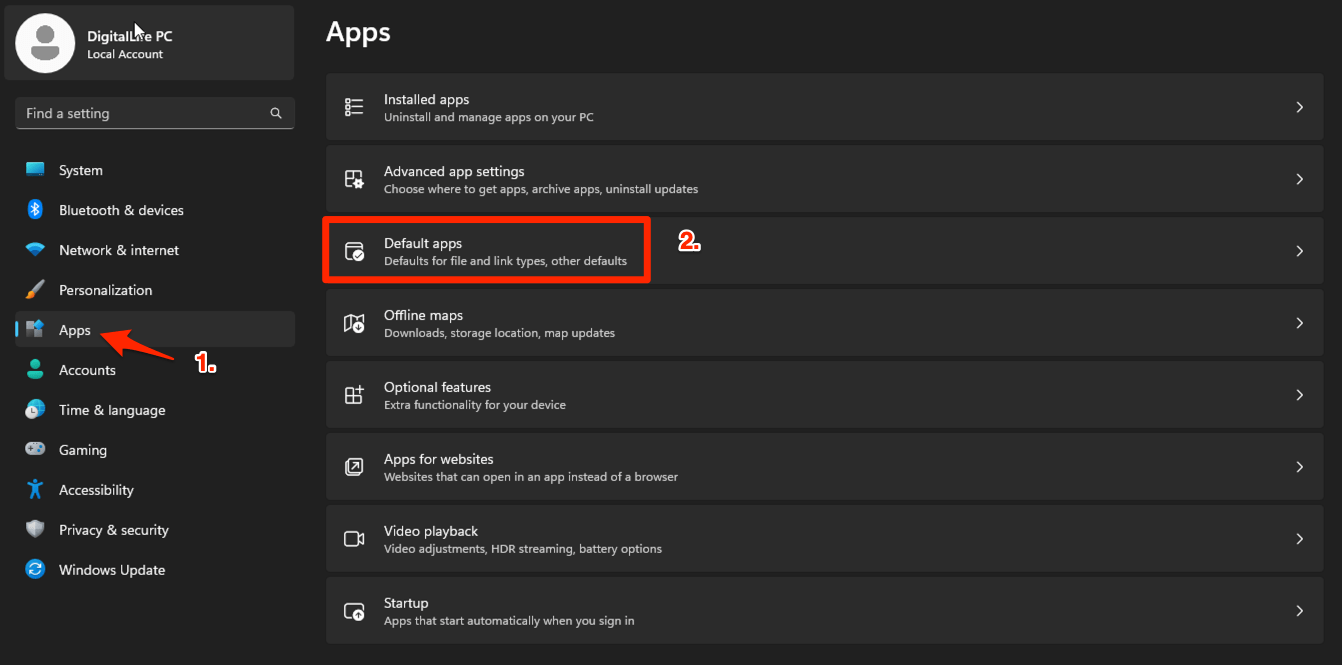
- Switch to the Apps menu from the left sidebar and then select the Default apps in the right pane.
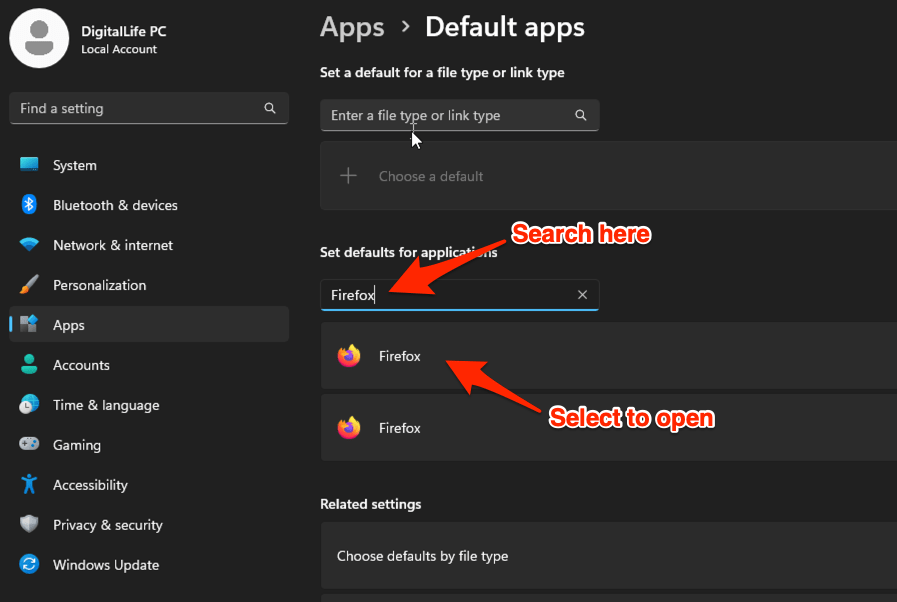
- Under the Set defaults for applications, search and select the desired browser (say, Firefox or Chrome) to open.
- Click the button at the top.
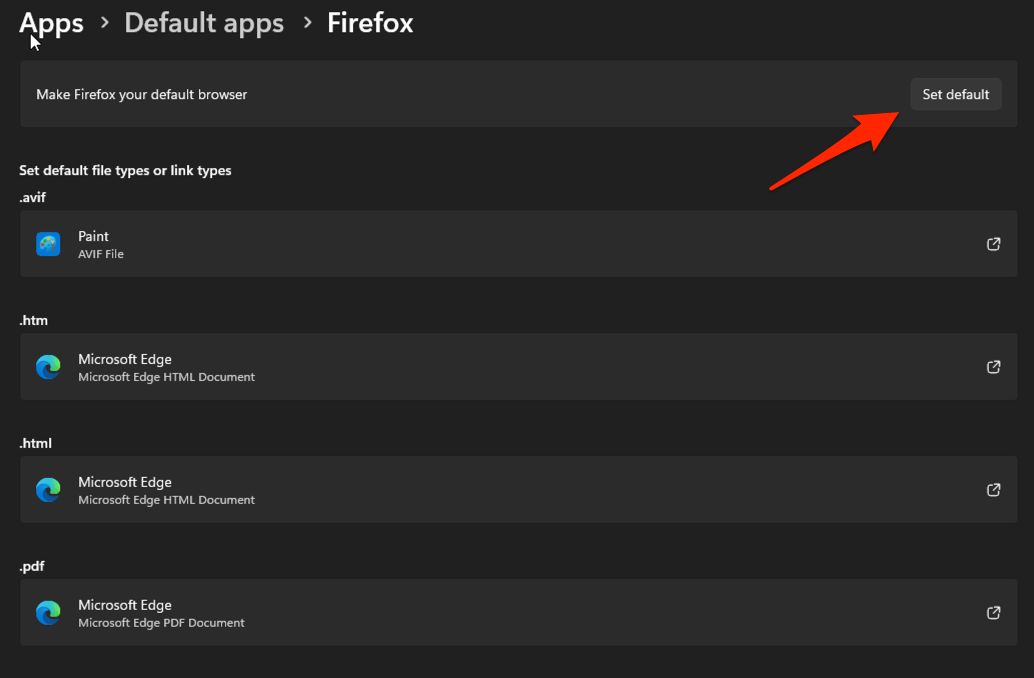 The desired browser will be set as the default app.
You’ll know it worked when a web link from another Windows app opens in the browser you selected.
Frequently Asked Questions
Which browser is best for Windows 11?
Google Chrome is the easiest all-around choice for most Windows 11 users, while Microsoft Edge is the strongest fit when Windows and Microsoft account integration matter. Firefox and Brave are better picks when privacy is the main priority.
Is Microsoft Edge better than Google Chrome on Windows?
Edge is the better choice if you use Microsoft 365, want a browser already integrated with Windows, or prefer Microsoft’s built-in tools. Chrome is usually easier to recommend when you depend on a particular Chrome extension or want the most uniform extension experience.
What is the best browser for privacy on a Windows PC?
Brave offers the strongest built-in tracking and ad controls without requiring extensions. Firefox is the better fit if you prefer a browser independent of Chromium and want Mozilla’s tracking protection. A private window alone does not hide your IP address or make you anonymous.
Do extensions slow down a browser, and which browser supports them best?
Several active extensions can increase memory use and background work. Chrome has the broadest Chrome Web Store experience, Edge, Brave, Opera, Vivaldi, and modern Maxthon can run many of the same extensions, while Firefox uses Mozilla Add-ons and cannot run a Chrome-only extension.
Is Chromium better than Google Chrome for Windows?
Not for most people. Chromium gives advanced users a build closer to the open-source project, but update delivery, bundled media codecs, and support depend on who packages it. Chrome is the safer default when you want regular updates and a finished browser experience.

Opera was first developed in mid 1990s, not for mobile phones. I’ve been using it for over 20 years and it was designed as a desktop browser from the very beginning. Only later did they introduce versions for mobile systems.
I downloaded Brave awhile back and have been using that and it uses DuckDuckGo for their incognito browsing. I have found it funny if you search for something that is “damning” or not good for Democrats on Google and then go search it on DuckDuckGo how different the results are. Google will almost always be an entire first page of spin machines from CNN, NYT etc. about how the thing you are search isn’t even really that bad. You can search almost a specific article title and not find it if it is something the left doesn’t like. Honestly it is one of the biggest reasons I am on this looking at browsers and started using Brave in the first place.
Even though you are prizing Chrome for performance, my experience is that I can work with 200+ tabs and couple windows in Firefox without killing performance of my PC, but Chrome brings down computer to a halt, as memory and CPU goes through the roof with just 80+ tabs open.
Also, privacy and political correctness pushed on you are issues with Google Chrome, but not Firefox.
Hi Peter, it’s true that Chrome hogs too much RAM memory as well as CPU. However, we can keep this under control following few tips. But of course, in terms of utilization, Firefox is great.
I agree with Rapsidy on these thoughts, I want to use a browser from any company that doesn’t try and pushes its views on others. We are free to use what we want, and I am now searching for an Independent browser that works without the home office political slants towards its views on how it wants the world to be seen. We all have different opinions and I served over 21 years for them to have theirs too. I just don’t have to use their products and won’t if I disagree. I’ll look for alternatives that offer free speech and opposing viewpoints, even if they disagree with mine but allow all to be heard, read, or seen. It’s just a product. I’ll find something for the masses and not just one side.
I downloaded Brave awhile back and have been using that and it uses DuckDuckGo for their incognito browsing. I have found it funny if you search for something that is “damning” or not good for Democrats on Google and then go search it on DuckDuckGo how different the results are. Google will almost always be an entire first page of spin machines from CNN, NYT etc. about how the thing you are search isn’t even really that bad. You can search almost a specific article title and not find it if it is something the left doesn’t like. Honestly it is one of the biggest reasons I am on this looking at browsers and started using Brave in the first place.
I liked your article. I use Firefox myself. It does a very good job and is quite fast for my work. Worrying about mil a seconds is not important to my work. I also have Firefox extensions and an antivirus software that are not causing me any problems. I stopped using Google as they have become politically motivated to exclude people because the people don’t agree with Googles political beliefs. And after threatening the American people with fixing the elections to help the Democrats win, well that was a bit much. We decide who wins not the billionaire tech companies. Sorry about the rant, but I use to enjoy Google’s products, just don’t like egomaniacs.
I totally understand your point, Rapsidy! Between the Google vs Firefox war, everyone has their own personal preference.
Firefox is great, I really like the strengthened security around tracking and such.
But this is something I have trouble understanding, how is voting for someone like Trump a stab at the billionaires? He has claimed to be one himself, no?
How did these tech companies threaten the American people?
Trump is the ultimate egomaniac, so this makes no sense.
@Mike, your comment shows how much people fail to pay attention and fail to read. Trump pushed to have these big tech companies stripped of their Section 230 of Title 47 of the United States Code, which allows them to “restrict access to or availability of material that the provider or user considers to be obscene…or otherwise objectionable”. That protection gives Big Tech the ability to claim ‘community standards violations’ and silence others that they disagree with. Politically everyone knows Big Tech is extremely Left-wing and they did interfere with the election by silencing ‘information’ from being shared through their Big Tech platforms. That is how ‘these tech companies threaten the American people’. When Big Tech can ban information by claiming that information violates their ‘community standards’ they have way too much power. The ‘Billionaire’ part isn’t even in the equation. President Trump, unlike the previous president and now the one sitting in the White House, had nothing but love for this country and her citizens. Trump in no way is an ‘ultimate egomaniac’ compared to those listed already. Therefor Rapsidy’s post is accurate and you are the one that ‘makes no sense’. BTW Firefox by far is the best browser IMO.
hrms anable to login in crome
I use Firefox Browser for pc and chrome for phone.
As of the last windows 10 updates Bave is not working correctly